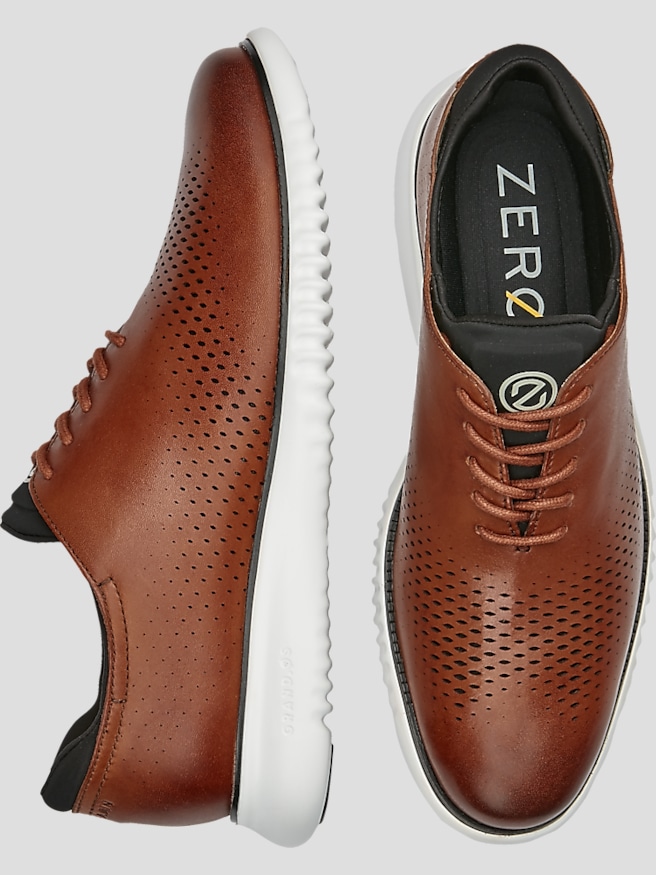
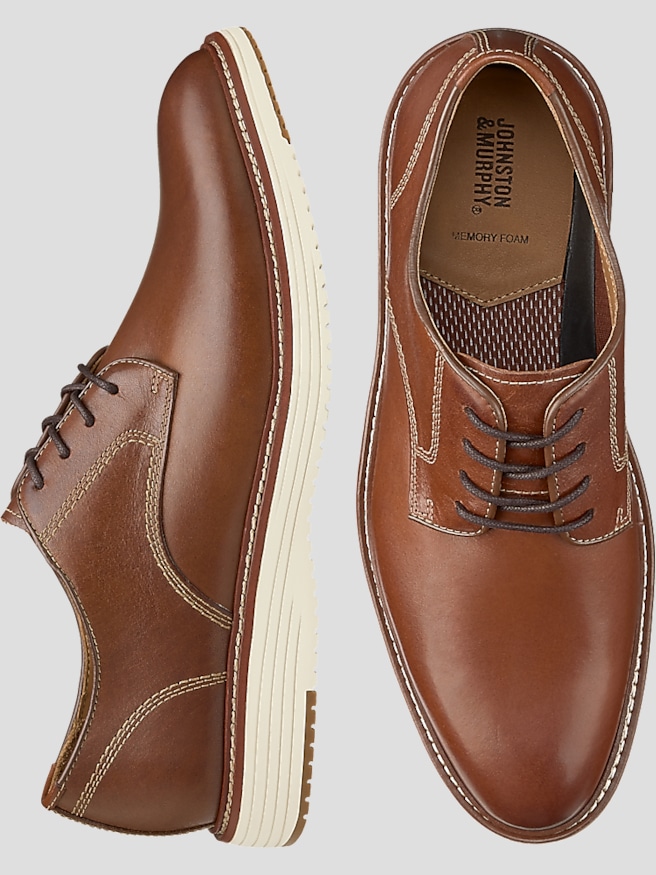
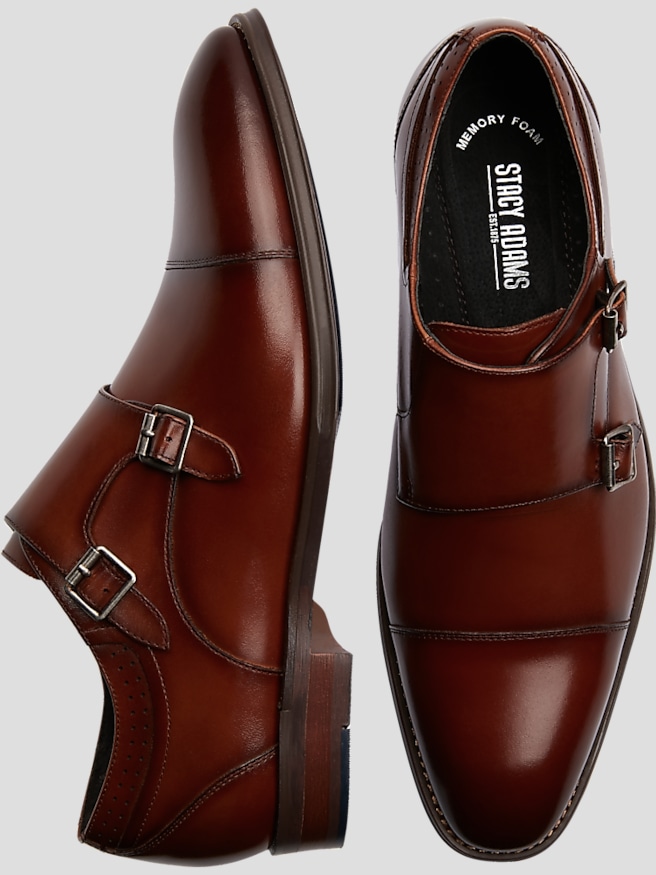
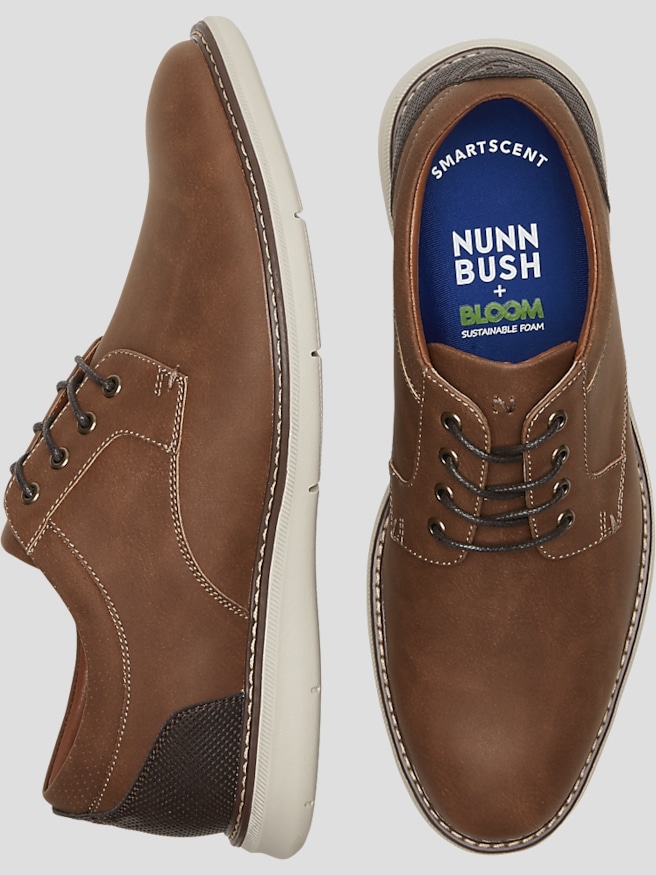
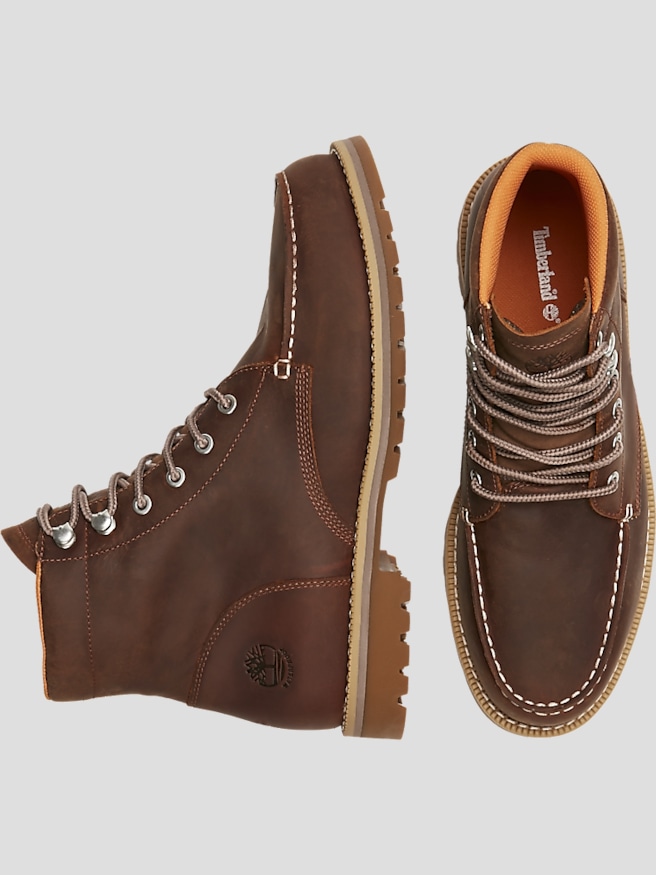
Brown derby shoes for men bring warmth and versatility to a dress wardrobe, pairing naturally with navy tailoring, gray trousers, chinos, and dark denim. Their defining feature is open lacing: the sections that hold the eyelets are sewn on top of the vamp, the part of the upper that covers the front of the foot. This construction lets the laces open relatively wide, offering some adjustment across the instep while maintaining a polished appearance. Compared with the closed lacing of an Oxford, a derby generally has a slightly more relaxed character, making it useful for offices, dinners, daytime weddings, and occasions that call for something smarter than sneakers. Brown adds another layer of flexibility. Deep chocolate shades look restrained alongside charcoal or navy, while medium brown and chestnut tones create a warmer contrast against blue, olive, and beige. Lighter tan shades tend to feel more casual and draw more attention to the shoes, especially beneath dark trousers. A smooth plain toe keeps the overall impression clean; a cap toe adds a defined seam across the front; decorative perforations, often called broguing, introduce texture and a less formal feel. Toe shape matters just as much as decoration. A gently rounded or almond-shaped toe usually works across both tailored and relaxed outfits, whereas a pronounced square or sharply pointed toe makes a stronger style statement. Within the wider family of derby shoes, brown is especially useful for anyone whose day moves from a desk to an evening gathering without time for a complete outfit change. Picture medium brown leather beneath navy trousers and a fine-gauge sweater, or dark brown plain-toe shoes finishing a blue suit for a wedding where suits are requested. Brown derbies are not a substitute for traditional black formal footwear at a strict black-tie event, but they cover a substantial stretch of everyday dressed-up life.
Materials and construction influence how brown derby shoes look, feel, and hold up to repeated wear. Smooth leather has a defined surface that can be conditioned and polished, making it a practical choice for a crisp office outfit. Full-grain leather retains the hide’s natural surface and can develop character with proper care, although the leather’s overall quality, thickness, and finishing also affect performance. Suede has a soft, matte texture that sits comfortably beside flannel trousers, corduroy, or chinos; its understated finish is particularly appealing during the cooler months. Pebbled leather adds visible grain that can make minor marks less noticeable, though a textured surface alone does not make a shoe weatherproof. Underfoot, leather soles offer a traditional profile and can feel flexible after initial wear, but they may be slippery on smooth or wet surfaces. Rubber soles often provide more traction and a buffer from damp pavement, with performance depending on the compound and tread. A slim rubber sole can preserve a dressy outline, while a thicker lug sole gives the shoe a more substantial, casual appearance. Neither sole material guarantees all-day comfort on its own. Cushioning, arch shape, flexibility, lining, and fit all contribute to how a shoe feels after several hours. Construction is another useful distinction: Goodyear-welted and many Blake-stitched shoes can be resoled by a qualified repair professional, depending on their condition and design. Cemented construction bonds the sole to the upper and may be lightweight and flexible, but it is often less straightforward to resole. For someone walking several blocks between a train station and an office, traction and a secure fit may matter more than a very thin sole. For mostly indoor occasions, a sleeker profile may take priority. Clean stitching, neatly finished edges, and securely attached soles are useful details to examine, but no single construction label tells the whole story of durability. How often the shoes are worn, the conditions they encounter, and routine maintenance also matter.
A comfortable fit gives brown leather derby shoes their everyday usefulness. The heel should feel secure without painful pressure, the widest part of the foot should align with the widest part of the shoe, and the toes should have room to move without being compressed. Some space beyond the toes is normal, especially with an elongated toe shape; that space alone does not mean the shoe is too large. Trying shoes with the socks intended for regular wear gives a more realistic sense of volume, particularly when thicker socks enter the rotation during cooler weather. Open lacing can accommodate some variation in instep height, but it cannot compensate for a shoe that is too narrow or the wrong shape. Leather may soften with wear, yet persistent pinching, numbness, or toes pressing against the front should not be treated as a normal break-in requirement. For a long workday or an occasion with considerable standing, comfort should be evident from the beginning. Ongoing care helps preserve both that fit and the appearance of the uppers. Dust and surface dirt can be removed from smooth leather with a soft brush or cloth, followed by a suitable conditioner when needed and polish appropriate to the finish. Testing care products on a discreet area helps avoid unexpected color changes. Suede calls for a suede brush and care products specifically intended for its nap rather than ordinary cream polish. If shoes become damp, let them dry naturally away from radiators and other direct heat sources; leather footwear should not be assumed waterproof unless its construction supports that claim. Cedar shoe trees can help absorb moisture and maintain shape between wears, while alternating pairs gives the interiors time to dry. A shoehorn helps protect the heel counter when putting shoes on, and attention to worn heel edges can prevent more extensive damage. As a gift for a graduate, a partner, or someone beginning an office-based role, brown derbies can be a thoughtful wardrobe addition when size, width, and personal style are known. Their lasting appeal comes from that combination of practical wear and understated polish: footwear that feels equally considered beneath a suit or a favorite pair of chinos.