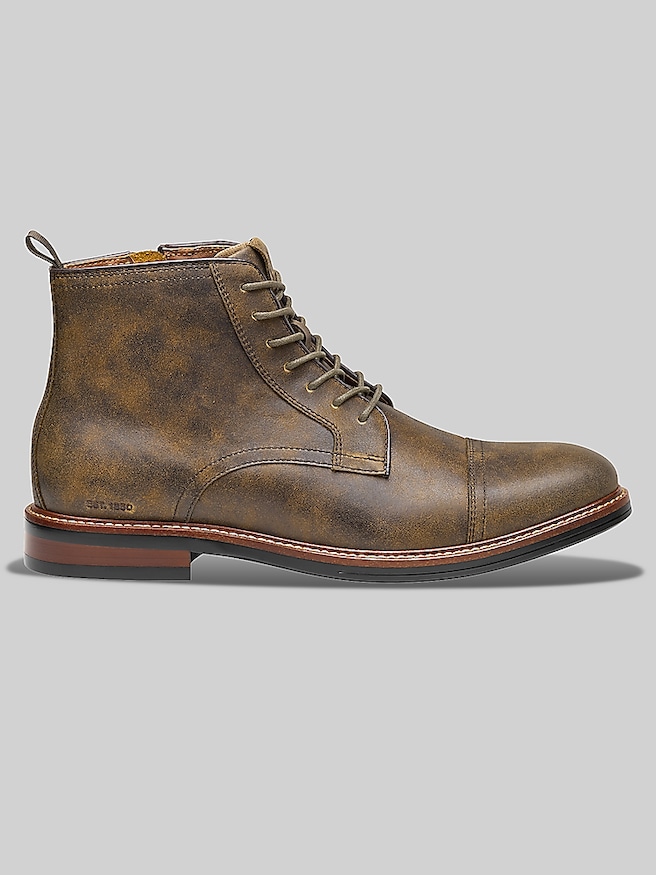
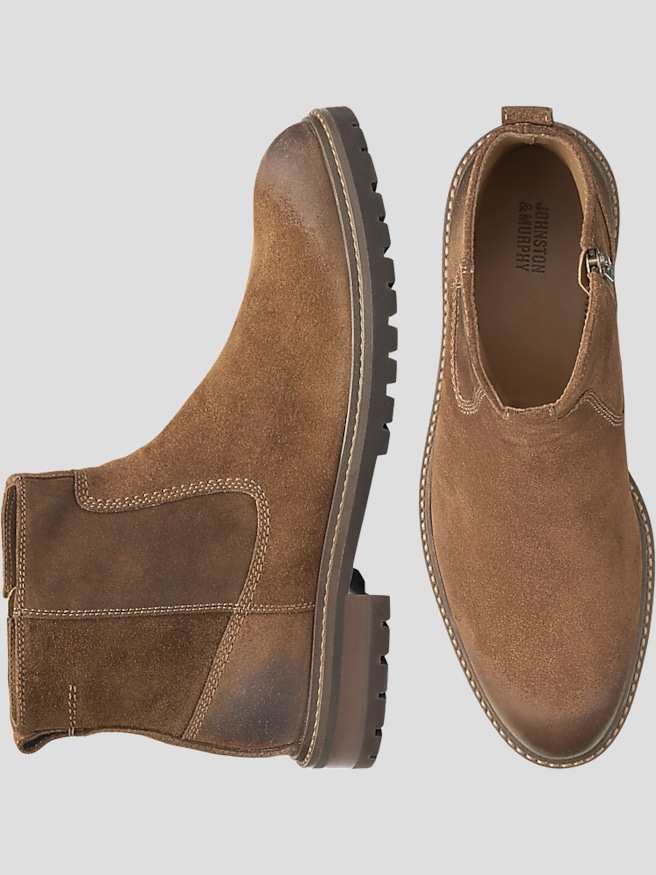
Brown boots are versatile footwear that combines the coverage of a boot with a warm, earthy color palette suited to both casual outfits and more polished everyday dressing. Shades range from light tan and cognac to chestnut and deep chocolate, with each tone giving an outfit a slightly different character. A lighter brown draws attention to the footwear and makes a natural companion to blue denim, while a darker brown can sit quietly beneath navy chinos or charcoal trousers. Smooth leather tends to look cleaner and dressier; suede introduces a soft, textured finish that feels at home with corduroy, knitwear, and relaxed tailoring. The shape matters as much as the color. Chelsea boots have elastic side panels and a streamlined profile, lace-up boots offer an adjustable closure and a more structured appearance, and chukka boots typically have an ankle-height shape with a short lace fastening. A rounded toe and substantial sole give brown boots a grounded, casual presence, while a slimmer toe and lower-profile sole create a neater line beneath trousers. For everyday outfits, brown casual boots bring texture and depth without requiring an elaborate outfit. Dark jeans, a crisp shirt, and a simple belt can be enough to make the combination feel complete. A brown belt in a similar shade creates continuity, though an exact color match is less important than keeping the finishes compatible. Brown footwear also works with black denim when the contrast looks intentional, especially with a neutral shirt or jacket connecting the two colors. Trouser hems should fall cleanly around the boot rather than bunch heavily over the shaft, helping the silhouette remain balanced. For an office with a relaxed dress code, a smooth, minimally detailed brown boot can complement chinos and an unstructured blazer. For dinner or a gathering with friends, suede or a more substantial lace-up shape can give familiar clothing a distinctive finish without making the outfit feel overly formal.
Materials and construction influence how brown boots look, feel, and hold up to repeated wear. Full-grain leather retains the hide’s natural grain and can develop a patina, with small variations in color and surface character becoming part of its appearance over time. Other leather finishes may create a more uniform look, while suede has a napped surface that changes subtly as the fibers move. Neither finish is automatically the better choice; smooth leather often suits a cleaner outfit, whereas suede adds visual softness and benefits from care suited to its texture. The lining, footbed, outsole, and stitching all contribute to the wearing experience beyond the outer material. A leather lining may feel smooth against the foot, while textile linings vary in texture and breathability. Cushioned footbeds can make prolonged standing more comfortable, but support depends on the complete design and how well the boot fits the wearer. Rubber outsoles generally bring flexibility and grip, although traction varies with the tread pattern and walking surface. Leather outsoles offer a traditional appearance and a slimmer visual profile. Welted construction can make sole replacement possible in some boots, while other construction methods may emphasize flexibility, lower weight, or a less bulky shape. Fit should leave room for the toes to move without allowing the foot to slide forward. The widest part of the foot should align with the widest part of the boot, and the instep should feel secure rather than compressed. A small amount of heel movement may occur in a new boot, but persistent lifting or rubbing can indicate a poor fit. Lace-up styles allow adjustments across the instep, while pull-on styles depend more heavily on the shape of the upper and the opening. Trying boots with the socks intended for regular wear gives a more useful sense of fit than relying on size alone. Leather may soften with use, but a boot that pinches the toes or causes sharp pressure should not be expected to become comfortable simply through repeated wear.
Brown boots can serve many roles in a wardrobe, from dependable footwear for an everyday commute to a finishing touch for casual celebrations, travel, and evenings out. Someone who spends much of the day walking between appointments may value a flexible sole and manageable weight, while someone dressing for a desk-based workplace may prioritize a sleek profile that sits neatly under tailored pants. A substantial appearance does not necessarily mean a boot is intended for demanding work: protective features, workplace requirements, and the manufacturer’s stated use matter more than rugged styling alone. Likewise, a refined brown boot can complement relaxed tailoring without replacing the footwear expected for a strict formal dress code. Keeping boots looking good starts with care appropriate to the material. Loose dirt should be removed before it settles into seams or scratches the surface, using a soft brush or cloth suited to the finish. Smooth leather benefits from occasional conditioning with a compatible product, followed by a modest amount of polish when a more even color or subtle shine is desired. Too much conditioner can leave residue or alter the leather’s appearance, so manufacturer care directions are useful. Suede needs its own brush and cleaning products rather than the creams intended for smooth leather; gentle brushing helps lift the nap and remove surface dust. Any treatment is best tested on an inconspicuous area first because brown shades can deepen or change with application. Allowing boots to air out between wears, using shoe trees that fit without stretching the uppers, and storing them away from direct heat help preserve their shape. Attention to worn heels, loose stitching, and thinning soles can also extend their useful life when repairs are practical. As a gift, brown boots make sense for someone whose footwear size, preferred fit, and everyday style are already known. A streamlined shape may suit a person who regularly wears chinos and jackets, while a textured or sturdier-looking style may appeal to someone most comfortable in denim. The strongest choice is one that fits the recipient’s routine, feels comfortable underfoot, and complements clothing already in regular use.