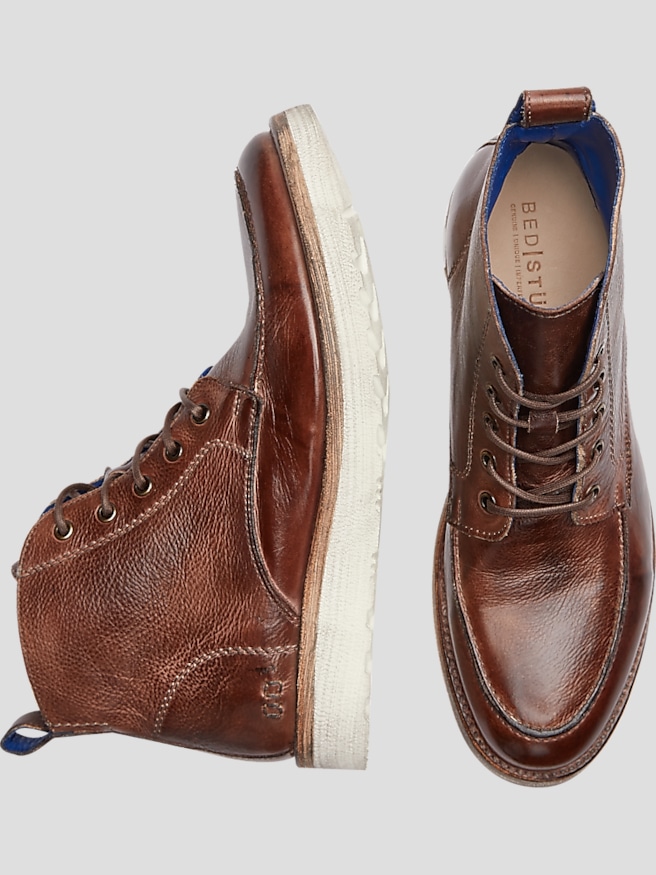
Dark brown boots bring depth to a wardrobe without demanding much attention. Their rich, earthy color sits comfortably beside indigo denim, charcoal trousers, olive chinos, and navy tailoring, making them a useful foundation for outfits that move between casual and more polished settings. In men’s footwear, common shapes include Chelsea boots with elastic side panels, lace-up boots with adjustable closures, and chukka boots with a low ankle profile and a small number of eyelets. Each creates a distinct impression: a slim Chelsea boot looks clean beneath tapered trousers, while a substantial lace-up adds visual weight to straight-leg jeans and a textured sweater. Smooth leather has a more refined surface that can complement a sport coat or an understated evening outfit. Suede brings a soft, matte texture that feels especially natural with corduroy, brushed cotton, and heavier knitwear during the cooler months. Dark chocolate and espresso shades offer a quieter contrast than lighter brown footwear, though the undertone matters too. A reddish brown adds warmth beside blue fabrics, while a cooler, nearly black brown blends more subtly with gray. For a business-casual office, a streamlined toe, discreet stitching, and a low-profile sole tend to feel more polished than pronounced lugs or bulky seams. For a weekend lunch or a relaxed gathering, that heavier construction can look right at home with dark jeans and an overshirt. The trouser opening also shapes the overall effect: fabric should fall comfortably over the shaft rather than catch on its top edge or gather heavily above the foot. Those drawn to the character of leather can also explore Brown Leather Boots for a broader look at the color family. Across these silhouettes, dark brown remains versatile because it provides enough definition to anchor an outfit while retaining the warmth and texture associated with leather footwear.
Material and construction influence how dark brown boots feel throughout the day, how they respond to wear, and where they work best. Full-grain leather retains the hide’s natural grain and can develop a distinctive patina with appropriate care. Top-grain leather has been refined for a more uniform surface, though performance depends on the hide, finish, and overall construction rather than the label alone. Suede has a raised nap that gives the color a soft, shaded appearance; its texture can shift slightly as the fibers move, adding depth even to a simple boot shape. Leather linings can help manage moisture, while textile linings vary in breathability and warmth. Underfoot, cushioning may soften contact with hard floors, but support and a stable fit matter just as much during a long commute or an afternoon spent standing. Rubber outsoles often provide useful flexibility and grip, with tread design and surface conditions affecting traction. Leather soles offer a traditional, streamlined profile but require extra caution on wet or slick pavement. A deep tread does not automatically make a boot suitable for ice, and a substantial leather upper does not establish waterproof protection. Weather resistance should be supported by the footwear’s stated features. Welted construction can make resoling possible, depending on the design and condition, while some cemented constructions offer a lighter, more flexible feel. Fit deserves equal attention: toes need room to move without sliding forward, the heel should feel secure without rubbing, and the widest part of the foot should align with the boot’s forefoot. Lace-up styles allow adjustments across the instep; Chelsea boots rely more heavily on the shape of the last and the hold around the ankle. Trying boots with the socks intended for regular wear gives a more useful sense of space than testing them with unusually thin socks. Leather may soften and ease slightly with use, but a break-in period should not be expected to correct cramped toes, sharp pressure, or the wrong length.
Regular care helps dark brown boots retain their color, shape, and finish through repeated wear. On smooth leather, removing surface dust with a soft brush or cloth keeps grit from building up around creases and seams. Conditioner used sparingly and according to the material’s care directions can help prevent dryness, while a compatible cream polish can refresh color and soften the appearance of minor scuffs. Testing any treatment on an inconspicuous area matters, especially with darker finishes that may react unevenly or deepen in tone. Suede needs a separate routine built around a suede brush and products formulated for its nap; ordinary leather cream can flatten the texture or leave marks. Protective treatments may improve resistance to light moisture, but they do not turn everyday boots into waterproof footwear. After exposure to rain, boots should dry naturally away from radiators and other direct heat. Promptly addressing road salt with a cleaner appropriate for the material helps limit lingering white marks and damage to the finish. Cedar shoe trees can help absorb residual moisture and support the shape between wears, and giving boots time to dry fully inside makes rotation worthwhile. Paying attention to worn heel edges, thinning soles, loose stitching, and persistent changes in comfort can also make timely repairs possible before a small issue becomes more extensive. These practical habits are especially useful for anyone whose day includes both indoor settings and stretches on the sidewalk. A polished pair can suit a relaxed office, dinner out, or a family gathering, while a more substantial profile works well for everyday casual dressing. Dark brown boots can also make a thoughtful gift for someone who regularly wears denim, chinos, or textured tailoring, provided sizing and preferred shape are understood. The strongest choice reflects the wearer’s routine: enough refinement for the places they go, enough comfort for the time spent on their feet, and materials they are comfortable maintaining. With those elements in balance, the appeal extends well beyond a single outfit or season.