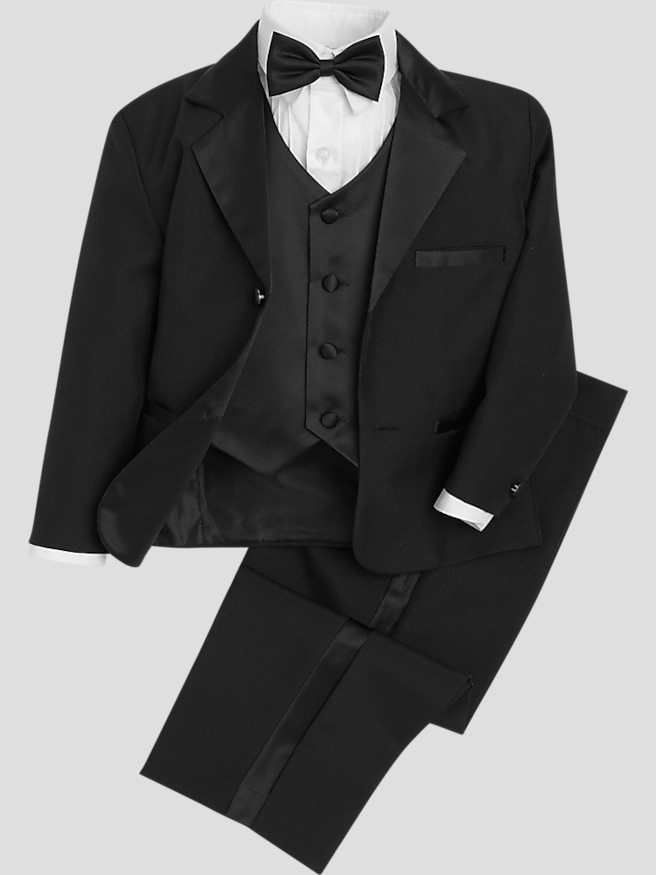
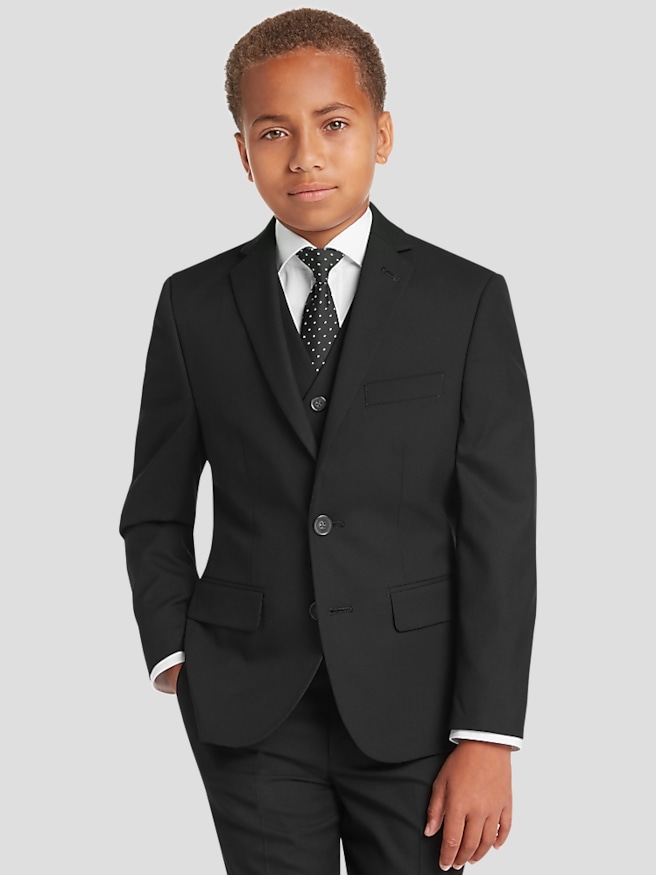
Boys' size 8 suits bring a coordinated, dressed-up look to weddings, first communions, school portraits, recitals, and other occasions that call for more than everyday clothes. A matching jacket and dress pants create a consistent foundation, while a vest can add another layer of formality when the occasion calls for it. Size 8 is a garment size rather than a reliable age recommendation: two children of the same age can need very different proportions through the shoulders, chest, waist, and legs. Height, chest, waist, and inseam measurements provide a more useful starting point than age alone, and the size chart associated with a garment matters because measurements can vary by maker and cut. Regular, slim, and husky sizing describe different proportions, not simply longer or shorter versions of the same suit. A comfortable jacket rests close to the shoulders without extending far beyond them, and the front should button without pulling into an X across the middle. Sleeves should leave the hands free, while pants should sit securely at the waist without relying on a tightly cinched belt. These details become especially noticeable during a ceremony, when a child may need to sit, stand, walk down an aisle, and pose for photographs in the same outfit. A little ease supports movement, but excessive extra fabric can make a jacket look oversized and cause pants to bunch over the shoes. Navy, charcoal, medium gray, and black each offer a distinct starting point for occasion dressing, with the event's dress expectations helping determine the most appropriate choice. Navy and gray work naturally across many daytime and evening settings; black creates a more formal impression. Subtle patterns can add texture without dominating a portrait, while a solid suit makes coordination with a shirt and tie straightforward. For a child participating in a wedding party, the requested color and level of formality take priority over a general preference, especially when several people will appear together in photographs.
Fabric and construction influence how a size 8 suit feels throughout an event and how well it holds its shape afterward. Wool is valued for its drape and natural resilience, while wool blends can combine those qualities with the characteristics of other fibers. Polyester blends are often chosen for durability and resistance to wrinkling, and cotton offers a different texture that can suit less formal celebrations. A small amount of elastane can provide stretch, although comfort also depends on the weave, lining, and overall cut. Fiber content alone does not tell the whole story: a smooth lining, neatly finished seams, and a waistband that stays comfortable while seated can matter just as much to a child wearing a suit for several hours. An adjustable waistband, when included, can help refine the waist fit without changing the proportions of the entire pair of pants. It does not replace the need for enough room through the seat and thighs. Similarly, stretch fabric should allow natural movement rather than compensate for a jacket that is too small. The difference shows up in ordinary moments, such as reaching across a table, climbing steps to a stage, or bending down to pick up a dropped program. Durability comes from appropriate fit as well as fabric and stitching, since strained seams and dragging hems tend to show wear sooner. Pants should clear the floor, and a jacket should allow comfortable movement without persistent pulling across the back. Care requirements vary, so the garment's care label remains the authority on cleaning, pressing, and whether washing is appropriate. A shaped hanger supports the jacket between wearings, and hanging pants neatly helps limit deep creases. Prompt attention to spills, using the recommended care method, can help protect the fabric's appearance. Before a special occasion, checking the hem, buttons, and pockets leaves time to address small issues. Professional alterations may improve sleeve or pant length when the garment's construction allows, but they cannot reliably correct every mismatch in shoulder width or overall size.
A boys' size 8 suit also provides a flexible base for finishing details that reflect the occasion without overwhelming the child wearing it. A white dress shirt creates a crisp contrast with darker tailoring, while a pale blue shirt offers a softer combination with navy or gray. The shirt collar should sit comfortably at the neck, especially when a tie is part of the outfit, and the sleeves should allow easy bending at the elbow. A necktie or bow tie adds personality through color and pattern; smaller-scale designs often keep the proportions balanced on a child. Dress shoes should feel secure rather than stiff or loose, with enough time before the event to confirm that walking and standing are comfortable. Coordinated socks and a simple belt, when belt loops are present, help the outfit look finished without making it complicated. For portraits, understated accessories keep attention on the child's face; for a wedding, a tie can echo the celebration's colors while leaving the suit itself versatile for another occasion. A vest can maintain a dressed-up appearance if the jacket comes off where the setting permits. Beyond a single event, a suit may serve for an awards ceremony, a family celebration, or a formal school function, provided the fit is checked again before each wearing. Children can outgrow sleeve and pant lengths quickly, and extra room at the waist does not necessarily mean the jacket still fits. Families coordinating siblings may also compare Boys Suits Size 12, using each child's measurements rather than assuming the same cut will fit everyone alike. As a gift from a grandparent or another relative, a suit is especially thoughtful when the recipient's measurements and upcoming occasion are known. A well-proportioned fit, comfortable fabric, and manageable care requirements make the outfit easier to wear again. The result is polished clothing that supports the occasion while still allowing a child to move, participate, and feel like himself.