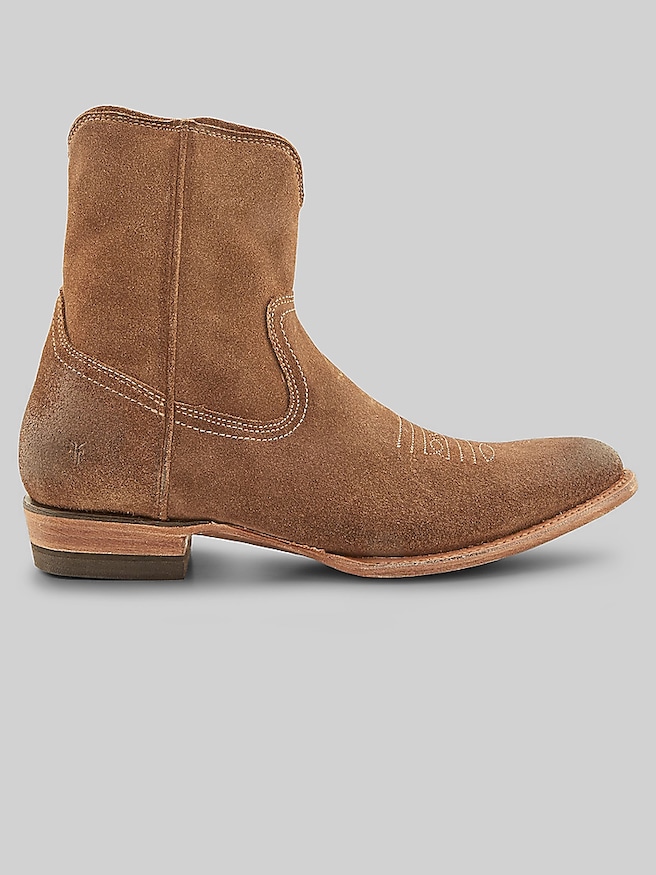
Boot styles bring a distinctive sense of proportion to an outfit, whether the look centers on straight-leg jeans, pressed chinos, or tailored trousers. The higher profile gives footwear a more substantial presence than a low-cut shoe, while the shape of the toe, the height of the shaft, and the thickness of the sole determine how polished or relaxed that presence feels. Chelsea boots have an uncluttered silhouette, with elastic side panels that keep the upper free of laces and allow the boot to pull on easily. Their clean lines sit comfortably alongside slim or straight trousers, especially when the hem falls over the top without bunching. Chukka boots have a shorter shaft and typically just a few pairs of eyelets, giving them an easygoing character that works with denim, cotton twill, and unstructured tailoring. Lace-up dress boots offer more adjustment through the instep and ankle, with sleeker versions complementing wool trousers and a sport coat. More substantial lace-up shapes bring visual weight to heavier fabrics and relaxed cuts. Color contributes just as much to the overall effect: black tends to look crisp and understated, deep brown adds richness, and lighter brown shades make stitching and texture more noticeable. For outfits built around charcoal, navy, black, or dark denim, dark boots provide a grounded finishing touch without drawing attention away from the rest of the clothing. A tapered toe can extend the line of a trouser leg, while a rounded toe gives the same outfit a less formal feel. Neither shape belongs to only one setting; the finish and sole matter, too. A smooth leather boot with a restrained heel can look at home at a business dinner, while a suede ankle boot often suits a casual office or an evening out. The strongest combinations balance the boot’s proportions with the clothing above it, rather than relying on a style name alone.
Materials and construction explain much of the difference in how boots feel, age, and fit into everyday routines. Smooth leather can develop creases and subtle tonal variation with wear, giving a well-maintained pair individual character rather than a permanently untouched appearance. Full-grain leather retains the hide’s natural surface, although the quality of the leather, its thickness, and its finishing all influence performance. Suede has a soft, napped surface that absorbs light instead of reflecting it, making the same basic shape appear more relaxed. Nubuck offers another softly textured option, with a fine nap on the outer surface of the hide. Synthetic uppers vary widely in flexibility and breathability, so the material description matters more than appearance alone. Inside the boot, linings, seams, and footbeds affect comfort during long stretches of standing or walking. A smooth lining can reduce friction, while cushioning changes how firmly the foot feels connected to the ground. Softness by itself does not guarantee support; a stable heel and a shape that suits the foot can matter just as much. Rubber soles often provide flexibility and grip, though traction depends on the compound, tread, and walking surface. Leather soles have a more traditional dress profile and a distinct feel underfoot. A thick lug sole adds both visual bulk and a pronounced tread, but that appearance does not establish that a boot is suitable for a jobsite or technical activity. Protective work requires footwear with the appropriate verified features for the task. Construction also affects long-term upkeep. Some welted or stitched designs may accommodate resoling, depending on how they are made and their condition, while other constructions are not intended for that kind of repair. Reinforced stitching, securely attached heels, and carefully finished edges are useful details to consider alongside the upper material. For someone who walks between appointments, spends hours on their feet, or wears boots several times a week, these less visible elements can shape the experience more than decorative details.
Fit brings all of those design choices into focus. A boot should hold the heel securely without squeezing the forefoot, and the toes need room to lie naturally rather than press against the front or curl inward. Slight heel movement can occur in some new pull-on styles, but pronounced slipping or a foot that slides forward suggests a mismatch in size or shape. Lace-up boots offer adjustment across the instep, while pull-on designs rely more heavily on how closely their fixed shape matches the foot. Trying boots with the socks intended for regular wear gives a more useful impression than testing them with an unusually thin or thick pair. Any orthotic or replacement insole also takes up interior space and can change the fit. Leather may soften with use, but a break-in period should not be expected to correct cramped toes, sharp pressure, or persistent rubbing. Trouser length deserves a little attention as well: a hem that catches on the shaft can interrupt an otherwise clean line, while excessive fabric can pile up over the vamp. Straight cuts often settle neatly over a substantial boot; narrower openings usually work more easily with a close-fitting ankle. Once the fit and proportions are right, consistent care helps preserve both appearance and useful life. Loose dirt can be removed with a soft brush or cloth, and smooth leather benefits from a suitable conditioner used according to the material’s care instructions. Polish can refresh the finish where appropriate, but suede and nubuck need products and tools intended for their textured surfaces. Allowing boots to dry naturally away from direct heat, giving them time to air between wears, and using properly sized shoe trees can help maintain their shape. Boots can also make a thoughtful gift for someone whose size, preferred silhouette, and daily routine are familiar. A recipient who dresses for client meetings may appreciate a refined profile, while someone who lives in jeans may favor a softer texture or sturdier shape. Personal habits, dependable fit, and manageable care are what turn a good-looking pair into footwear that earns repeated wear.