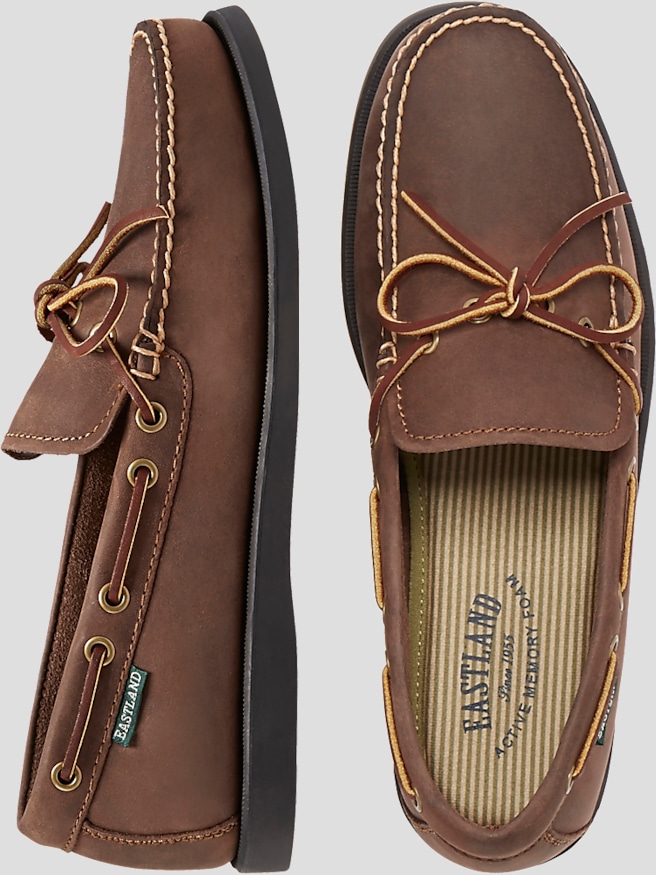
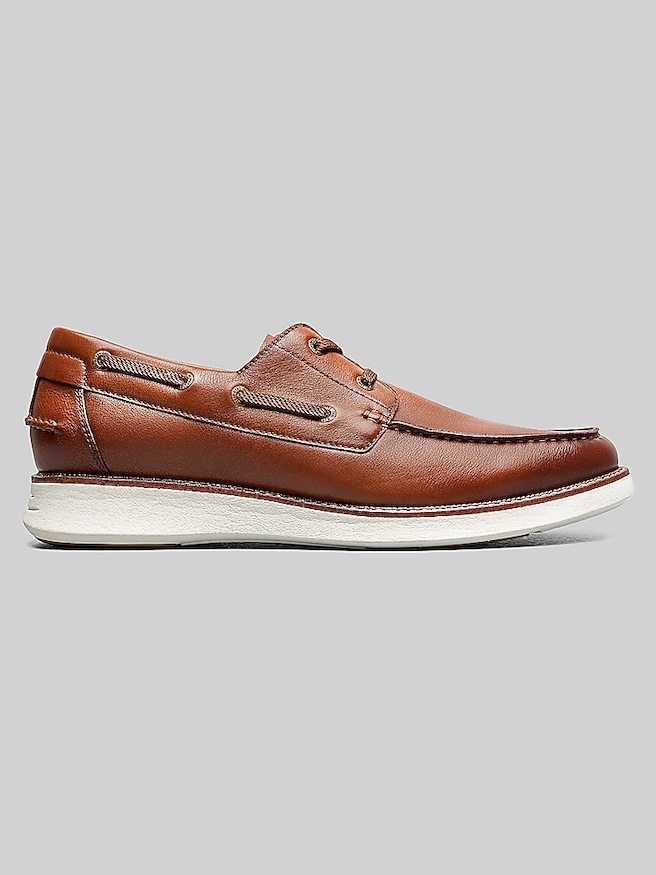
Boat shoes are low-cut casual shoes traditionally made with leather or canvas uppers, moccasin-style toe stitching, and rubber outsoles designed to provide traction on boat decks. Often called deck shoes, they carry recognizable details that serve a purpose beyond their nautical appearance. Many have a 360-degree lacing system, with laces threaded around the collar as well as across the instep, allowing the upper to adjust more closely around the foot. The raised seam around the toe gives the shoe its distinctive shape, while flexible construction can make it comfortable for everyday movement. Traditional deck-oriented designs use non-marking rubber soles with siping: narrow cuts in the rubber that help disperse water and improve contact with a surface. Neither siping nor a non-marking sole makes footwear slip-proof, and traction depends on the outsole design, its condition, and the surface underfoot. For actual boating, those functional details matter more than a nautical silhouette alone. Away from the dock, men's boat shoes occupy a useful space between athletic sneakers and dressier leather footwear. Their low profile works with straight-leg chinos, neatly hemmed casual pants, and shorts without adding much visual weight to an outfit. A polo and chinos give them an easy, put-together setting for lunch with friends, while a casual button-down and dark denim create a similarly relaxed combination for a neighborhood gathering. They can also work in an office where the dress code allows casual footwear, though a formal suit or black-tie event calls for a different shoe. The stitched toe and visible laces bring texture to simple clothing, so an outfit does not need extra nautical details to feel complete. Trouser hems that meet the top of the shoe, rather than pooling over it, keep that shape visible. Boat shoes are most at home in settings where comfort, practical construction, and a relaxed appearance matter equally, whether that means an afternoon near the marina or a day spent moving between everyday errands and informal plans.
Material changes both the character of boat shoes and the attention they need over time. Smooth leather offers a more structured appearance and can develop creases and a patina with wear; its finish determines which cleaners and conditioners are appropriate. Supple leather may conform to the foot, but that gradual softening should not be mistaken for a solution to an uncomfortable fit. Suede has a soft, textured surface that pairs naturally with casual clothing, although it needs suede-specific cleaning methods and more care around spills. Canvas generally feels lighter and less structured, with a distinctly casual look, but cleaning instructions vary with the fabric, lining, and adhesives used in construction. Color also influences how easily a pair fits into an existing wardrobe. The warm, understated look of tan leather deck shoes works naturally with navy chinos, stone-colored pants, and medium-wash denim. Darker leather creates a quieter contrast with dark trousers, while lighter tones make the toe stitching and lacing more noticeable. Fit deserves at least as much attention as color. A boat shoe should hold the heel securely without pinching, allow the toes to lie naturally, and feel comfortable across the widest part of the foot. Some flexibility at the forefoot is useful, but persistent heel lifting, pressure over the instep, or toes touching the front suggests a mismatch in size or shape. The collar laces can fine-tune the fit on designs that use functional wraparound lacing, yet they cannot correct a shoe that is too short or too narrow. Trying shoes with the socks intended for regular wear gives a more realistic sense of space inside. Thin socks or low-profile liners can reduce direct friction and absorb moisture without changing the shoe's open, low-cut appearance. Underfoot comfort also varies: some boat shoes emphasize flexible ground contact, while others include more cushioning or a contoured footbed. For long stretches of walking or standing, the right combination of support, secure fit, and sole flexibility matters more than appearance alone.
Regular care helps boat shoes retain their shape and keeps the details that make them useful in good working condition. Dust and grit can collect around the raised toe seam, lace openings, and outsole grooves, so a soft brush is helpful for routine cleaning. Smooth leather can usually be wiped gently with a soft cloth, followed by a leather care product suited to its finish and used according to the manufacturer's directions. Suede calls for a dedicated brush and appropriate spot treatment rather than ordinary leather polish, which can alter its texture. Canvas should be cleaned according to its care instructions; a machine wash is not automatically suitable simply because the upper is fabric. If shoes become damp, letting them air-dry away from direct heat helps protect the uppers, adhesives, and shape. Removing removable insoles, loosening the laces, and using plain paper to support the interior can help, provided the care instructions allow it. Alternating between pairs gives the inside time to dry thoroughly between wears, particularly when shoes are worn for extended periods. Durability comes from the complete construction, not just the thickness of the leather. Secure stitching, intact lace eyelets, a well-attached outsole, and an upper that flexes without sharp pressure points all contribute to useful wear. Outsole grooves should be checked periodically for trapped debris and wear, especially when the shoes are used on a boat. Flattened tread, cracked rubber, loose seams, and badly worn laces deserve attention before the next outing. Boat shoes can also make a thoughtful gift for someone who favors chinos, polos, and relaxed button-downs or enjoys time around the water. A known shoe size is a starting point, but preferred width, sock habits, and the shape of a comfortable existing pair help make the choice more personal. A neutral color that complements the recipient's everyday pants is often more useful than an unfamiliar shade. For a weekend visit or a casual trip, their compact profile and ability to work with several outfits make boat shoes a practical footwear choice without turning every occasion into a boating occasion.