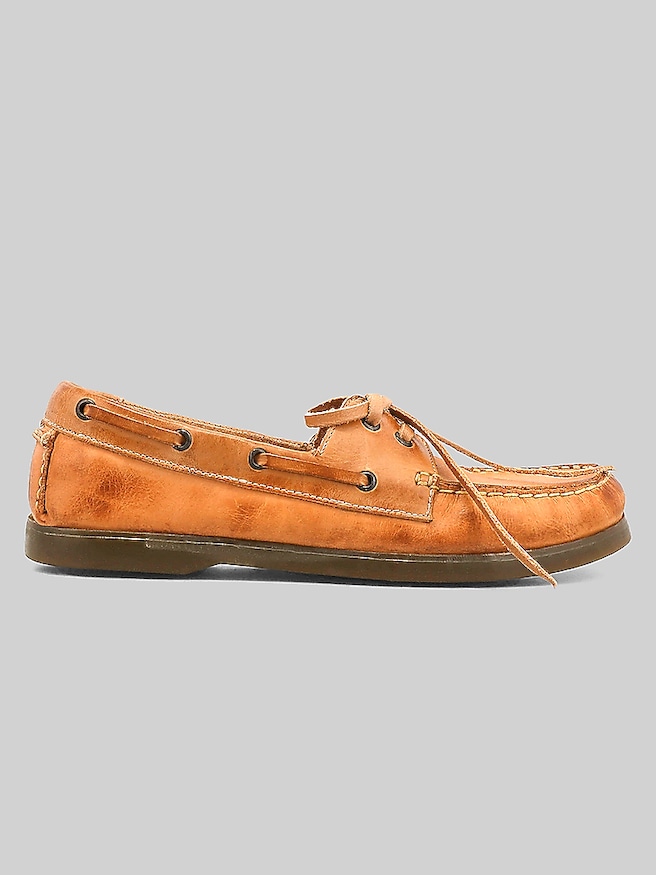
Tan leather deck shoes are low-profile casual shoes that combine leather uppers with a relaxed, nautical-inspired shape. Often called boat shoes, they are recognizable by details such as moccasin-style toe stitching, short lacing sections, and laces that may continue around the sides of the shoe. Their appeal extends well beyond the dock: the clean profile sits comfortably between a sneaker and a loafer, making them useful for everyday outfits that call for something polished but informal. Tan leather adds warmth without the visual weight of black or deep brown, and its natural variations give the shoes character. Shades can range from pale sand and honey to richer caramel tones, each pairing easily with familiar wardrobe colors such as navy, olive, cream, and medium-blue denim. The leather itself plays a large part in how a deck shoe looks and feels. Full-grain leather retains the hide’s natural surface and can develop a distinctive patina with wear, while other finished leathers may offer a more consistent appearance. Smooth leather has a clean, understated finish; pebbled leather introduces texture that can make small surface marks less noticeable. Softer uppers tend to feel more flexible from the beginning, while firmer leather may need some wear before it follows the shape of the foot. Neither softness nor thickness alone determines quality. Even stitching, neatly finished edges, secure eyelets, and a well-attached outsole all contribute to a shoe’s construction. Raised stitching around the toe emphasizes the traditional boat-shoe shape, while understated seams create a quieter look. Lace color, sole color, and the amount of visible stitching also influence the overall impression. A light sole creates a stronger nautical contrast, whereas a tonal sole keeps the profile more subdued. These distinctions make tan leather deck shoes a versatile category rather than a single, uniform style.
Fit and underfoot construction determine whether that easygoing appearance translates into comfortable everyday wear. A well-fitting deck shoe should hold the heel securely without pinching it, leave room for the toes to move naturally, and feel supportive across the midfoot without squeezing the sides. Leather can soften and relax, but a shoe that presses hard against the toes or crowds the forefoot should not depend on stretching to become wearable. Length, width, and the shape of the toe box matter separately; moving up a size does not always solve a width issue and may leave too much movement at the heel. Laces help refine the fit, particularly around the instep, although they cannot compensate for an unsuitable overall shape. Trying shoes with the socks intended for regular wear gives a more useful impression of fit. No-show socks preserve the low-cut silhouette while adding a layer between the foot and the lining, and lightweight visible socks can work with longer pants when the colors feel intentional. Inside the shoe, cushioning, lining materials, and footbed shape influence comfort as much as the softness of the upper. A padded footbed may reduce the feeling of hard surfaces underfoot, but plush cushioning is not the same as structured arch support. Removable footbeds, when part of the construction, can make cleaning easier and may accommodate an appropriate insert. Outsoles deserve equal attention. Traditional deck-shoe designs often use rubber with fine grooves, called siping, intended to improve traction on certain surfaces. Actual grip depends on the sole compound, tread condition, and surface underfoot; a nautical appearance does not establish slip resistance or suitability for boating. Nonmarking construction is also a specific feature rather than something to assume from a pale sole. For errands, casual dinners, travel days, and relaxed office settings, flexibility and dependable walking comfort are especially useful. For time aboard a boat, stated performance features matter more than styling alone.
Tan leather deck shoes work particularly well with clothes that share their relaxed structure. Navy chinos and a tucked or untucked polo create a neat everyday combination, while straight-leg denim and an Oxford shirt give the shoes a grounded, casual setting. With shorts, a clean hem and a simple shirt keep the proportions balanced without turning the nautical influence into a costume. Pants that meet the top of the shoe with little bunching allow the low profile and toe stitching to remain visible. Tan does not need an exact color match elsewhere in the outfit: a brown leather belt in a complementary tone is often enough to connect the look. These shoes suit casual gatherings, sightseeing, and workplaces where chinos are appropriate, but they are not a substitute for dress shoes when an invitation calls for formal attire. For a higher-cut alternative with a similarly versatile color palette, Tan Leather Chukka Boots offer another way to pair leather footwear with denim and casual trousers. With either shape, consistent care helps preserve the leather’s appearance and flexibility. Surface dust and grit can be removed with a soft brush or cloth before they settle around stitching and seams. Smooth leather generally benefits from a compatible cleaner and occasional conditioning, following the care directions for its finish; suede and nubuck require products intended for their textured surfaces. Testing any treatment on an inconspicuous area helps avoid unwanted darkening, which can be especially noticeable on lighter tan leather. If the shoes become damp, gentle air-drying away from direct heat helps protect their shape and finish. Leather uppers should not be assumed to be waterproof, even when the design has boating roots. Allowing shoes to dry fully between wears, loosening laces before taking them off, and keeping sole grooves clear of debris are small habits that support longer use. As a birthday or graduation gift, tan leather deck shoes can suit someone who regularly wears chinos, denim, or shorts. Knowing the recipient’s usual width, preferred sock choice, and comfort needs makes that gift more personal than choosing by appearance alone.