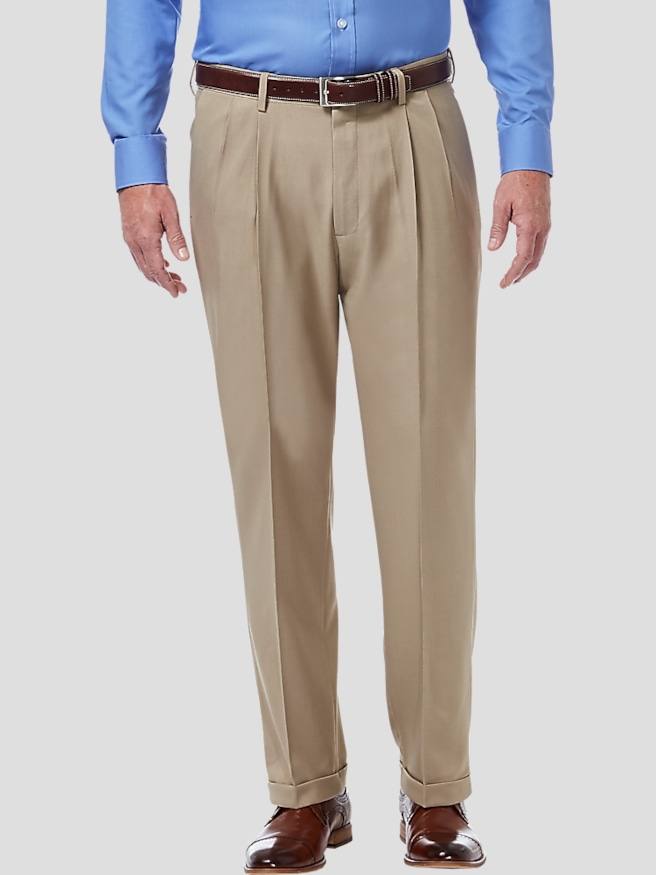
Blue office trousers are workwear pants in shades such as navy, slate blue, and medium blue, designed to bring a polished appearance to professional settings. Their appeal comes from a useful balance: blue coordinates easily with familiar office colors while offering more visual depth than a strictly black-and-white outfit. Deep navy has a restrained look suited to client meetings, presentations, and workplaces where tailored clothing is expected. Medium blue feels a little more expressive without stepping outside a professional wardrobe, while muted slate tones sit comfortably alongside gray jackets and neutral knitwear. The fabric makes as much difference as the color. Wool trousers generally have a smooth drape and can recover well from ordinary creasing, making them a practical choice for a day that moves between a desk, a conference room, and an after-work appointment. Wool blends may add resilience or stretch, depending on their composition. Cotton twill brings a more defined texture and a slightly less formal character, particularly when paired with an Oxford shirt or an unstructured blazer. Some stretch-woven fabrics allow easier movement, though the amount of give and the way the fabric returns to shape depend on the construction. Fabric weight, weave, and finishing also affect how trousers hang; two pairs with similar fiber labels can look noticeably different when worn. A matte surface usually coordinates easily with everyday office clothing, while a smoother finish can create a dressier impression. Fine patterns and subtle texture give blue fabric dimension without demanding a patterned shirt or a bold jacket. For men building a dependable work wardrobe, blue provides a foundation that can support both more formal combinations and relaxed office outfits. A white shirt and brown leather shoes create a clear, familiar combination, while pale blue shirting, a charcoal jacket, or a cream knit adds variety without making the outfit feel busy. The result can be understated enough for routine desk work and considered enough for an important introduction.
The fit of blue office trousers shapes both their appearance and their usefulness over a full workday. A waistband should sit securely at the intended rise without needing a belt pulled tight to hold it in place. When the waist is too loose, excess fabric can gather beneath the belt; when it is too snug, the pockets may pull open and the front can develop horizontal tension lines. Room through the seat and thighs matters just as much, especially for a commute, extended sitting, or frequent movement between workspaces. Slim-fit trousers generally follow the leg more closely, straight fits maintain a more consistent line, and fuller cuts allow additional room through the upper leg. These labels are starting points rather than universal measurements, since the actual shape varies by design. A tapered leg can create a clean outline without requiring a tight fit through the thigh, while a straighter leg offers a balanced proportion with more substantial shoes. Flat-front trousers have a simple appearance that works across many office dress codes. Pleated trousers provide another option, with folds that can allow room through the front when the cut and size are right. The pleats should lie neatly while standing rather than spreading open under tension. Rise affects the overall silhouette, too: a higher rise can meet a tucked shirt cleanly, while a lower rise changes where the waistband sits and how the shirt stays in place. Length finishes the picture. A slight break, where the hem rests gently on the shoe, has a traditional office appearance; little or no break creates a sharper outline, particularly with a narrower leg. Excess fabric pooling around the ankles can obscure an otherwise good fit. Alterations may refine the waist or hem, but the underlying cut still needs to provide comfortable space through the seat and legs. Sitting, walking, and bending should feel natural, with the trousers returning to a tidy line when standing.
Everyday durability depends on fabric construction, fit, and care working together. Trousers that pull across the seat or strain at the thighs place extra stress on seams and high-friction areas, while an appropriate fit gives the fabric room to move. Secure stitching, neatly finished seams, and a waistband that holds its shape are useful construction details, although no single feature guarantees longevity. Care instructions remain the best starting point because blue office trousers can require very different treatment depending on their fibers, lining, and finish. A washable cotton blend should not automatically be handled like a lined wool trouser, and stretch fabrics may have specific limits on heat. Washing only as directed, avoiding unnecessary heat, and attending to small stains promptly can help preserve the appearance of the fabric. When ironing is permitted, the recommended setting and a pressing cloth can help reduce the risk of shine on dark blue surfaces. Hanging trousers neatly after wear helps limit avoidable creases, and allowing space between garments prevents a carefully pressed leg from being crushed in a crowded closet. Alternating pairs can also reduce repeated wear at the pockets, knees, and seat. These practical details matter for trousers expected to handle regular commuting, long meetings, business travel, and evenings that continue beyond the office. Blue is especially useful when an outfit needs to cover several settings without a complete change: a tailored jacket adds structure for a presentation, while a fine-gauge sweater creates a less formal look for an internal meeting. Belts and shoes in related tones can bring the combination together without needing to match exactly. For a broader look at workplace-ready styles, explore Best Pants for Office Men. Blue office trousers can also make a thoughtful gift for someone starting a job or updating a professional wardrobe, particularly when the preferred waist size, inseam, and fit are already known. Their lasting usefulness comes from getting the fundamentals right: a suitable fabric, comfortable proportions, straightforward care, and a shade that works with clothing already in regular rotation.