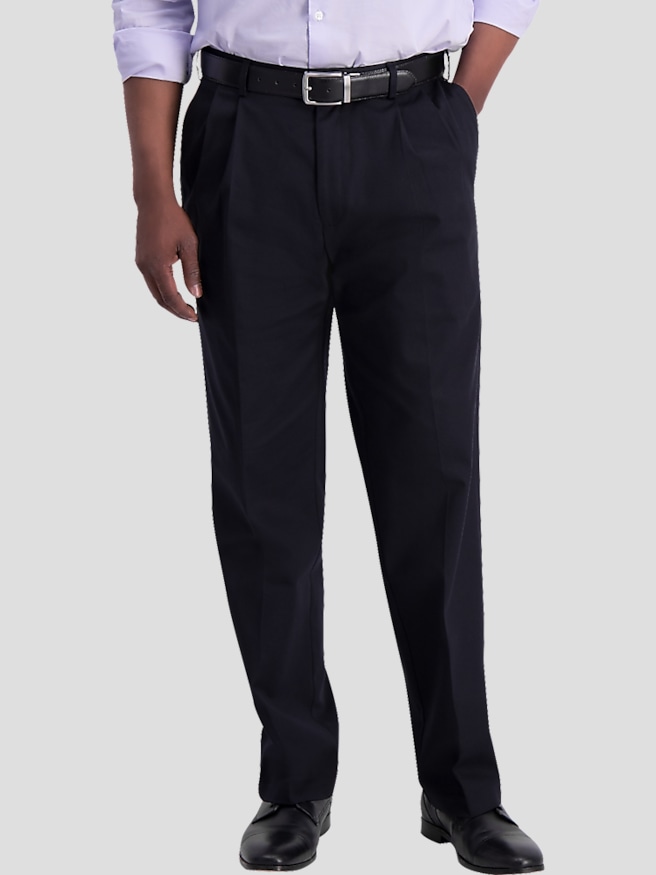
Black trousers are a versatile foundation for a men’s wardrobe, with a neutral color that works for business settings, celebrations, dinners, and polished everyday dressing. Their character comes from the fabric and cut: a smooth, pressed pair reads more formally than textured cotton twill, while a relaxed leg creates a softer silhouette than a closely tapered one. Black dress pants typically have details such as a defined crease, discreet pockets, and a clean waistband that sit comfortably alongside dress shirts and tailored jackets. More casual black pants often emphasize visible stitching, a washed finish, or an easy shape suited to knit shirts and understated sneakers. That range makes black trousers useful for someone building a first professional wardrobe, refreshing work attire, or choosing an outfit for an evening event. A white shirt and black trousers create crisp contrast, while a light blue shirt softens the combination without losing its professional appearance. Burgundy, olive, gray, and cream also complement black, offering variety without requiring a complicated color palette. For a presentation or business dinner, a textured gray jacket can give the outfit depth; for a restaurant outing, a fine-gauge polo and loafers keep the same foundation relaxed but composed. A black jacket requires more attention, since two black fabrics may have noticeably distinct undertones, textures, or levels of sheen. Coordinated suit separates are designed to work together, whereas unrelated black pieces do not necessarily create the appearance of a matching suit. Occasion matters as much as color: black trousers can support many dress codes, but they do not automatically replace formal attire when an invitation specifies black tie. Shoes, shirt choice, and tailoring all affect the finished impression. The strongest combinations let the trousers provide a quiet base, with a smooth line through the leg and enough structure to make the outfit feel intentional rather than overly assembled.
Fabric determines how black trousers drape, move, and hold up to regular use. Wool is valued for its resilience and ability to fall in a clean line, making it a familiar choice for tailored clothing. The finish can be smooth and refined or more textured, so the fiber name alone does not tell the whole story. For a tailored look with fluid drape, black wool trousers offer a focused category to consider alongside the broader range of black pants. Cotton twill usually has a more substantial, tactile surface, giving casual trousers enough body to pair naturally with an Oxford shirt or a knit top. Blended fabrics can balance softness, shape retention, and ease of care, although performance depends on the full composition and construction. A small amount of elastane may provide useful give when sitting at a desk, stepping into a car, or walking between appointments. Stretch does not replace a proper fit, and a fabric that feels flexible should still recover rather than remain stretched at the knees or seat. Weight, weave, and finish also affect opacity, wrinkle behavior, and the way a crease holds. A matte surface tends to blend easily into everyday outfits, while a subtle luster can make trousers appear dressier. Construction deserves equal attention: secure pocket openings, even stitching, a stable waistband, and neatly finished seams contribute to comfort and longevity. Pocket bags should lie flat instead of showing through or bunching against the thigh. Lining, when present, can help the upper leg move smoothly against the fabric, though its placement and extent vary. For frequent wear, durability is a combination of suitable material, sound construction, appropriate fit, and consistent care—not simply a heavier cloth. Someone who spends long stretches seated may value flexibility through the waist and thigh, while someone wearing trousers for ceremonies may place more emphasis on drape and crease definition. Black can look strikingly simple, but these quieter fabric details are what make one pair feel right for a particular routine.
Fit gives black trousers their final shape, and labels such as slim, straight, and classic describe only part of that relationship. Slim fits generally sit closer through the seat and thigh and narrow toward the ankle; straight fits maintain a more consistent line down the leg; classic fits usually allow more room through the upper portion. The best silhouette follows the body without pulling across the pockets, gripping the calves, or creating excess folds beneath the seat. Rise is equally important because it determines where the waistband sits and how comfortably the trousers accommodate sitting and movement. A waistband that stays level without relying on a tightly cinched belt helps shirts remain tucked and keeps the front of the trousers smooth. Flat-front styles offer an uncluttered appearance, while pleats can introduce useful room and a fuller drape when they lie closed at rest. Length changes the balance of the entire outfit. A slight break lets the hem rest lightly on the shoe, while little or no break produces a cleaner ankle line; fuller legs can often accommodate a bit more length without looking crowded. Checking the hem with the shoes intended for the outfit makes that proportion easier to judge. Alterations may refine the waist, length, or leg shape, subject to the garment’s construction and seam allowance. Once the fit is settled, care helps preserve both the dark color and the silhouette. The care label should govern washing, drying, pressing, or professional cleaning, since black trousers made from distinct fabrics can need very different treatment. For washable styles, turning them inside out and using the recommended wash settings can help limit surface abrasion and fading. Excessive heat can affect fibers and finishes, and direct ironing may leave shine on some dark fabrics; an appropriate pressing cloth can help protect the surface when ironing is permitted. Hanging trousers neatly, emptying pockets after wear, and addressing marks promptly reduce unnecessary strain and keep the line tidy. These practical qualities also make black trousers a thoughtful gift for a graduate or someone starting a new role, especially when their measurements and preferred fit are known. A comfortable, well-proportioned pair earns its place through repeated use, moving easily between meaningful occasions and ordinary days.