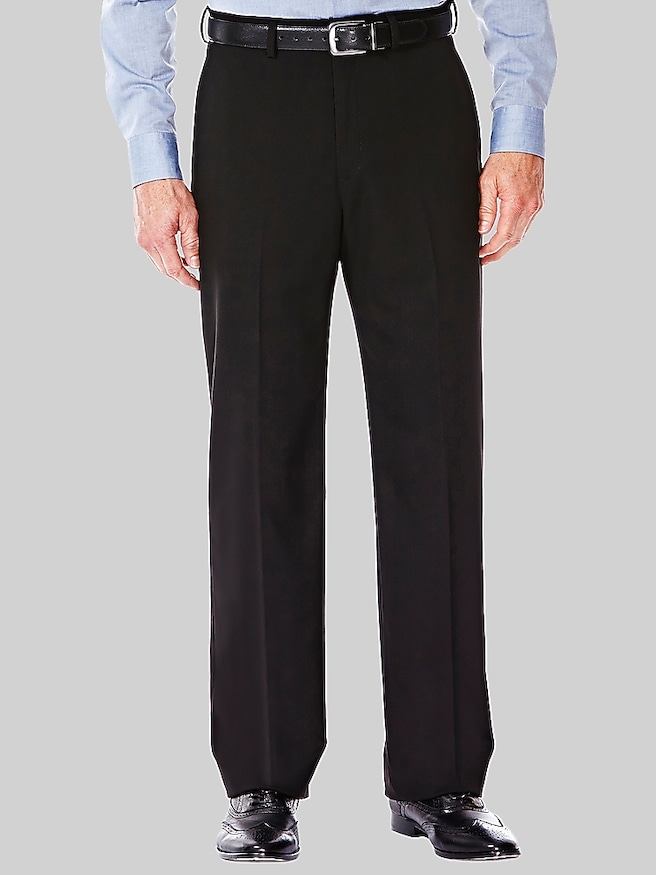
Black trousers for men bring a clean, grounded look to outfits that range from business attire to casual separates. Their versatility comes from the combination of a neutral color and a silhouette that can feel sharp without drawing attention away from the rest of an outfit. Black dress pants with a defined crease work naturally with a tucked-in shirt, leather shoes, and a sport coat, while softer cotton trousers can feel at home with a knit polo and understated sneakers. For an office presentation, a white or pale blue shirt creates clear contrast; for dinner, a fine-gauge sweater gives the same dark trousers a less formal character. Texture matters as much as color in these combinations. A matte trouser fabric balances a patterned jacket, while a subtly textured shirt keeps an all-black outfit from looking flat. Black also pairs comfortably with burgundy, olive, camel, and gray, making it useful for wardrobes built around a few dependable colors. The intended setting helps determine how dressy the trousers should be. Interviews, client meetings, and ceremonies generally call for a neat drape and restrained details, whereas a relaxed workplace or an evening with friends leaves more room for a fuller leg or an uncreased finish. For weddings, the invitation’s dress code takes priority: separate black trousers can suit some cocktail outfits, but a coordinated suit or tuxedo may be required for more formal occasions. A black jacket and black trousers are not automatically a matching suit, since differences in fabric, finish, and dye can become visible under bright lighting. Deliberate contrast often looks more convincing than an almost-match. Black trousers are especially useful for someone moving between professional and social settings, with a change of shirt or shoes shifting the overall impression. The most adaptable pair is not necessarily the narrowest or dressiest; it is the one whose fabric, proportions, and details make sense for the places it will be worn.
Fabric gives black trousers much of their character, influencing how they hang, how they feel against the skin, and how well they hold their shape. Wool is associated with tailored dress trousers because it can drape smoothly and retain a crisp crease, though the weight and weave make a noticeable difference. Fine, smooth wool has a refined appearance, while a more textured weave brings depth to an otherwise solid black surface. Wool blends may combine that tailored look with characteristics from other fibers, such as added strength or easier maintenance, depending on the composition and construction. Cotton tends to have a more matte, casual finish and a familiar feel, making it a natural choice for less formal trousers. Cotton twill’s diagonal weave gives the fabric texture, and its appearance can soften with repeated wear and washing. Synthetic fibers can contribute wrinkle resistance and shape retention, while a small amount of stretch may make sitting, walking, or climbing stairs more comfortable. Stretch is helpful, but it does not compensate for trousers that are too tight through the seat or thighs. Fabric descriptions are most useful when considered alongside the cut: a supple material may drape well in a wider leg, while a fabric with more structure can support a clean, tailored outline. Slim-fit trousers generally sit closer through the seat and thigh and narrow toward the ankle. Straight-leg trousers maintain a more consistent line below the knee, and relaxed fits allow additional room without needing to look oversized. A tailored fit typically aims for a balanced silhouette, although fit names are not standardized and measurements remain important. Flat-front trousers offer a smooth appearance across the front, while pleats provide extra fullness that can be helpful when sitting or moving. A pleat should rest neatly rather than pull open while standing. Rise also changes the feel and proportions of the outfit: a higher waistband can support a tucked-in shirt and a longer-looking leg line, while a lower rise sits farther down on the hips. Comfort and a clean drape should work together rather than compete.
Small construction and fit details become especially noticeable in a solid dark trouser. A comfortable waistband rests securely without digging in, and the fabric across the front should lie reasonably smooth rather than forming tight horizontal lines. Side pockets that flare outward can indicate insufficient room through the hips, while excess fabric beneath the seat may need a fit adjustment. Length affects the whole silhouette. A slight break creates a small fold where the hem meets the shoe; little or no break gives a cleaner ankle line, particularly with a tapered leg. Several folds above the shoes can obscure the shape of the trousers and leave the hem exposed to unnecessary wear. Alterations can refine the waist and length, although starting with enough room through the seat and thighs makes the finished result more comfortable. Durability depends on more than fabric thickness. Secure stitching, well-finished seams, stable pocket openings, and a smoothly operating closure all contribute to trousers that withstand regular use. Care should follow the garment label, since black trousers made from different fibers may require very different treatment. For washable fabrics, turning trousers inside out and using the recommended wash setting can help reduce surface abrasion; avoiding unnecessary heat can also help protect fit and color. Garments labeled for dry cleaning need that method rather than an assumed home-washing routine. Hanging trousers neatly after wear helps limit creasing, and a fabric brush or appropriate lint roller can remove the pale fibers that show readily against black. An iron used at the wrong temperature can leave shine, so any pressing should follow the label and use a pressing cloth when appropriate. Rotating pairs and keeping heavy objects out of pockets can reduce concentrated wear and distortion. As a gift, trousers are most practical when the recipient’s measurements, preferred rise, and usual fit are known. For a wardrobe that needs another neutral alongside black, Grey Trousers offer a softer contrast with dark shirts and jackets while keeping the same easy-to-coordinate character.