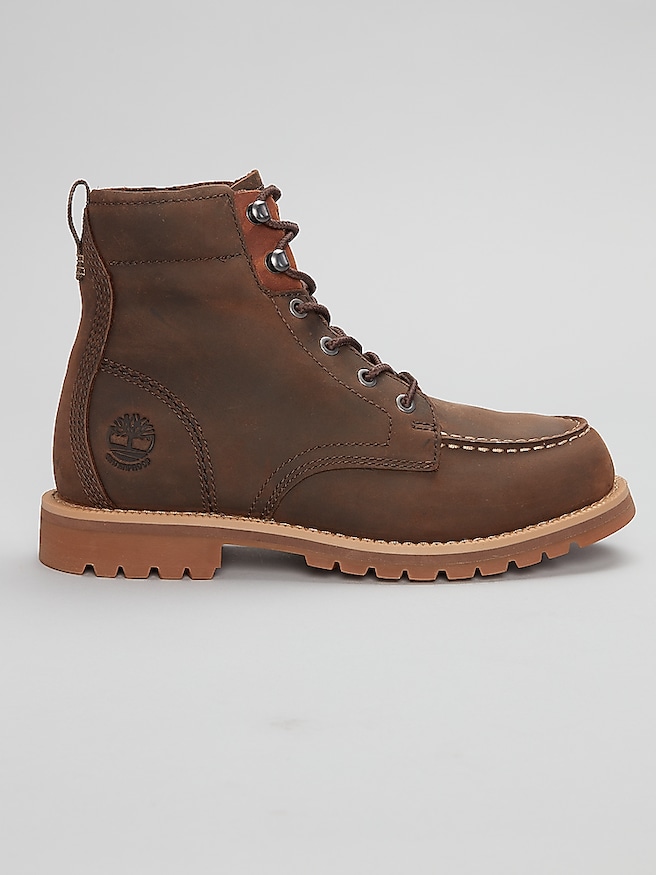
Stylish black boots bring a defined shape and a versatile finish to men’s wardrobes, pairing the substance of a boot with the polish of dark footwear. Their character comes from the details: a smooth leather upper, a tapered toe, a substantial sole, or the clean line of an ankle-height shaft. Chelsea boots have elastic side panels and a streamlined profile that works especially well with slim or straight-leg pants. Lace-up boots offer an adjustable closure and can look refined or rugged depending on their leather, stitching, and sole. Chukka boots typically sit lower at the ankle, with fewer eyelets and a relaxed shape that bridges tailored and casual clothing. Lug-sole boots create a stronger visual foundation, while a lower-profile outsole keeps the overall effect closer to a dress shoe. Black gives these distinct silhouettes a common advantage: it coordinates easily with charcoal, gray, navy, olive, and denim without adding another color to the outfit. With charcoal trousers and a fine-gauge knit, a polished black boot can feel appropriate for an office that allows business casual clothing. With dark jeans and an overshirt, a matte leather lace-up looks comfortable at a casual dinner or an evening concert. The relationship between the boot and the pant leg matters as much as the boot itself. A narrower shaft can sit neatly beneath tailored trousers, while a heavier sole generally looks more balanced with straight-leg denim or pants with a little more room through the hem. Excess fabric bunching over the ankle can obscure a sleek silhouette; an uninterrupted line from the knee to the shoe lets its shape show. Subtle details such as tonal stitching, understated hardware, and a low heel make black boots easier to wear across several settings. More pronounced tread, a broad toe, or visible welt stitching gives them a bolder presence. Neither approach needs an elaborate outfit: the right proportions allow the footwear to stand out without competing with everything above it.
Materials and construction influence how black boots look, feel, and hold up to repeated wear. Smooth leather can take on a soft sheen with conditioning and polishing, making it a natural companion to tailored pants and structured jackets. Full-grain leather retains the hide’s natural surface and may develop creasing and character over time, while other leather finishes offer a more uniform appearance. Suede has a softer, textured finish that makes black feel less severe, particularly beside brushed cotton, denim, or knitwear. Synthetic uppers vary considerably, so their material descriptions and care requirements deserve attention rather than assumptions based on appearance alone. Inside the boot, lining material, footbed design, and seam placement all affect comfort. A cushioned footbed may soften the feel underfoot, but cushioning cannot compensate for a shape that pinches the toes or presses across the instep. A sound fit leaves room for the toes to move while holding the foot securely enough to limit sliding. Lace-up styles allow adjustment across the top of the foot; pull-on styles depend more heavily on the match between the foot, heel, and shaft opening. A small amount of heel movement can occur in some new pull-on boots, but excessive slipping or persistent rubbing suggests that the fit needs another look. Trying boots with the socks intended for regular wear gives a more useful impression than judging them with an unusually thin or thick pair. Outsole construction also changes the experience: rubber can provide flexibility and cushioning, while leather soles offer a traditional appearance and a distinct feel underfoot. Deeper tread creates a more substantial profile, although traction depends on the compound and surface, not appearance alone. Stitched construction may allow certain boots to be resoled, depending on the design; bonded construction has its own care and repair considerations. For a gift, familiar sizing and the recipient’s usual footwear style are helpful starting points. Someone who wears streamlined dress shoes may appreciate an understated ankle boot, while a devoted denim wearer may gravitate toward a sturdier lace-up shape.
The lasting appeal of black boots depends partly on how easily they fit into an established routine. A pair worn for seated office work has a different job from one intended for long stretches of standing, frequent walking, or evenings spent moving between venues. Boot height, weight, flexibility, and support are worth considering alongside appearance, especially when the day involves more than a short walk from the car. Fashion-oriented boots should not be treated as protective work footwear unless they carry the appropriate specifications for that purpose. For everyday dressing, a black leather belt can echo the footwear without requiring every accessory to match exactly, and a restrained palette lets texture do more of the visual work. Smooth boots beneath wool trousers create a different effect from suede beneath dark denim, even when both outfits stay within black and gray. For casual plans that call for a lower-cut silhouette, Black Stylish Sneakers offer another way to maintain that dark foundation with a more relaxed finish. Keeping boots looking sharp is generally a matter of consistent, material-appropriate care. Surface dust and grit can be removed before they settle into seams or scuff the finish. Smooth leather benefits from suitable conditioner used according to the maker’s directions, with black polish reserved for compatible finishes. Suede requires its own brush and cleaning products rather than the creams intended for smooth leather. Any cleaner or protectant is best tested on an inconspicuous area first. Boots that become damp should dry naturally away from direct heat, and storage with enough space around the shafts helps preserve their shape. Shoe trees or appropriate supports can reduce collapse between wears, while rotating footwear gives linings time to dry. Attention to worn heel edges, separating soles, or damaged stitching can help catch repair needs before they become more extensive. With a comfortable fit, a useful silhouette, and care suited to the material, stylish black boots can become a dependable part of getting dressed rather than footwear saved for a single occasion.