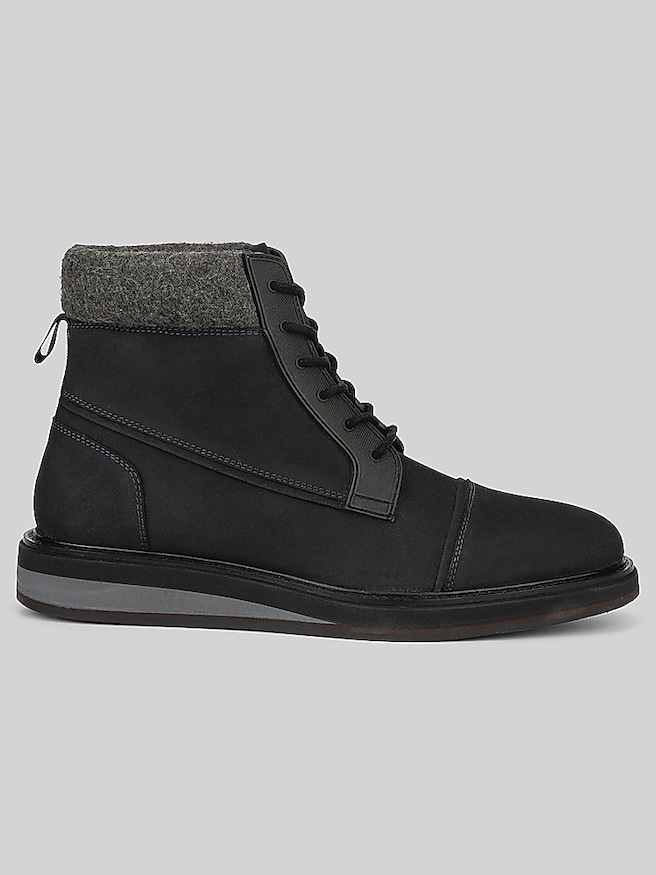
Stylish winter boots combine a defined silhouette with features suited to cold-weather wear, bringing together materials, comfortable support, and traction appropriate to the conditions. Their appeal is practical as much as visual: a well-proportioned boot can anchor a wool overcoat and tailored trousers, add texture to dark denim, or give corduroy pants a sturdy finish without making an outfit feel bulky. Smooth leather creates a polished impression for office days and evening plans, while pebbled leather introduces subtle texture that works naturally with flannel, knitwear, and casual outerwear. Suede has a softer, more relaxed character, though its suitability for damp conditions depends on its construction, treatment, and care requirements. Shape makes a noticeable difference, too. A streamlined ankle boot slips neatly beneath a narrower trouser opening, while a fuller lace-up silhouette pairs comfortably with straight-leg jeans and heavier fabrics. Chelsea boots offer a clean profile with minimal visual interruption; lace-up designs allow more adjustment across the instep and ankle. Neither silhouette alone determines warmth or weather protection, so the most useful balance depends on where the boots will be worn. A short walk from a parking garage to an office calls for something different from extended time on snowy sidewalks or a weekend spent outdoors. For city wear, a restrained toe shape and a sole with moderate visual weight can bridge business-casual settings and relaxed dinners. For more demanding winter conditions, protective construction and dependable footing deserve greater emphasis than a sleek outline. Black, deep brown, and rich tan each have a place in a winter wardrobe, with black lending a sharper finish and brown tones complementing navy, olive, charcoal, and denim. For outfits that call for a broader range of footwear silhouettes, Stylish Winter Shoes for Men offers a related category to explore. The common thread is footwear that looks intentional alongside substantial winter clothing rather than simply adding weight at the hem.
Materials and construction determine how winter boots feel after the first few steps and how well they suit repeated wear. Leather uppers can soften and develop character with use, but leather alone does not make a boot waterproof. Water-resistant finishes can help with brief exposure to moisture, while waterproof performance depends on features such as a protective membrane, sealed seams, and construction designed to limit water entry. A gusseted tongue can also help reduce the gaps through which slush or debris might enter a lace-up boot. Insulation serves a separate purpose: it helps retain warmth, and the amount needed depends on activity level, exposure, and individual comfort. Someone walking briskly between transit stops may prefer less insulation than someone standing outside for a long stretch. Linings that manage moisture can improve comfort, especially when a day includes both outdoor walking and time in heated buildings. Underfoot, tread depth, rubber composition, and sole flexibility all influence the experience. Pronounced lugs can provide purchase in loose snow, while a less aggressive outsole may feel more natural on office floors and paved walkways. No tread pattern guarantees secure footing on ice, and winter surfaces still require care. Fit matters just as much as these technical details. The heel should feel held without persistent rubbing, the instep should feel supported rather than squeezed, and the toes need enough room to move without sliding forward on a slope. Winter socks take up space, so fit is most meaningful when assessed with the sock weight intended for regular wear. Extra room is not automatically better; an overly loose boot can allow friction and reduce stability. Likewise, a tight fit can compress socks and make feet uncomfortable. Removable footbeds may be useful for those who use compatible orthotics, while adjustable laces can accommodate modest differences in foot volume. Cushioning should feel supportive through a commute, not merely soft during a quick try-on. The right proportions leave the foot secure and comfortable without relying on a lengthy break-in period to resolve pinching or pressure.
Durability comes from the relationship between materials, construction, use, and upkeep rather than from a rugged appearance alone. Areas that flex repeatedly, including the forefoot and the junction between the upper and sole, deserve particular attention because winter walking exposes them to moisture, grit, and repeated movement. Stitched and bonded constructions have different characteristics, and the possibility of replacing a worn sole depends on the individual boot’s design. A substantial outsole may withstand frequent pavement use, but weight also matters when boots are worn through a full workday or packed for travel. For someone moving between a train platform, an office, and an evening reservation, a balanced design can feel more versatile than an especially heavy outdoor boot. Care helps preserve both appearance and function. Road salt and surface dirt are easier to address before they remain on the material for an extended period; cleaning methods should match the upper and follow the maker’s directions. Smooth leather may benefit from an appropriate conditioner, while suede generally calls for a suitable brush and material-specific treatment rather than leather cream. Protective treatments should be compatible with any existing finish or waterproof membrane. Wet boots need time to dry naturally away from radiators and other direct heat sources, which can damage leather or adhesives. Removing loose insoles when appropriate can help the interior dry more thoroughly, and rotating footwear gives linings a chance to release accumulated moisture. These details are especially valuable for boots worn regularly through slush, snow, and salted sidewalks. As a gift, winter boots can be a thoughtful choice for a partner, father, brother, or friend whose routine includes cold-weather commuting or outdoor gatherings. Successful gifting depends on knowing the recipient’s size, preferred fit, usual sock weight, and everyday style—not just choosing a striking silhouette. Whether paired with a wool coat for dinner or durable denim for a weekend walk, stylish winter boots earn their place through a combination of visual balance, comfortable fit, and features that match the way they will actually be worn.