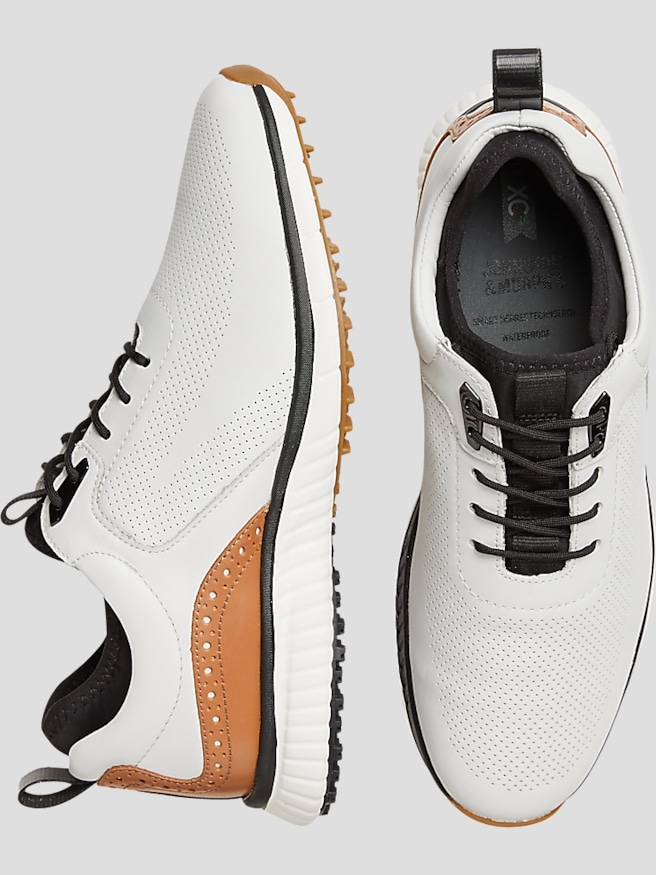
White golf shoes bring a clean, classic finish to a golf outfit while serving a practical purpose underfoot. The light color works with navy, charcoal, khaki, and patterned golf pants, and it pairs just as naturally with tailored shorts and a tucked polo. A smooth upper with understated stitching can give the outfit a traditional feel, while paneled construction and a more sculpted sole lean toward an athletic look. Small details, from the shape of the toe to the contrast along the outsole, help establish that character without requiring a bold color. Beyond appearance, golf footwear is built around the repeated movements of the game: walking between shots, setting a stance, rotating through a swing, and bending to read a putt. The connection between the sole and the turf matters throughout those movements. Spiked designs typically use strategically placed cleats to help provide traction, while spikeless designs rely on molded lugs or other tread patterns. Neither construction tells the whole story on its own; the shape, spacing, and material of the traction elements also influence how a shoe feels and grips. For a golfer who walks a full round, the balance between cushioning, flexibility, and stability deserves particular attention. Someone who rides still needs a secure platform at address and enough comfort for the steps between the cart path, fairway, and green. A substantial-looking sole does not automatically mean better support, just as a streamlined profile does not necessarily mean less cushioning. Overall construction is more useful than appearance alone when judging suitability for the course. White footwear can also make a golf outfit feel coordinated without matching every accessory. A white polo creates a simple visual connection, while a darker shirt lets the shoes provide a crisp contrast. For practice sessions, casual rounds, or organized outings, the strongest choice is a pair that suits both the golfer’s movements and the way the rest of the outfit comes together.
Materials affect how white golf shoes feel, how they hold their shape, and how much attention they need between rounds. Leather uppers can offer a structured appearance and may gradually soften with wear, though the finish and construction influence that process. Synthetic uppers often provide a consistent surface that is straightforward to wipe clean, while mesh and knit panels can add flexibility and allow air to circulate. Those fabric surfaces may also hold fine dirt more readily than a smooth upper, making the cleaning method an important consideration. Reinforced areas around the toe, heel, and lace openings can help manage the friction and repeated flexing associated with walking and swinging. Inside the shoe, a smooth lining, well-positioned seams, and a tongue that stays centered can make a noticeable difference over several hours. Fit should feel secure without requiring the laces to be pulled excessively tight. The heel should remain reasonably steady during a normal stride, the forefoot should have room to spread, and the toes should not press into the front when walking down an incline. Trying shoes with the socks intended for golf gives a more useful impression than testing them with a much thinner or thicker pair. Taking a few steps and making a controlled golf stance can reveal pressure across the instep or unwanted movement around the heel. Width matters as much as length; sizing up to solve a narrow fit may leave too much space elsewhere. Golfers comparing Comfortable Golf Shoes can look beyond initial softness to consider heel security, underfoot support, and flexibility through the forefoot. Cushioning should complement a stable base rather than create a sensation of shifting during a swing. For anyone who uses an orthotic, a removable footbed and sufficient interior depth may be useful, but compatibility depends on the shoe and insert together. A good fit should be comfortable from the start, without relying on a lengthy break-in period to resolve pinching or rubbing.
Keeping white golf shoes looking sharp is largely a matter of consistent, material-appropriate care. Fine dust and grass residue are easier to remove before they settle into stitching, textured panels, and the edges of the sole. After a round, a soft brush can loosen debris from the outsole, while a soft cloth can lift surface marks from a smooth upper. The care instructions should determine which cleaners are suitable, since a treatment intended for leather may not work well on knit fabric or a coated synthetic surface. Aggressive scrubbing, harsh cleaners, and machine washing can damage finishes or adhesives unless the manufacturer expressly allows them. White laces often show wear before the upper does, so cleaning them separately according to their care instructions can freshen the overall appearance. Shoes should be allowed to dry thoroughly away from direct heat before being placed in a closed storage space. Removing loose debris from traction grooves also makes it easier to inspect the outsole for wear. On designs with replaceable cleats, checking for worn or missing components helps maintain the intended traction; on spikeless designs, flattened tread is a useful sign that the sole deserves closer attention. Durability also depends on intended use. Long stretches on pavement can wear down traction elements designed primarily for turf, and not every golf shoe is suited to extended wear away from the course. Carrying a separate pair for the drive or the clubhouse can reduce unnecessary outsole wear and keep tracked-in debris contained. For gifting, white golf shoes can be a thoughtful choice for a regular playing partner, a family member taking up the game, or someone who enjoys a coordinated golf wardrobe. Knowing the recipient’s width, preferred closure, and walking habits is more helpful than choosing by color alone. The lasting appeal comes from that combination of clean styling and practical function: shoes that look at home with a favorite golf outfit and feel dependable from the opening tee shot through the final walk off the green.