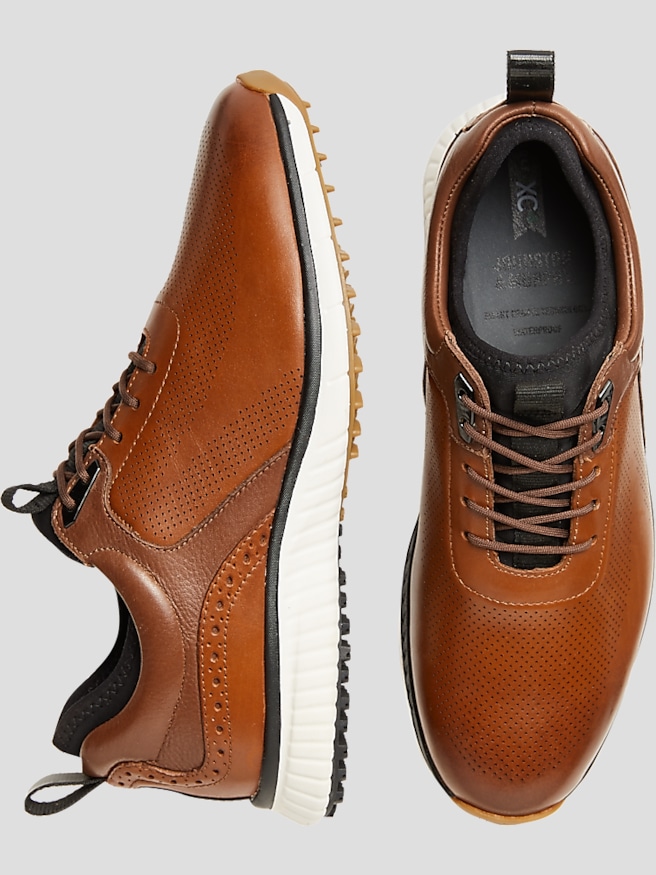
Golf shoes for men bring together the traction needed for a balanced swing and the comfort needed for a full round on foot. Their purpose becomes clear over the course of eighteen holes: feet stay active while walking the fairway, settling into a stance, stepping through a bunker, and standing on the putting green. Unlike everyday sneakers, golf footwear is built around the particular demands of that movement, with outsole patterns and supportive structures designed to help manage rotation without making every step feel rigid. Spiked styles typically use replaceable cleats arranged across the sole, while spikeless designs rely on molded lugs or textured traction patterns. Both have a place on the course, and the choice often comes down to personal preference, walking habits, and facility requirements. A golfer who carries a bag for most rounds may put extra emphasis on shoe weight and cushioning; someone who rides still needs a secure foundation for swings and the walks between the cart path and the ball. Traditional silhouettes offer a polished look with golf pants and a tucked-in polo, while athletic profiles work naturally with streamlined performance clothing. Low-profile shapes can feel understated, and more structured designs may appeal to players who like a substantial feel around the heel and midfoot. The most useful distinction is not simply dressy versus sporty, but how the shape, construction, and sole work together for the way someone plays. Beginners, regular weekend players, and experienced golfers all benefit from footwear that feels dependable without drawing attention away from the next shot. Golf shoes can also make a thoughtful gift for a dad, partner, friend, or colleague who spends time on the course, particularly when the recipient’s size, width, and preferred style are already known. For someone starting to play more often, a dedicated pair helps separate course footwear from the sneakers used for errands or workouts. For a longtime player, familiar details such as a roomy forefoot or a firmly held heel can matter more than a dramatic change in appearance.
Materials give men’s golf shoes much of their character, influencing flexibility, weight, surface texture, and the amount of attention they need between rounds. Leather uppers often provide a smooth, substantial finish and can soften with wear, although the feel varies with the leather and construction. Synthetic uppers can offer a lighter, more uniform surface, while mesh panels and knit sections may add flexibility and ventilation. Reinforcement around the toe, sides, or heel helps support areas that take repeated stress during walking and swinging. Inside the shoe, linings, footbeds, and midsoles each play a role: a smooth lining can reduce friction, a shaped footbed can help distribute pressure, and cushioning can soften repeated contact with the ground. More padding is not automatically a better fit, however. An overly soft platform may feel less steady to some players, while a firmer shoe can still be comfortable when its shape suits the foot. A secure heel, comfortable instep, and enough room for the toes to move are useful hallmarks of a good match. The forefoot should not feel squeezed when settling into an address position, and the heel should not lift noticeably with each step. Width deserves as much attention as length, especially for golfers who have found that sizing up creates extra space at the toe without relieving pressure across the ball of the foot. Trying shoes with the socks intended for play gives a more realistic sense of the fit. Anyone who uses orthotics should also account for their thickness and confirm whether the shoe’s footbed can be removed. Lacing systems help fine-tune the hold across the top of the foot, but they cannot fully compensate for a shape that is too narrow or too loose. For players who prioritize an easy stride from the opening tee to the final green, Comfortable Golf Shoes bring that everyday wearability into focus. The goal is a shoe that stays settled during a swing while allowing a natural walking motion, rather than one that requires constant adjustment halfway through a round.
Durability in golf footwear depends on both construction and use. Repeated rotation places stress on the upper and sole, while walking adds wear at the heel and forefoot. Secure stitching, neatly joined panels, and reinforcement in high-contact areas can contribute to lasting performance, though no single material guarantees a longer lifespan. The outsole deserves particular attention because its condition affects how the shoe interacts with the ground. Replaceable cleats need periodic inspection for wear and secure attachment, using only compatible replacements and the appropriate tool. Molded traction elements also wear down over time, especially when worn extensively on pavement away from the course. A spikeless shoe may have an easygoing appearance, but its suitability for off-course use still depends on the sole design and the manufacturer’s recommendations. Keeping a separate pair for the drive home can limit unnecessary wear and give golf shoes a chance to air out after play. Routine care is usually straightforward: remove loose grass and soil with a soft brush, wipe the upper with a suitable cloth, and follow the material-specific cleaning directions. Leather may benefit from an appropriate conditioner, while knit, mesh, and synthetic surfaces can require other methods. Harsh cleaners, prolonged soaking, and direct heat can damage finishes, adhesives, or the shape of the shoe. Loosening the laces and opening the tongue after a round helps the interior release accumulated perspiration; removable footbeds can be taken out to dry when care instructions allow. Shoes should be dry before being enclosed in a storage bag, and a little space around them helps prevent crushed uppers. These small habits support the details that matter during play: a consistent fit, intact cushioning, and traction that has not been neglected. Whether worn for practice sessions, a casual nine holes, or a full day on the course, well-chosen golf shoes make a practical part of a golfer’s wardrobe, balancing personal style with the physical demands of the game.