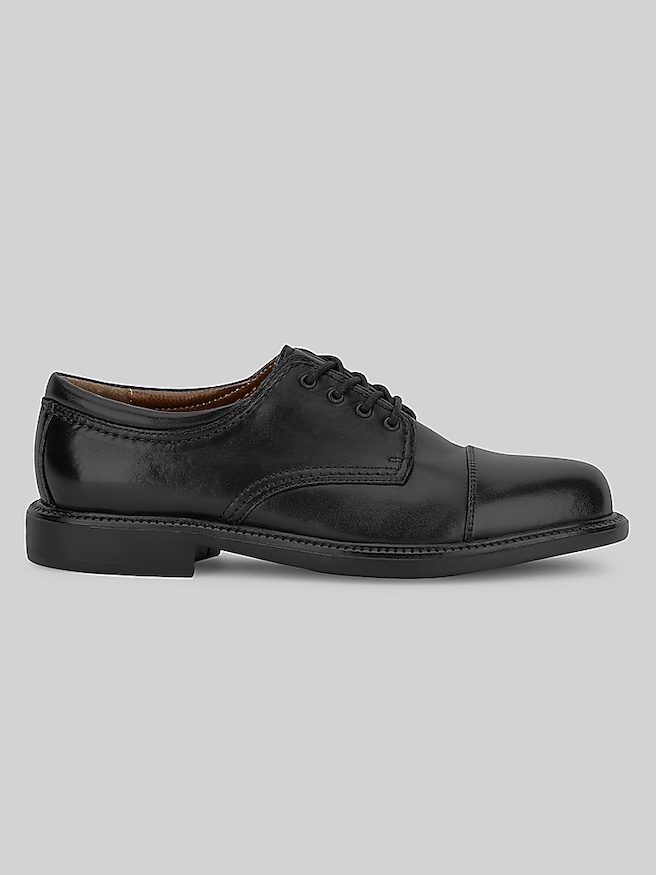
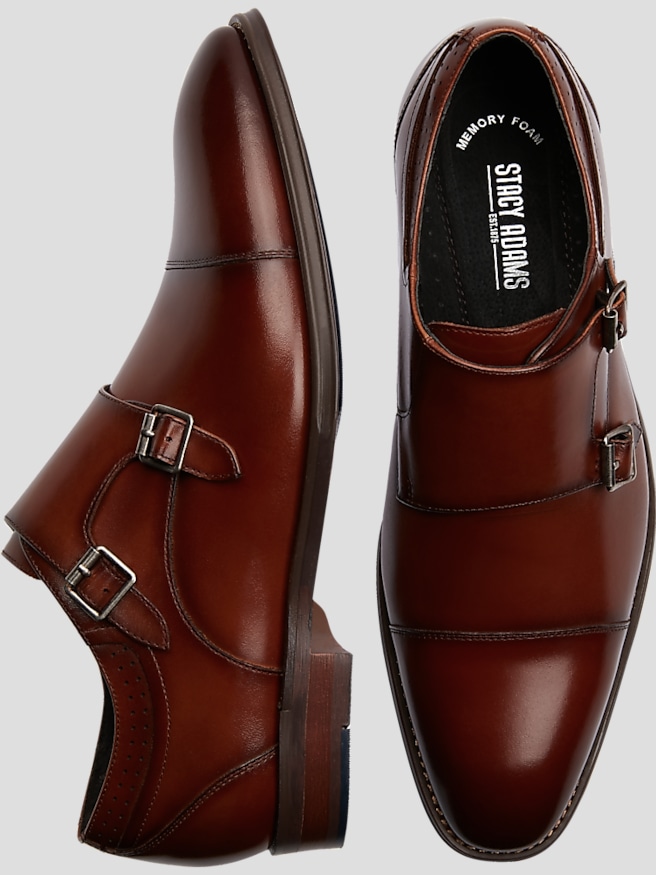
Black buckle dress shoes bring the polish of traditional dress footwear together with a distinctive strap-and-hardware closure. The category includes single monk strap shoes, double monk strap shoes, and slip-on silhouettes accented with a buckle across the upper. On monk straps, the buckle typically helps secure the shoe; on some loafers, the hardware is primarily decorative. A single strap creates a clean, understated profile, while two straps add a more pronounced detail across the instep. The two-strap shape of Men's Double Buckle Dress Shoes gives tailored outfits a focal point without relying on a contrasting shoe color. Smooth black leather keeps the overall effect refined, allowing the shape of the toe, the finish of the buckle, and the line of the trousers to define the look. An almond-shaped toe tends to feel streamlined, while a rounded toe has a more traditional character. A plain toe emphasizes the uninterrupted leather surface; a cap toe adds a seam that gives the front of the shoe more structure visually. Brogue perforations introduce texture and generally make the design less formal than an otherwise comparable plain style. These distinctions make black dress shoes with a buckle useful for office wardrobes, wedding guest outfits, graduation ceremonies, and dressed-up dinners. With a charcoal suit, the effect is crisp and restrained. With navy tailoring, black shoes create a grounded finish that works especially well with a black leather belt. Silver-tone hardware can echo a watch case or belt buckle, although the metals do not need to match perfectly. Trouser hems that rest lightly at the top of the shoe allow the straps to remain visible without exposing too much sock. For occasions with a strict formal dress code, the required footwear matters more than the appeal of a particular buckle design; a monk strap is not automatically a substitute for traditional evening shoes.
Materials and construction shape how buckle dress shoes look, feel, and hold up to repeated wear. Full-grain leather retains the hide’s natural grain and can develop subtle character with use, while corrected-grain leather has a more uniform surface. Neither label alone determines comfort or longevity: leather thickness, finishing, lining, stitching, and sole construction all contribute. A smooth, lightly polished upper offers a versatile dress appearance, whereas a high-gloss finish makes a stronger statement and may show scuffs more readily. Synthetic uppers can provide a consistent look, but their flexibility, breathability, and care requirements differ from those of leather. Inside the shoe, a smooth lining and neatly finished seams help reduce friction, particularly around the heel and beneath the straps. Cushioning can soften the feel underfoot, while a supportive shape matters during a long reception or a workday that includes walking between meetings. Buckle adjustment allows some control over pressure across the instep, but it cannot compensate for the wrong length or width. A suitable fit leaves room for the toes without letting the foot slide forward, holds the heel securely without pinching, and places the widest part of the foot comfortably within the shoe’s widest area. The strap should fasten without pulling the upper into deep, strained folds. Anyone with a high instep may notice that strap placement matters as much as the number of adjustment holes. Trying dress shoes with the socks intended for everyday wear gives a more useful sense of fit than trying them with unusually thick athletic socks. Underneath, leather soles offer a traditional profile, while rubber soles can add flexibility and traction, depending on their design. A rubber sole is not necessarily slip-resistant, and a leather sole may feel slick on smooth flooring. Welted construction may allow resoling, subject to the shoe’s condition and a repair professional’s assessment; other construction methods can provide a lighter, more flexible feel. Secure buckle attachments, even stitching, and clean joins between the upper and sole are useful signs of careful assembly.
The appeal of black buckle dress shoes extends beyond their appearance with a suit. A restrained single monk strap can finish an outfit of tailored trousers and a tucked-in dress shirt without making the footwear the center of attention. Double monk straps bring more visual detail to a blazer and trousers, especially when the rest of the outfit stays simple. For someone moving between client meetings, presentations, and dinner reservations, that balance of personality and polish can make buckle footwear a practical part of a dress wardrobe. The hardware also rewards a little attention: straps that lie flat and buckles that sit neatly against the upper preserve the shoe’s clean outline. Routine care helps maintain that appearance. Dust and grit left on the surface can dull the finish and work into creases, so a soft brush or cloth is useful after wear. Leather conditioner, used sparingly and only when appropriate for the finish, helps keep leather supple; a suitable black cream polish can refresh color and soften the appearance of minor scuffs. Patent, coated, and synthetic surfaces need care products intended for those materials rather than a standard leather treatment. Buckles benefit from gentle wiping, with polish kept away from hinges and fastenings. Allowing shoes to air out between wears gives the lining time to dry, while properly sized shoe trees help support the shape without stretching the upper. A shoehorn reduces pressure on the heel counter when putting shoes on, and releasing the buckle rather than forcing a foot through a closed strap protects the closure. These small habits are especially valuable for footwear worn frequently. As a gift, black buckle dress shoes can suit a graduate building a professional wardrobe, a partner preparing for a milestone celebration, or someone who enjoys tailored clothing. Familiarity with the recipient’s size, width, and preferred toe shape makes the gesture more personal—and helps turn a distinctive pair of dress shoes into something worn with confidence.