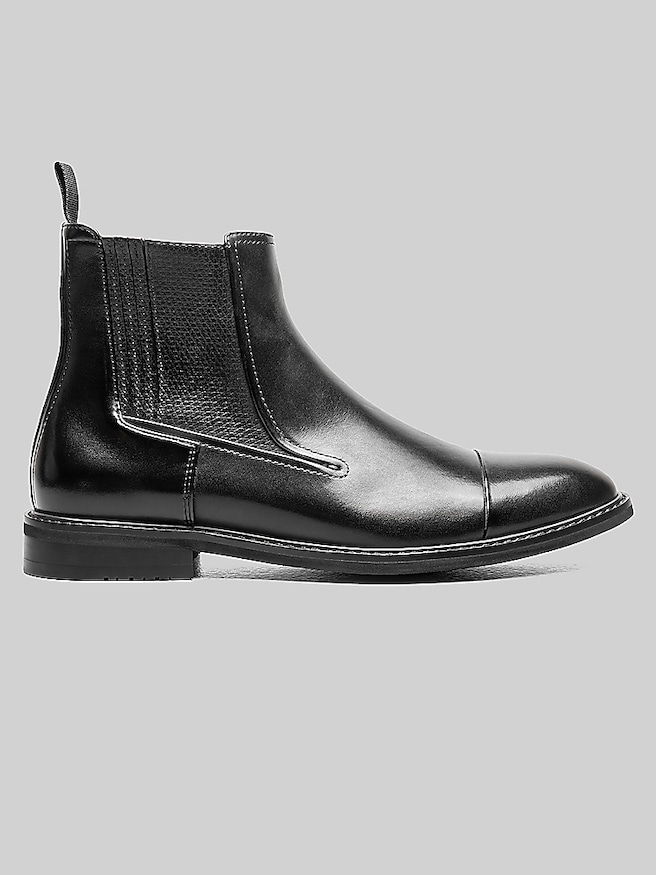
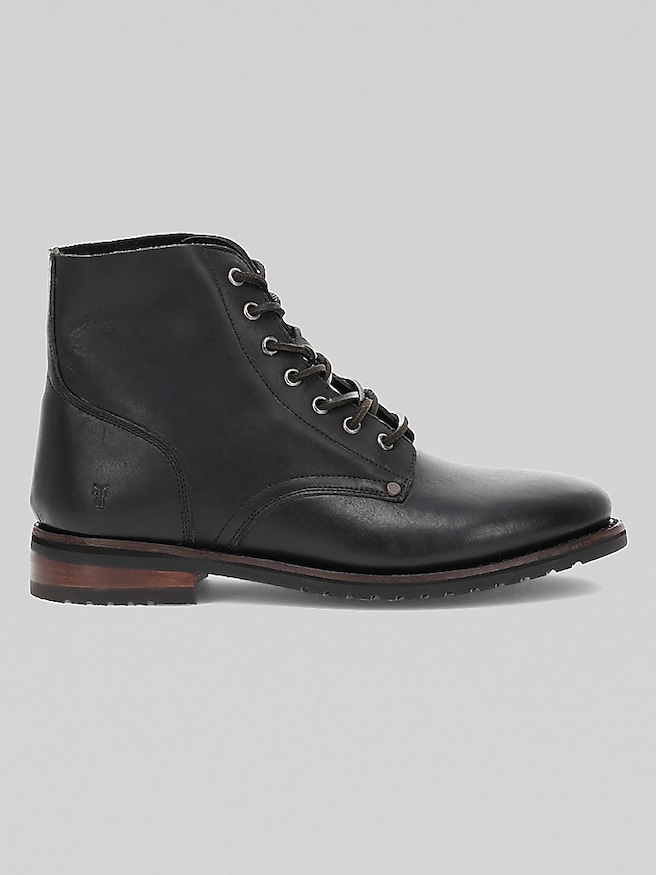
Black dress boots for men combine the polished appearance of dress shoes with the ankle-height coverage and structure of boots. Their appeal is in that balance: a clean leather upper can look sharp beneath tailored trousers, while the taller shape brings a little more presence to an outfit than a low-cut lace-up. Smooth black leather, restrained stitching, and a relatively slim sole tend to create the dressiest impression. A plain toe keeps the silhouette simple, a cap toe adds a defined detail across the front, and subtle broguing introduces texture without necessarily making the boot look rugged. Chelsea boots have elastic side panels and an uninterrupted front, making them a natural match for narrow trouser openings. Lace-up dress boots offer more adjustment through the instep and a traditional look that works particularly well with tailored clothing. Zip closures provide another way to keep the profile streamlined, although the placement and finish of the hardware influence how understated the boot appears. Material matters as much as shape. Full-grain leather retains its natural surface character and can develop attractive creasing with wear, while other leather finishes may create a more uniform appearance. Suede has a softer, more textured look and generally reads as less formal than smooth, polished leather. For office days, business dinners, graduation ceremonies, or celebrations where a suit is appropriate, black leather dress boots can provide a composed finishing touch. They are especially useful for someone who moves between tailored and smart-casual clothing and prefers footwear that feels substantial without looking heavy. The most formal dress codes call for closer attention: a sleek boot may suit many dressy settings, but traditional black-tie attire generally calls for formal shoes rather than boots. Details such as a bulky tread, pronounced toe shape, or contrasting stitching can also shift the overall impression toward casual wear, even when the leather is black.
A comfortable fit gives black dress boots their best appearance as well as their everyday usefulness. The toe box should leave room for the toes to rest naturally without squeezing the sides of the foot, and the instep should feel secure rather than tightly compressed. Slight heel movement can occur in a new leather boot, but persistent lifting, rubbing, or pressure deserves attention; leather softening does not reliably correct the wrong size or shape. The socks worn with the boots affect that fit, particularly with closer-cut styles, so a lightweight dress sock and a thick cushioned sock may produce noticeably different results. Lace-up designs allow small adjustments across the foot, while Chelsea styles depend more heavily on the match between the foot, ankle, and boot opening. Beneath the upper, lining materials, footbed cushioning, arch shape, and sole flexibility all contribute to comfort. A leather lining can provide a smooth interior, but seams and edges still need to sit comfortably against the foot. Cushioning may soften the feel of each step, though a soft footbed alone does not guarantee support during a long workday. Leather outsoles often have a refined, low-profile appearance; rubber outsoles can add grip and cushioning, depending on their design. A discreet rubber insert or slim rubber sole can preserve a dressy outline without the visual weight of a deep tread. Construction also affects long-term wear. Some welted or stitched designs can be resoled by a skilled shoe repair professional, while other constructions offer more limited repair options. Neither a higher ankle nor a substantial sole automatically makes a boot more durable. Leather quality, secure stitching, sturdy closures, and care over time all matter. For someone spending a day moving between a desk, meeting rooms, and a dinner reservation, the strongest choice balances a polished profile with a fit that remains comfortable beyond the first hour.
The versatility of black dress boots becomes clear in the way they sit beneath clothing. With a charcoal or navy suit, a smooth black boot creates a continuous, grounded finish, especially when the trouser hem falls neatly over the shaft rather than catching on it. Straight or gently tapered trousers usually give the boot enough room without creating excess fabric around the ankle. With a sport coat and dress pants, a cap-toe or plain-toe boot can feel professional without making the outfit overly formal. Dark, clean denim paired with a tucked-in shirt offers a more relaxed setting, while a fine-gauge sweater adds texture without competing with the footwear. A black leather belt can help connect the look, though the finishes do not need to match perfectly. For wardrobes centered on earth tones and softer leather contrasts, Brown Dress Boots for Men provide a distinct alternative; black remains especially useful when a crisp, understated finish is the goal. Keeping that finish attractive takes consistent, uncomplicated care. Dust and grit should be removed with a soft brush or cloth before they work into creases, and leather conditioner should be used sparingly according to the material and care instructions. Cream polish can help refresh color and nourish suitable smooth leather, while wax polish can build shine, particularly at the toe and heel. Suede needs its own brush and appropriate cleaning products rather than standard leather polish. Boots should dry naturally away from direct heat if damp, and allowing time between wears helps the interiors dry fully. Properly sized shoe trees can help maintain shape and absorb some residual moisture. Attention to worn heel edges, loose stitching, or a damaged zipper can prevent a minor issue from becoming more extensive. As a gift for a partner, father, brother, or friend, black dress boots are most thoughtful when the recipient’s size, preferred fit, and usual dress codes are already familiar. A restrained design can become a dependable part of a working wardrobe, valued for both its appearance and the way it wears over time.