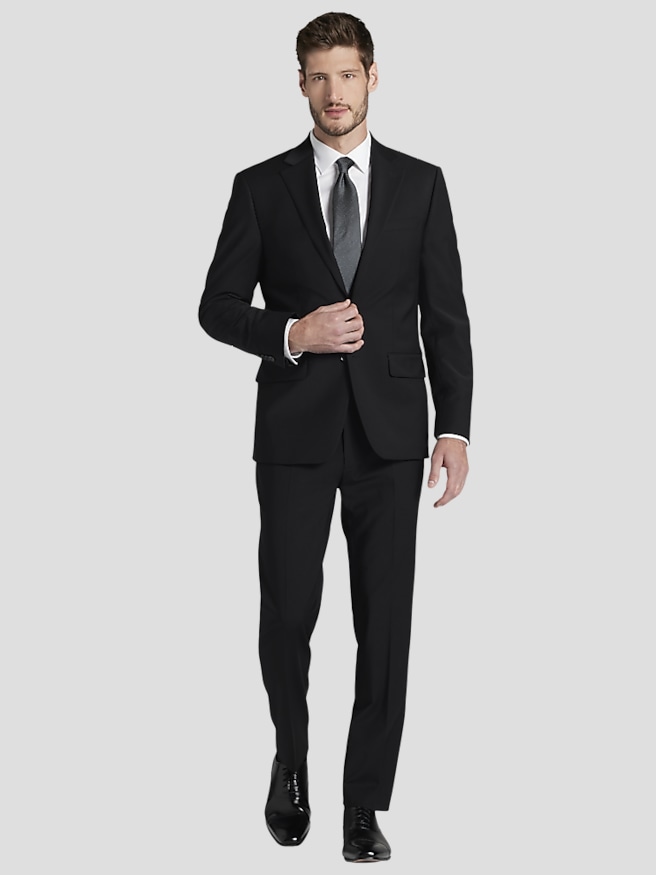
A black designer suit brings a clean, defined presence to occasions where the details matter: an evening wedding, an awards dinner, a formal reception, or a milestone celebration with a tailored dress code. Its appeal starts with the uninterrupted line of a matching jacket and trousers, but the character comes from proportion, fabric, and construction. A narrow notch lapel can give the jacket a restrained, contemporary feel, while a broader peak lapel creates a stronger frame across the chest. A single-breasted front is straightforward to style; a double-breasted design adds more overlap and a distinctly structured silhouette. Neither needs elaborate accessories to make an impression. Against black cloth, the roll of the lapel, the placement of the buttons, and the shape of the shoulder become especially noticeable. Designer tailoring may emphasize a particular silhouette, distinctive finishing, or carefully considered interior construction, though those details vary from suit to suit. A softly shaped shoulder feels less rigid, while a more defined shoulder can lend presence to the upper body. The jacket’s length also changes the effect: balanced coverage through the seat generally creates a more grounded outline than an abbreviated cut. Black is especially effective for dressier gatherings, though its suitability for an office depends on the workplace and occasion. It is also worth distinguishing a black suit from a tuxedo. A suit typically has lapels faced in the same fabric as the jacket, while a tuxedo commonly uses contrasting satin or grosgrain details. For an invitation that specifies black tie, that distinction matters. For many other celebrations, a black designer suit offers room for personal expression without making the outfit feel busy. It can mark a graduation, accompany a wedding party when coordinated with the couple’s plans, or become a thoughtful gift for someone establishing a tailored wardrobe, provided measurements and fit preferences are part of the decision.
Fabric influences how a black designer suit hangs, moves, and holds its appearance over repeated wear. Wool is a traditional choice because its natural resilience helps the cloth recover from ordinary creasing, while its drape supports a smooth line through the jacket and trousers. Fine worsted wool often has a clean surface that suits polished occasions, whereas a more textured weave gives black additional depth without relying on a visible pattern. A wool blend may introduce other qualities, including added stretch or greater resistance to wrinkling, depending on its composition. Stretch can make sitting through a ceremony or reaching across a dinner table more comfortable, but it does not replace an accurate fit. Cotton has a distinct hand and can develop more noticeable creases; synthetic fibers vary considerably in feel, sheen, and recovery. Fabric weight, weave, and lining all affect the experience of wearing the finished suit. A smooth lining helps the jacket move over a dress shirt, and interior construction can influence how naturally the chest and lapels follow the body. Half-canvas and full-canvas construction use an internal supporting layer in different portions of the jacket, while fused construction bonds supporting material to the fabric. These are useful distinctions, not guarantees of how a particular suit will fit. At the shoulder, the seam should sit near the natural edge without an overhang or a tight ridge. With the jacket fastened, the front should lie relatively clean rather than pull into pronounced lines around the button. Sleeves that allow a small amount of shirt cuff to show help establish a finished proportion. Through the trousers, enough room at the seat and thighs supports comfortable movement, whether standing for photographs or sitting through a long reception. A tapered leg can look sharp without gripping the calf, and the hem may meet the shoe with little break or a modest fold. Tailoring at the waist, sleeves, and hem can refine the silhouette, but a well-matched shoulder and balanced jacket length provide the strongest starting point.
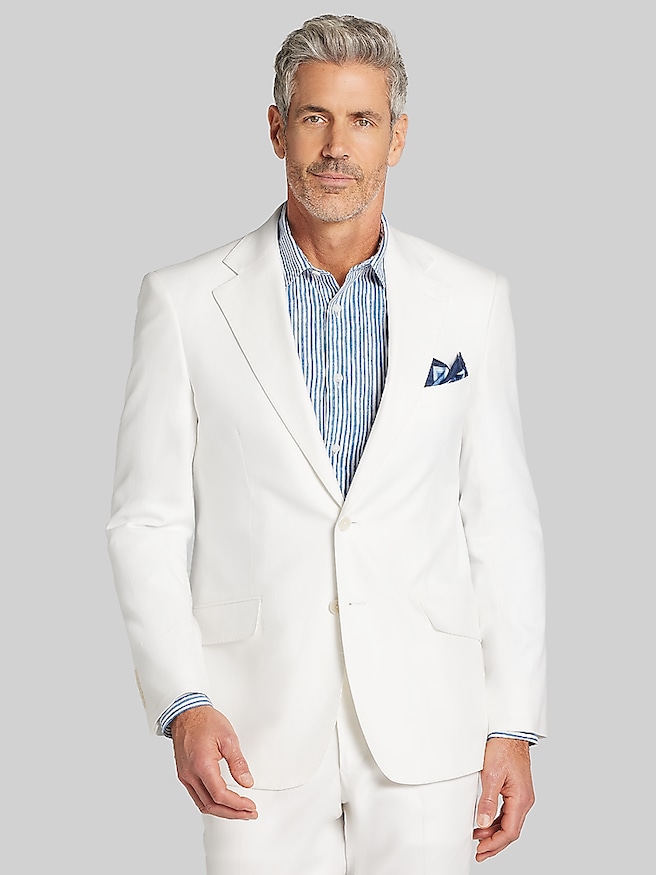
Styling a black designer suit is often a matter of keeping each supporting detail deliberate. A crisp white dress shirt produces a clear contrast that works especially well for ceremonies and formal dinners. A pale blue shirt can soften that contrast when the setting permits, while a black shirt creates a more tonal outfit suited to certain evening events. The textures matter as much as the colors: a tie with a subtle woven surface can stand apart from smooth suiting without introducing a loud pattern. A pocket square need not match the tie exactly; a simple fold in white can give the breast pocket definition while leaving the tailoring in focus. Black leather lace-ups are a dependable companion for dressier settings, with well-maintained uppers and clean edges contributing as much as the shoe’s shape. Belts, when worn, generally look most cohesive when their leather color relates to the shoes. For celebrations that welcome a brighter tailored look, a White Designer Suit offers a contrasting direction, with the event’s dress code still setting the tone. Whatever the styling, black fabric rewards careful maintenance because lint, dust, and surface shine can be conspicuous against a dark background. A soft garment brush can remove loose particles, and a wide, shaped hanger supports the jacket between wears. Trousers benefit from hanging neatly rather than being folded into a crowded drawer. Giving the suit time to air after wearing helps it freshen before storage, while a breathable garment bag protects it from dust without trapping moisture. Cleaning should follow the care label, with professional attention for stains or cleaning needs rather than automatic dry cleaning after every outing. Direct heat and heavy pressure can leave shine on dark cloth, so pressing deserves care. Wearing the matching jacket and trousers together also helps keep their appearance consistent over time. With sound construction, a comfortable fit, and attentive care, a black designer suit can remain a dependable part of a dressed-up wardrobe through many significant occasions.