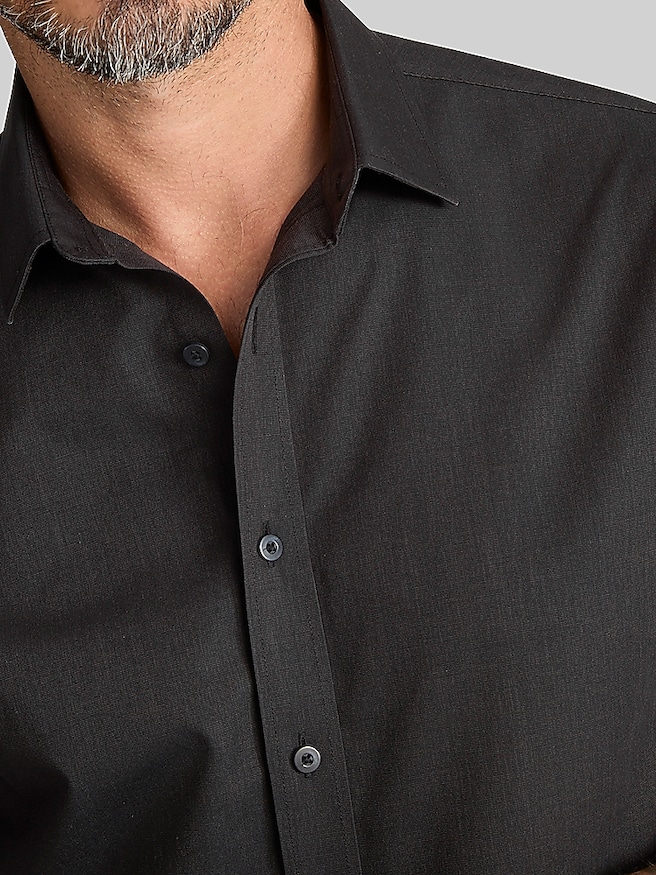
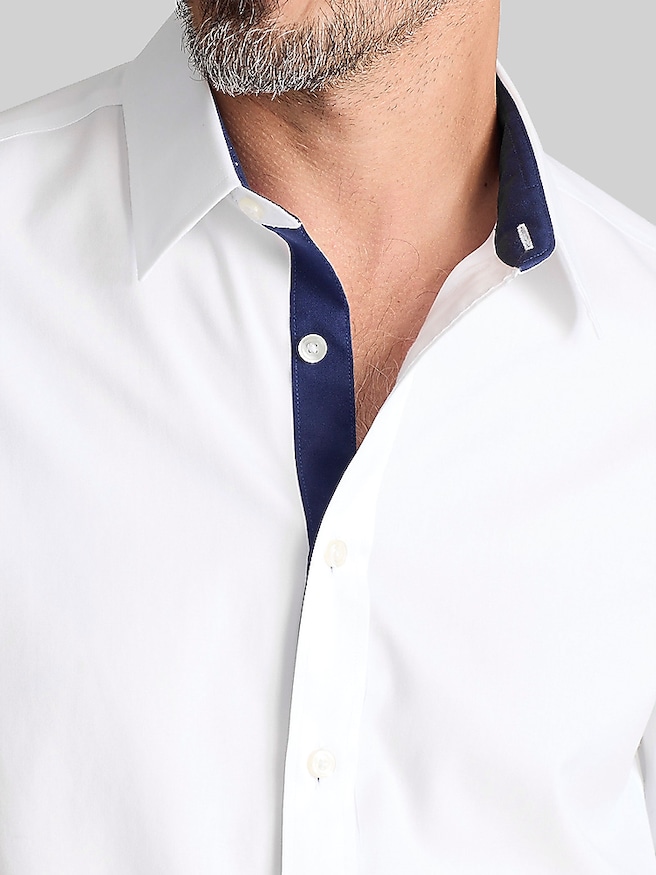
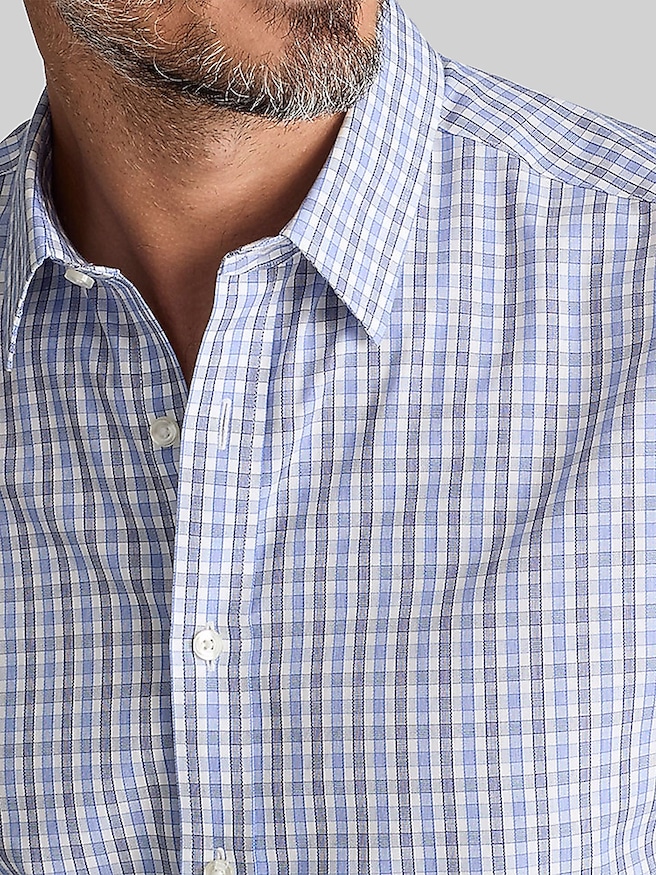
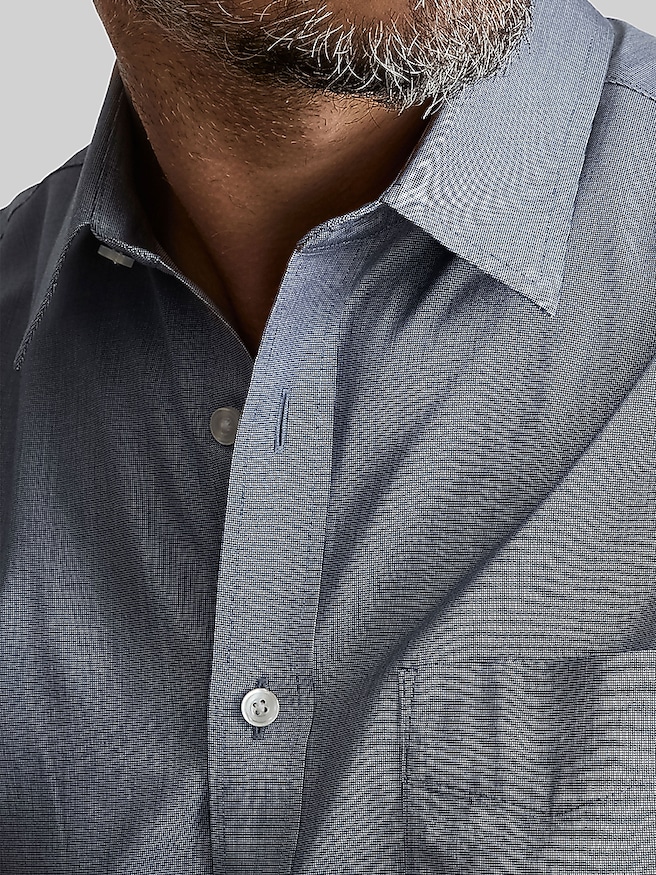
Black and white casual shirts bring clear contrast to an everyday wardrobe, with patterns that range from understated pinstripes to broad checks and expressive prints. Their appeal lies in how easily those two colors work with familiar pieces: dark denim, stone chinos, olive pants, and a favorite pair of sneakers or leather boots. A small black-and-white check can look almost like a textured solid from a distance, making it a comfortable choice for a relaxed office or dinner with friends. Wider stripes and larger geometric motifs have more visual presence, especially when the rest of the outfit stays simple. Gingham has a neat, easygoing character, while larger windowpane checks leave more open space between lines. Floral and abstract prints introduce movement without adding another color to coordinate. Pattern scale matters as much as the pattern itself; a fine repeat is subtle beneath a sweater, while a broad stripe remains noticeable under an open jacket. The balance of black to white also changes the effect. A mostly white shirt tends to look crisp and bright, while a black background with small white details creates a quieter contrast that works well for evening plans. These shirts sit comfortably between a plain T-shirt and a dress shirt, offering enough structure for a put-together appearance without requiring a tie or a formal jacket. Button-down collars generally keep their shape close to the neckline, while open camp collars have a more relaxed feel. Short sleeves suit warm indoor gatherings and mild afternoons, and long sleeves provide flexibility for layering during the cooler months. For men who prefer a compact wardrobe, the limited color palette makes repeat wear feel natural rather than repetitive. The same checked shirt can look casual over a plain tee on a coffee run, then more polished buttoned and tucked into chinos for a family gathering. That versatility makes black-and-white patterns useful well beyond any single occasion.
Fabric gives black and white casual shirts much of their character, influencing how a pattern looks and how the shirt feels after several hours of wear. Cotton is a familiar choice for its breathable feel and ability to absorb moisture, although its weight and weave can make one cotton shirt feel quite unlike another. Lightweight poplin has a smooth surface that keeps stripes and small prints sharply defined. Oxford cloth brings a more noticeable texture and a slightly substantial feel, while twill often has a soft diagonal surface and a fluid hand. Brushed cotton flannel adds softness and warmth, making checks especially comfortable beneath an overshirt or casual jacket when temperatures drop. Linen and linen blends have an airy texture and natural creasing that suit a deliberately relaxed look, though lighter versions may need another layer in cool weather. Lyocell and viscose can give fabric a smooth drape, allowing a shirt to fall softly rather than hold a crisp shape. They do not necessarily provide stretch; that usually depends on the fabric construction or the addition of fibers such as elastane. Cotton-polyester blends can combine a familiar cotton feel with easier wrinkle management, but comfort still depends on the blend, weave, and fabric weight. A heavier fabric is not automatically more durable, and a lighter fabric is not automatically more breathable. Construction deserves equal attention: even stitching, secure buttons, neatly finished seams, and reinforcement at stress points all contribute to how well a shirt handles regular wear. Fit is just as important as fiber content. Shoulder seams should generally sit near the shoulder edge on a conventional cut, and the front should lie comfortably without pulling between buttons. A slim fit follows the torso more closely, while a relaxed fit leaves more space through the chest and waist. Enough room to reach forward, sit down, and bend the elbows keeps an appealing shirt comfortable through a commute, a long lunch, or an afternoon spent with family. Shirts worn over a tee need a little additional ease without excess fabric bunching beneath outerwear.
Small styling and care choices help black and white casual shirts earn a lasting place in regular rotation. Hem shape is useful when deciding how a shirt will be worn: a shorter, straighter hem often looks natural untucked, while a longer curved hem provides coverage and stays tucked more securely. Sleeve length should allow comfortable movement without cuffs slipping over the hands, and an open collar should rest neatly rather than collapse beneath a jacket. For an uncomplicated weekend outfit, a black-and-white print pairs easily with solid pants and shoes that repeat one of the shirt’s colors. Tan suede or brown leather adds warmth without competing with the pattern. A charcoal sweater can soften the contrast of a bright white background, while a plain black tee under an open checked shirt creates a relaxed layered look. When another garment has a visible pattern, varying its scale can keep the combination from feeling crowded, though solid layers remain the simplest companions. For more everyday outfit possibilities, Weekend Casual Shirts offers a related direction for a wardrobe built around comfortable, informal dressing. Black-and-white shirts can also make thoughtful gifts for a partner, father, brother, or friend whose wardrobe already includes neutral pants and uncomplicated layers. Familiarity with the recipient’s usual fit, sleeve preference, and laundry habits is more useful than choosing a bold pattern alone. Easy care matters particularly for someone who reaches for the same dependable shirts throughout the week. The care label should always determine washing, drying, and ironing methods, since fibers, finishes, and trims respond differently to heat and moisture. When machine washing is permitted, washing with compatible colors, using an appropriate detergent, and avoiding unnecessary heat can help preserve the fabric and contrast. Prompt stain treatment is especially helpful on white sections, but chlorine bleach may damage dark areas and should not be assumed suitable. Removing a shirt promptly after its recommended drying cycle can reduce creasing, and following the specified ironing temperature protects sensitive fibers. With a comfortable fit, fabric suited to its intended use, and consistent care, a black-and-white casual shirt can move easily from low-key daytime plans to relaxed evenings.