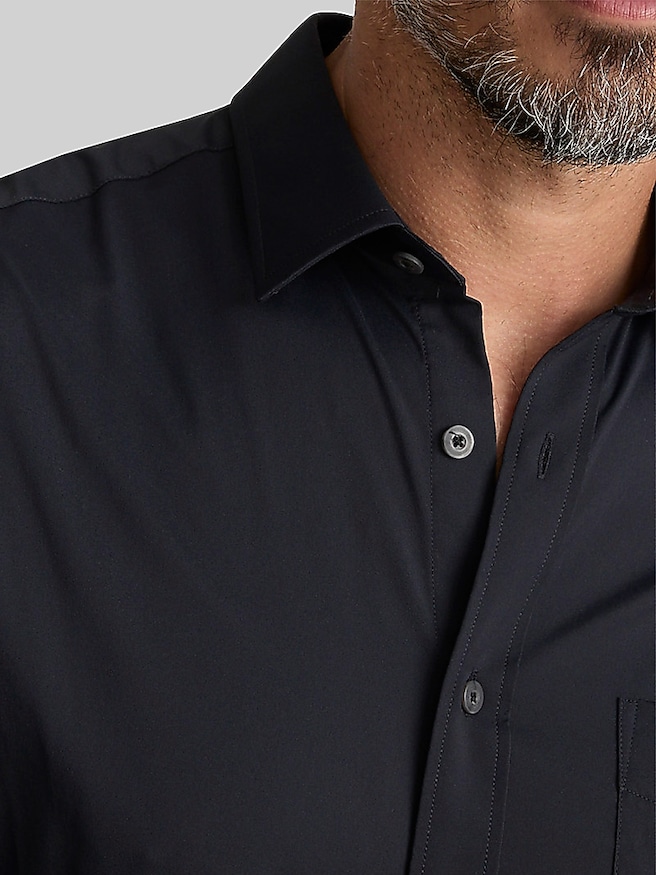
Men's casual white shirts offer a clean, versatile foundation for everyday outfits, with a less formal feel than shirts designed primarily for suits and ties. Their character comes from the fabric, collar, cut, and finishing details rather than bold color or pattern. A textured weave, a softly shaped collar, or a hem designed to sit outside the waistband can make a white shirt feel right at home with jeans, chinos, or casual trousers. White also creates an easy contrast with navy, olive, gray, and darker denim, so the same shirt can work across several combinations without competing with the rest of an outfit. Button-down collars help keep the collar points in place and lend a relaxed appearance, while open collars and softly constructed spread collars offer other interpretations of casual style. Long sleeves provide flexibility for wearing the cuffs buttoned or neatly rolled, and short sleeves create a more straightforward, informal silhouette. Fit has just as much influence as those details. A slim fit typically sits closer through the chest and waist, a regular fit offers a straighter shape, and a relaxed fit provides additional room, although measurements vary by design. In a conventional shoulder construction, the shoulder seam should sit near the edge of the shoulder, with enough room through the upper back to reach forward comfortably. Buttons that pull across the chest or a placket that gaps when seated usually signal a need for more room. A comfortable collar should frame the neck without pressing against it, even when the top button remains open. Shirt length matters, too: shorter hems generally look more balanced untucked, while longer tails help a tucked shirt stay in place. For someone who moves between a desk, a lunch meeting, and an evening out, these proportions can make the difference between a shirt that merely looks good standing still and one that remains comfortable throughout the day. The best match depends on both personal style and how the shirt will actually be worn.
Fabric gives casual white shirts much of their personality, and the differences are often easiest to notice up close. Oxford cloth has a basket-weave structure that adds visible texture and a substantial feel, making it a natural companion to denim and other textured fabrics. Poplin has a finer, smoother surface and a crisp appearance that suits cleaner, more understated outfits. Dobby weaves introduce small woven details without relying on a printed pattern, giving a white shirt depth while keeping its overall appearance simple. Cotton is valued for its familiar feel and ability to absorb moisture, though softness, weight, and wrinkle behavior depend on the weave and finish. Linen has a distinctive texture and a less uniform surface, with natural creasing that contributes to its relaxed character. For that particular fabric and look, men's casual white linen shirts offer a more focused category. Linen blends can balance that texture with qualities from other fibers, while fabrics containing stretch may provide additional give across the shoulders and torso. Fiber content alone does not tell the whole story: two cotton shirts can feel noticeably different because of yarn thickness, construction, or finishing. Fabric weight and opacity are especially relevant with white. A fine weave may reveal an undershirt or the outline of a waistband, while a more substantial cloth can offer greater coverage. An undershirt close to the wearer's skin tone often shows less clearly than a bright white one, and a neckline that stays below the open collar keeps the layers visually separate. Durability also comes from construction. Even stitching, securely attached buttons, neatly finished seams, and reinforced areas at stress points support repeated wear. Crispness should not be mistaken for strength, since a soft fabric can still be well constructed. Conversely, a heavier fabric is not automatically the most comfortable choice for every outfit. The useful balance is a shirt with the desired texture and coverage, sufficient freedom of movement, and a finish that fits the wearer's expectations for everyday maintenance.
Casual white shirts work particularly well where an outfit needs to look considered without appearing overly dressed. With dark jeans and simple leather sneakers, a white button-front shirt creates a clean combination for dinner with friends or a casual date. Paired with chinos and loafers, it can suit a workplace with a relaxed dress code, a family gathering, or a restaurant where a T-shirt might feel too informal. Worn open over a plain crewneck, it takes on an easier, layered character; worn beneath an unstructured jacket, it gains definition without necessarily requiring a tie. The details help keep those combinations balanced. A pronounced shirttail may look better tucked, a compact collar can sit neatly beneath a jacket, and sleeves rolled evenly just below the elbow tend to look more deliberate than cuffs pushed into a bunch. Care is another practical part of choosing white shirts, particularly for frequent wear. The care label should determine washing, drying, and ironing methods, since fibers, finishes, and blends respond differently. Separating whites from strongly colored garments helps reduce the risk of dye transfer, and addressing marks promptly can prevent them from becoming harder to remove. Collars and cuffs deserve attention because they make regular contact with skin. Bleach is not appropriate for every white fabric, so any treatment should be compatible with the garment's instructions. Overloading a washer can limit cleaning and contribute to creasing, while prolonged overdrying may make wrinkles more difficult to smooth. Removing a shirt promptly after the recommended drying cycle, reshaping the collar, and hanging it neatly can simplify the next wear. A casual white shirt can also be a thoughtful gift for a partner, father, brother, or friend whose wardrobe leans toward adaptable basics. Familiarity with the recipient's usual fit, sleeve preference, and care habits matters more than choosing the most elaborate detail. Someone who regularly wears shirts untucked may appreciate a shorter hem, while someone who prefers a polished finish may favor a smoother weave. Those everyday preferences give a simple white shirt its lasting usefulness.