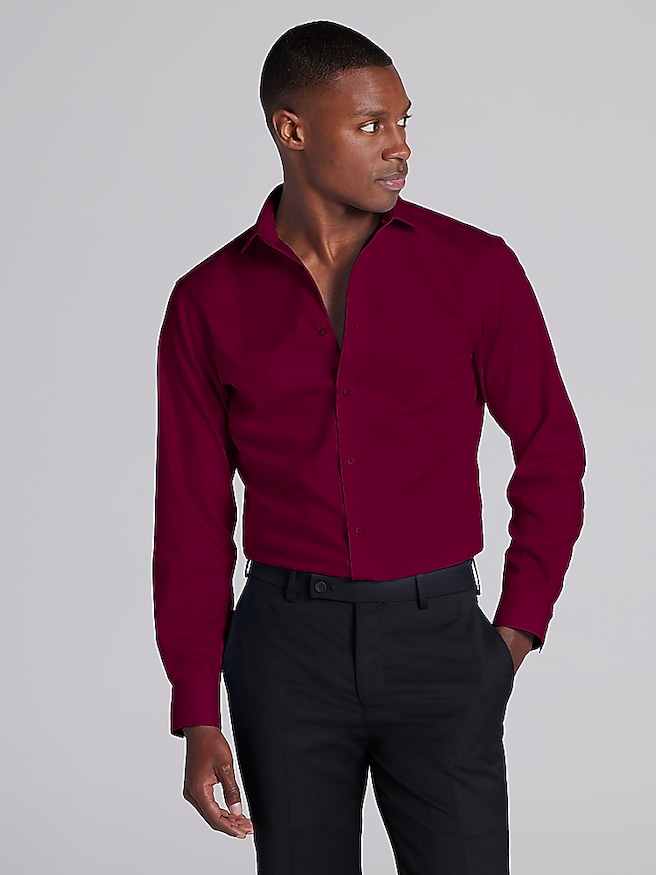
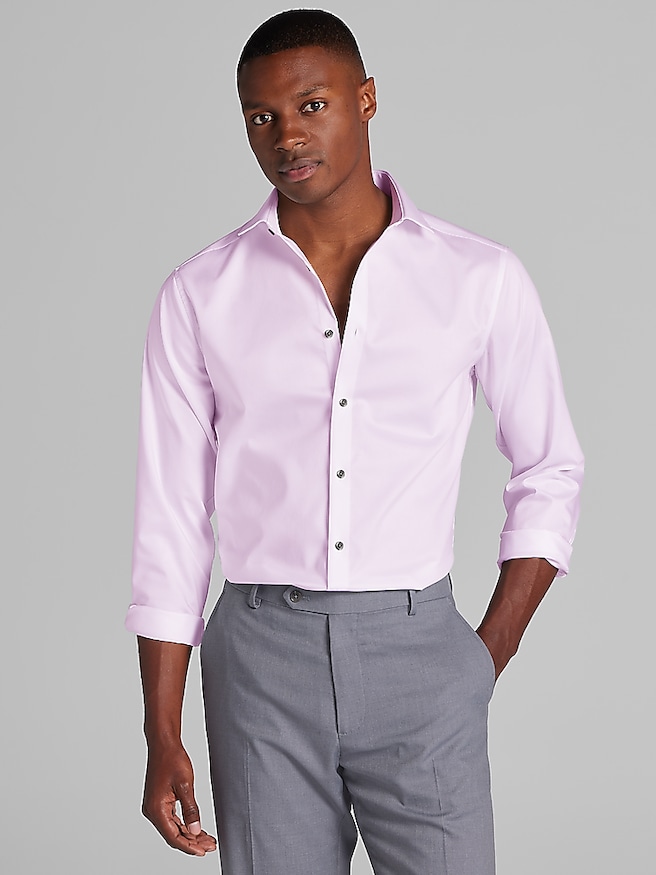
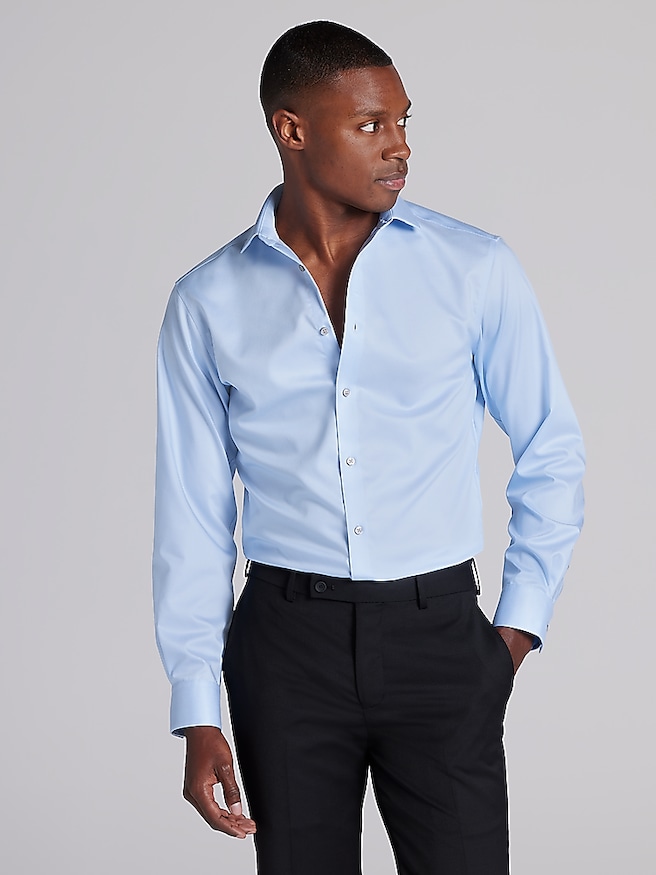
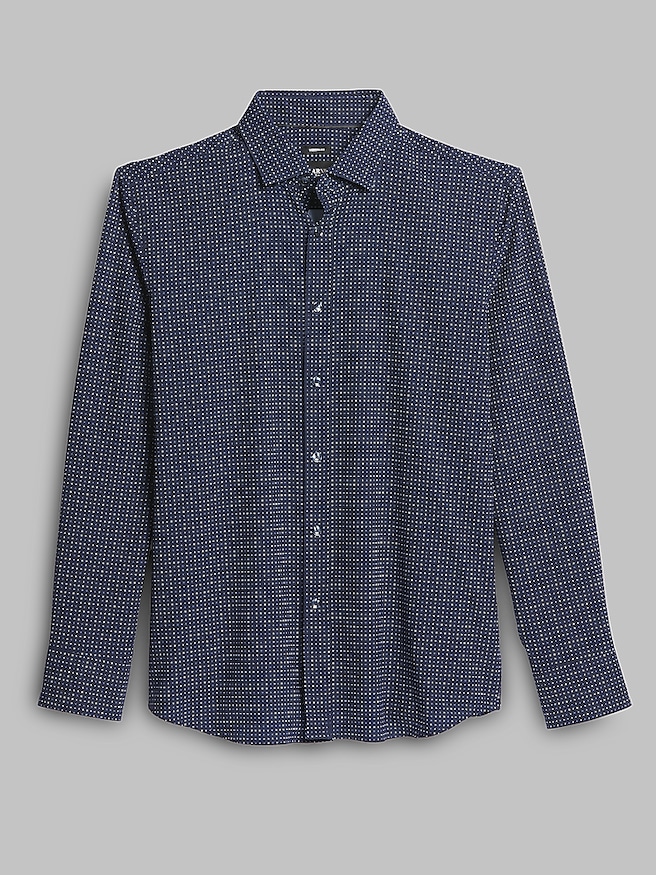
Big and tall wedding shirts bring the proportions of dress clothing into focus: a collar that sits comfortably beneath a tie, sleeves that reach the wrist, and enough length to keep the hem tucked through the ceremony, dinner, and dancing. For a groom, a member of the wedding party, a father of the couple, or a guest, those details help a formal outfit feel considered rather than improvised. Big and tall sizing addresses more than an increase in overall size. A broader chest may need additional room across the back and upper arms, while a longer torso calls for extra body length without unnecessary fullness at the waist. A tall build may require longer sleeves but a relatively narrow body; a fuller build may need generous proportions without added sleeve length. The strongest fit balances these needs instead of solving one by oversizing everything else. Shoulder seams should sit near the natural shoulder, and the front should lie smoothly without pulling between the buttons. A comfortable collar leaves room to breathe and swallow when fully fastened, particularly important during a ceremony or a seated dinner. At the wrist, a cuff should remain visible just beyond the jacket sleeve without sliding over the hand. Enough room to reach forward for a handshake or lift a glass matters as much as a clean silhouette in photographs. A shirttail with adequate length helps prevent repeated adjustments when standing after dinner or joining the receiving line. These proportions also affect how the rest of an outfit falls: excess fabric can bunch beneath a vest, while a tight upper back can restrict movement even when the jacket fits well. Big and tall wedding shirts are at their best when they create a smooth foundation for tailoring and remain comfortable after the jacket comes off. The result is a polished appearance built around the wearer’s actual shape, not simply a larger size on the label.
Fabric and construction contribute just as much to that experience as measurements. Cotton is valued for its soft feel, breathability, and familiar dress-shirt appearance, with the weave influencing both texture and structure. A fine plain weave can look crisp and understated beneath a suit, while twill often has a subtle diagonal texture and a fluid drape. Oxford-style weaves tend to have a more visible texture and can suit wedding attire with a less formal dress code. Cotton blends may offer added wrinkle resistance, easier care, or a degree of stretch, depending on the fiber content and finish. Stretch can make reaching and sitting more comfortable, but it works best alongside an appropriate cut rather than as a substitute for enough room through the chest or arms. Fabric weight and opacity deserve attention, too. A very lightweight white shirt may reveal an undershirt or show through more noticeably in photographs, while a more substantial weave can provide coverage and structure. Neatly finished seams, securely attached buttons, and well-constructed cuffs support repeated wear beyond a single celebration. For wedding-day styling, white provides a crisp contrast against dark tailoring and a neutral setting for a tie or pocket square. Soft blue and other restrained shades can work beautifully when they agree with the invitation’s dress code and the wedding party’s plans. Color names alone do not guarantee an exact match across fabrics, so coordinated outfits benefit from attention to the actual shade and finish. Collar shape changes the overall effect as well: a point collar gives a traditional look, while a spread collar leaves more space around a fuller tie knot. French cuffs lend themselves to cuff links and dressier combinations; button cuffs offer a straightforward finish with broad usefulness. Black-tie attire can call for a dedicated formal shirt with details suited to the tuxedo and its accessories. The invitation and the couple’s preferences help establish the appropriate level of formality without requiring every wedding shirt to look the same.
The value of a well-proportioned wedding shirt continues after the last photograph. The same clean fit can serve at an engagement celebration, rehearsal dinner, anniversary dinner, or another occasion that calls for a suit and tie. For a broader view of this wardrobe foundation, Big and Tall Dress Shirts connects wedding dressing with the familiar details that matter for business and other dressed-up events. Versatility often comes from understated choices: a balanced collar, a fabric with a subtle finish, and cuffs that work with the wearer’s usual tailoring. Care helps preserve those qualities. The garment’s care label should determine washing, drying, and pressing, since fiber blends, finishes, and formal detailing can require distinct treatment. Prompt attention to collar and cuff marks helps keep a dress shirt presentable, while suitable laundering and careful drying help protect its shape. Wrinkle-resistant does not necessarily mean wrinkle-free, and a light pressing may still be useful around the collar, placket, and cuffs. Following the recommended iron setting is especially important for stretch blends and treated fabrics. A smooth hanger and space in the closet help prevent creases from forming between wears. Before a wedding, trying the shirt on with the intended jacket, tie, and undershirt gives a realistic sense of the finished outfit, including how the collar sits and whether the sleeves stay in place when moving. For wedding parties, a shared color or collar style can create cohesion while allowing each person the neck size, sleeve length, and body proportions that fit best. As a gift for a groom, father, or partner, a dress shirt is most personal when its measurements and care needs suit the recipient’s habits. Thoughtful proportions, dependable construction, and manageable upkeep make big and tall wedding shirts more than a finishing touch. They provide a comfortable foundation for an important day and a useful place in a dressed-up wardrobe afterward.