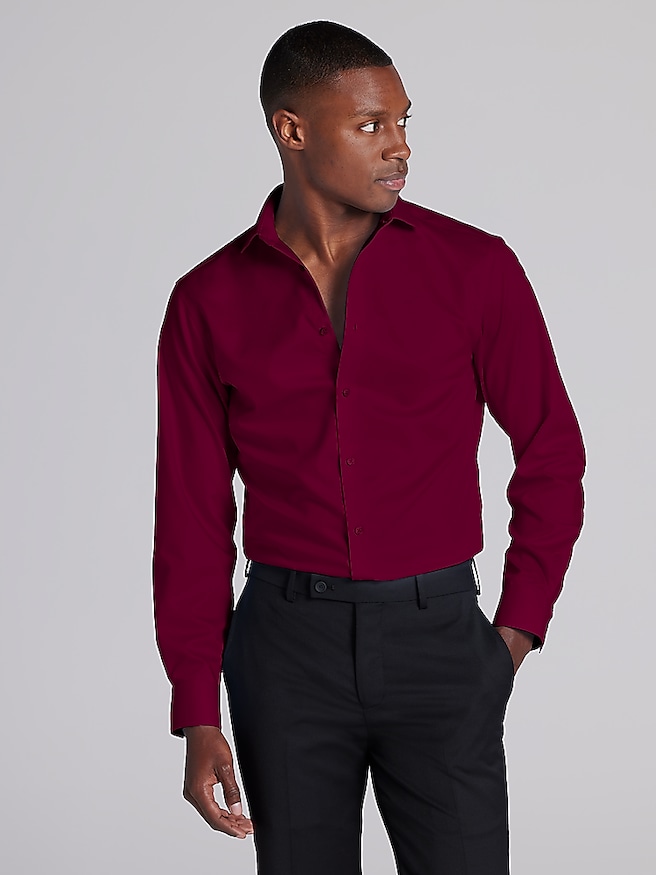
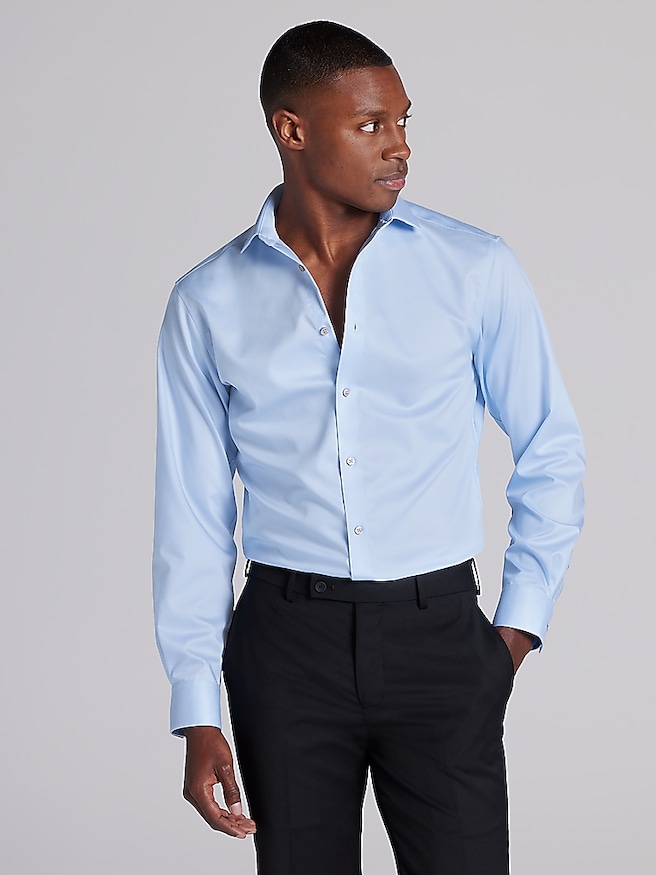
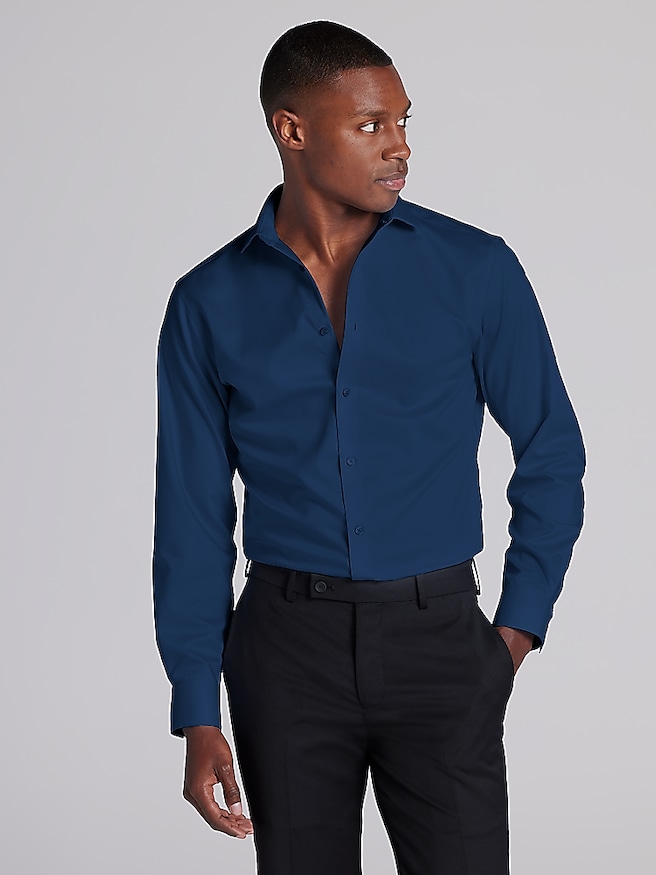
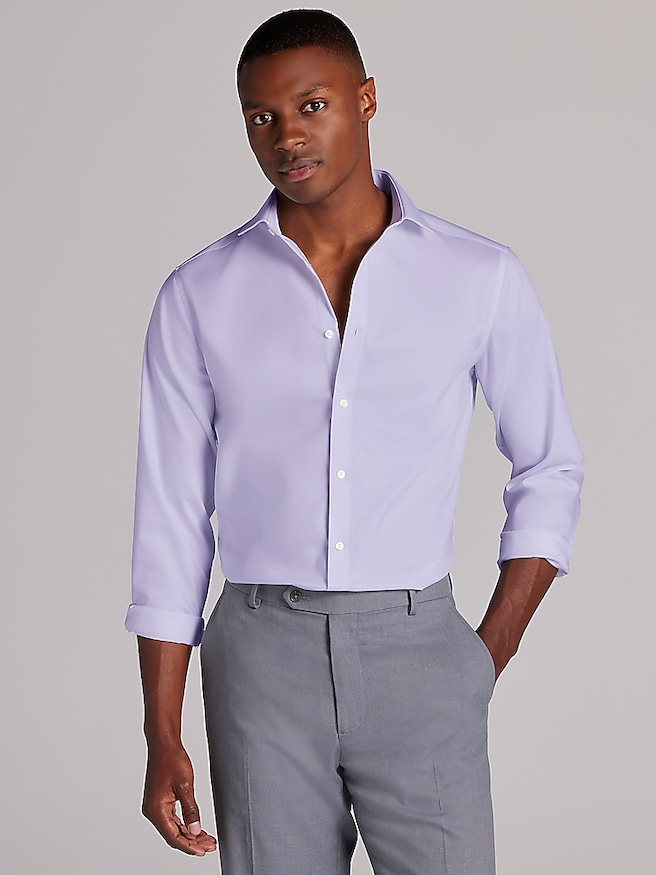
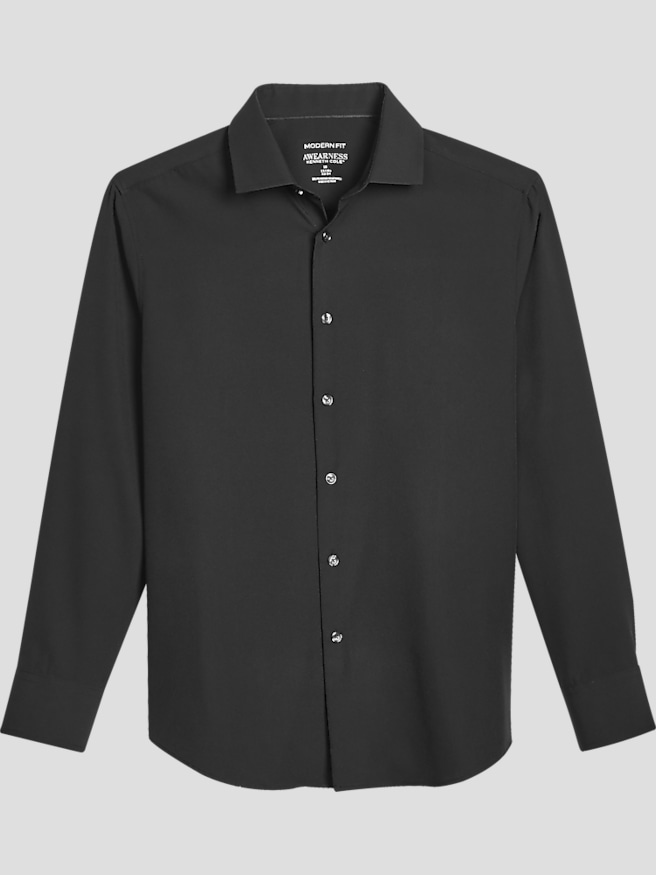
Big and tall men’s casual shirts bring everyday comfort and a put-together look to wardrobes that need more than extra width or a longer hem. These shirts are designed around fuller builds, taller frames, or a combination of both, with proportions that may provide additional room through the chest and waist, greater body length, longer sleeves, or broader shoulders. Big sizing generally emphasizes room through the torso, while tall sizing generally adds length to the body and sleeves; the exact measurements depend on the cut and size chart. That distinction matters when a shirt fits across the chest but rides up at the waist, or when the sleeves reach the wrists but the shoulders feel tight. A comfortable casual fit leaves enough space to sit, reach for an overhead shelf, and bend to tie a shoe without the button placket pulling open. Shoulder seams on a traditional set-in sleeve should sit near the edge of the shoulder rather than slipping far down the upper arm, and long sleeves should reach the wrist without swallowing the hand. For an untucked look, the hem should cover the waistband with enough length for movement, without extending so far that it overwhelms the rest of the outfit. A curved shirttail often provides useful coverage when tucked, while a straighter hem can give an untucked shirt a neat finish. Comparing chest, waist, sleeve, and body measurements with a shirt that already fits comfortably is more reliable than choosing by a familiar size label alone. Anyone exploring the broader category of big and tall shirts can use those measurements to distinguish everyday casual proportions from a closer, more tailored shape. The goal is a shirt that follows the body comfortably, with space where movement requires it and enough structure to look intentional through a full day.
Fabric gives big and tall casual shirts much of their character, influencing everything from how the collar sits to how comfortable the shirt feels beneath a jacket. Cotton is a familiar choice for its soft hand and breathability, though weight and weave make a noticeable difference. A lightweight cotton plain weave can feel smooth and airy indoors, while an Oxford weave has a more textured surface that works naturally with denim and chinos. Cotton flannel typically has a brushed finish that feels soft against the skin and adds warmth during the cooler months. Flannel is a fabric rather than a pattern: it can be solid or patterned, and a plaid shirt is not necessarily flannel. Twill fabrics have a diagonal weave and often offer a substantial feel suited to frequent wear, although durability also depends on yarn quality, construction, and care. Blends containing polyester can help fabrics dry faster and hold their shape, while a small amount of elastane can add useful give across the back and elbows. Stretch should complement a comfortable fit, not compensate for a shirt that is too tight through the chest. Moisture-wicking properties and wrinkle-resistant finishes are features to confirm in the fabric description rather than assume from appearance or fiber content. A wrinkle-resistant shirt may still need light pressing, especially at the collar and button placket. For someone moving between a chilly sidewalk, a heated office, and a crowded restaurant, a breathable midweight fabric can offer flexibility without the bulk of a heavy layer. Softer, fluid fabrics tend to drape closer to the body, while crisper weaves hold a more defined outline. Neither is inherently better; the right choice depends on whether the shirt will be worn alone, open over a T-shirt, or beneath a sweater. Seams, securely attached buttons, and neatly finished buttonholes also deserve attention, particularly on shirts intended for steady use through workdays and weekends.
Casual shirt details help set the tone without requiring an elaborate outfit. A button-down collar keeps its points in place and looks relaxed beneath a crewneck sweater, while an open spread collar can give a solid shirt a clean, easy finish. A camp collar has a laid-back shape that works well worn open at the neck, including indoors during cooler weather. Long sleeves offer coverage and layering flexibility; short sleeves can remain comfortable in warm indoor settings or under a suitable outer layer. Solid navy, gray, olive, and muted earth tones pair easily with familiar pants, while checks, plaids, and small-scale prints bring variety to a simple combination. Pattern scale is a matter of preference rather than a rule tied to body size. A larger plaid can give a shirt a more casual character, and a fine check can read as subtle texture from a distance. For a relaxed workplace, a cotton button-front shirt with chinos creates a tidy outfit without the formality of a suit. For a weekend breakfast followed by errands, a soft shirt worn over a T-shirt offers an easy layer to adjust as temperatures change. When layering, enough room through the upper arms and back helps prevent binding, but excessive fabric can bunch beneath a jacket. Care habits are just as important as styling when a shirt becomes a regular favorite. Follow the garment’s care label, since fiber blends, finishes, and construction can call for distinct washing and drying methods. High dryer heat can shrink some cotton fabrics, and repeated overdrying can stress fibers and elastic components. Prompt removal from the dryer, gentle reshaping, and hanging can reduce creasing when those steps suit the care instructions. Treat spills promptly using an appropriate method, and check care guidance before ironing a stretch fabric or treated finish. For a practical gift, a familiar color, a comfortable fabric, and measurements taken from a well-fitting shirt are useful starting points. Thoughtful proportions and straightforward care make a casual shirt easier to wear repeatedly, whether the day calls for a desk, a dinner table, or a few unhurried hours with friends.