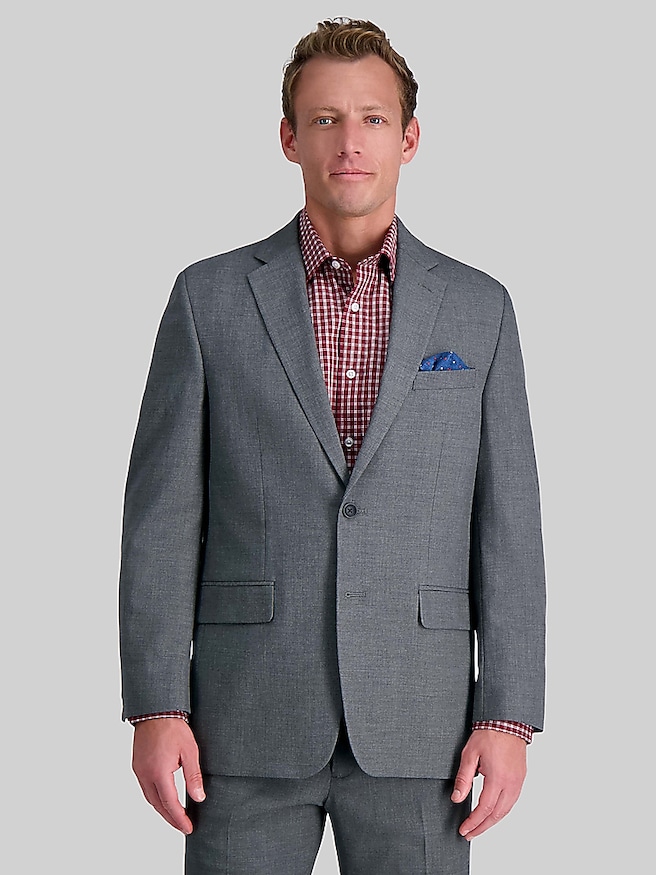
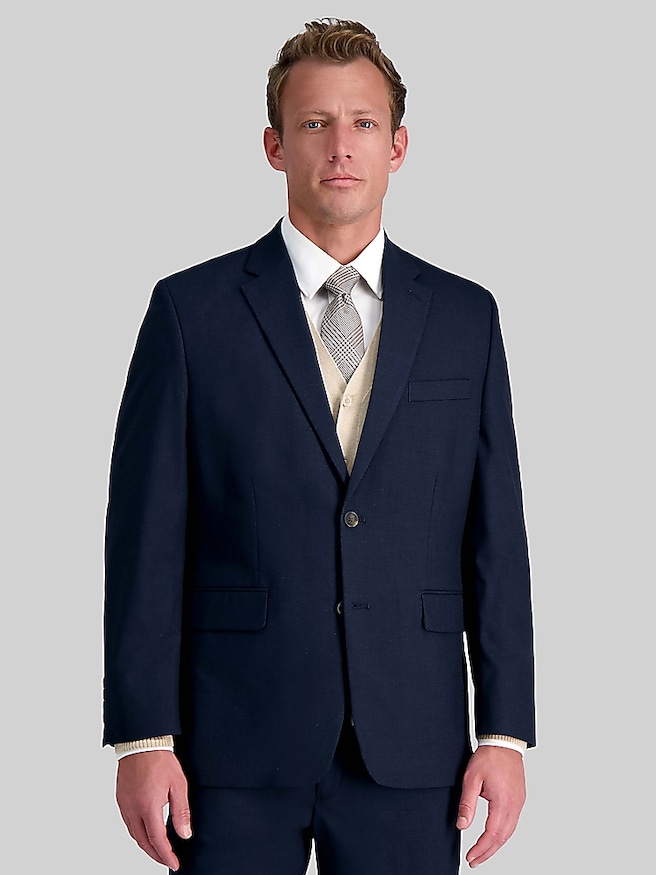
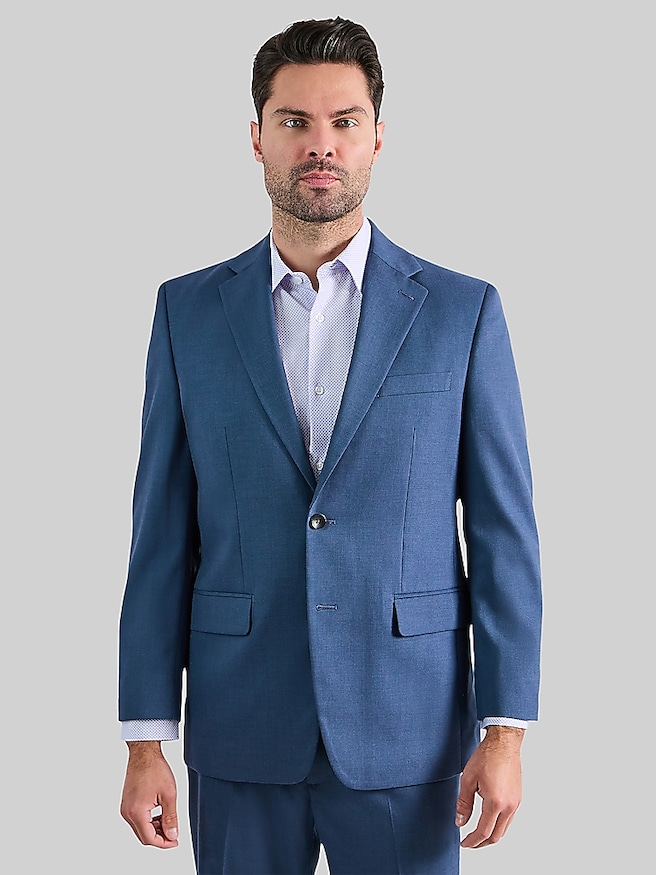
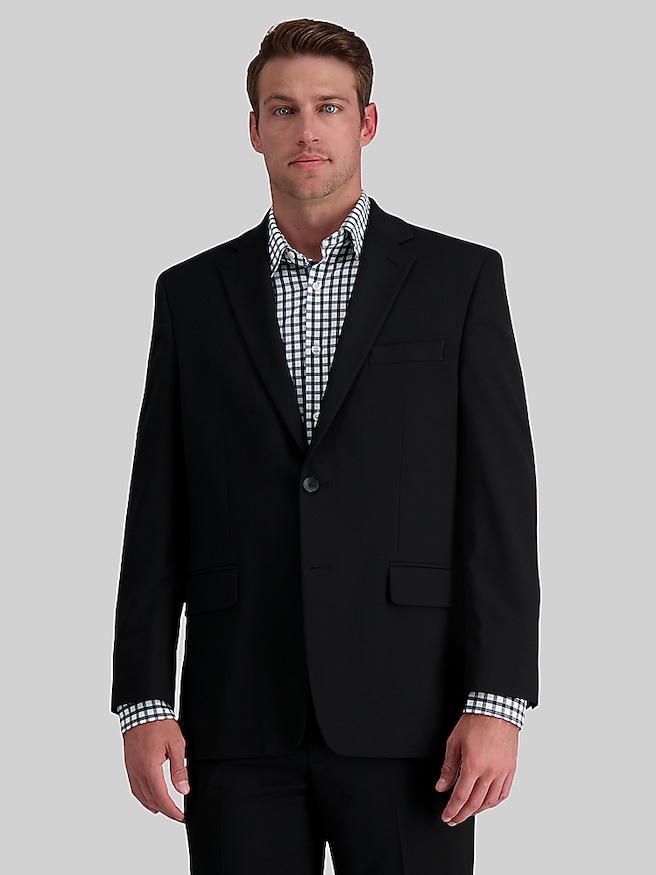
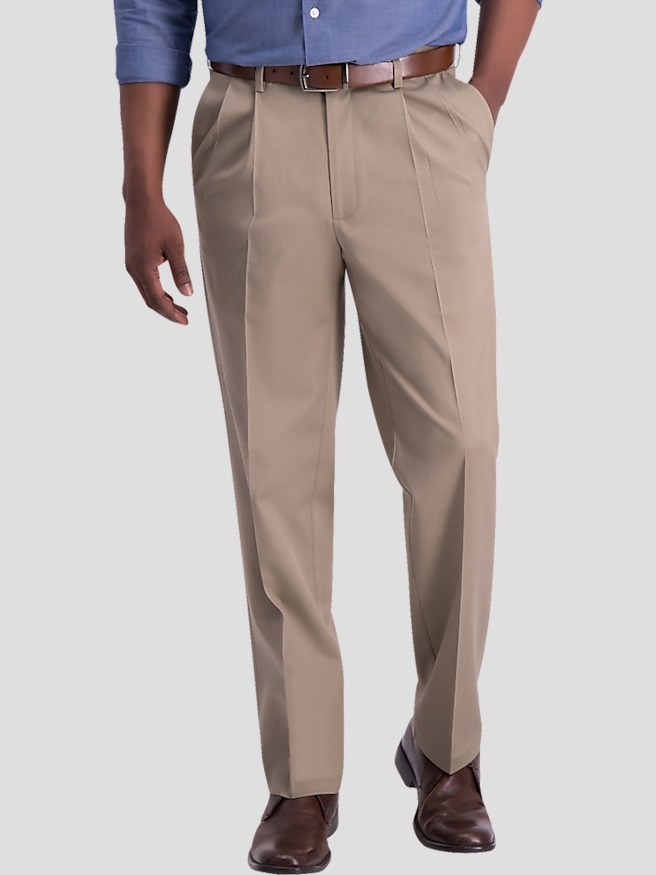
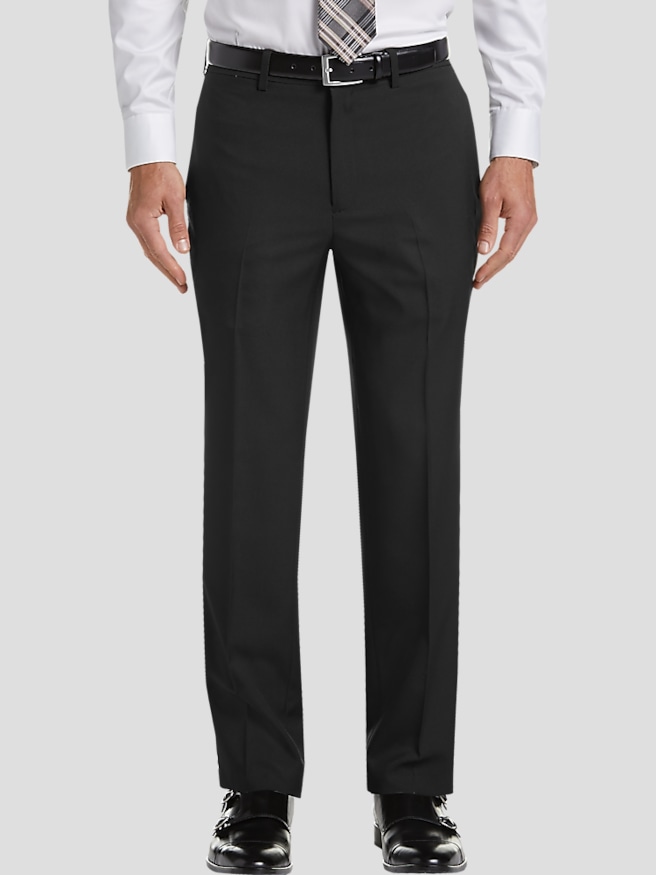
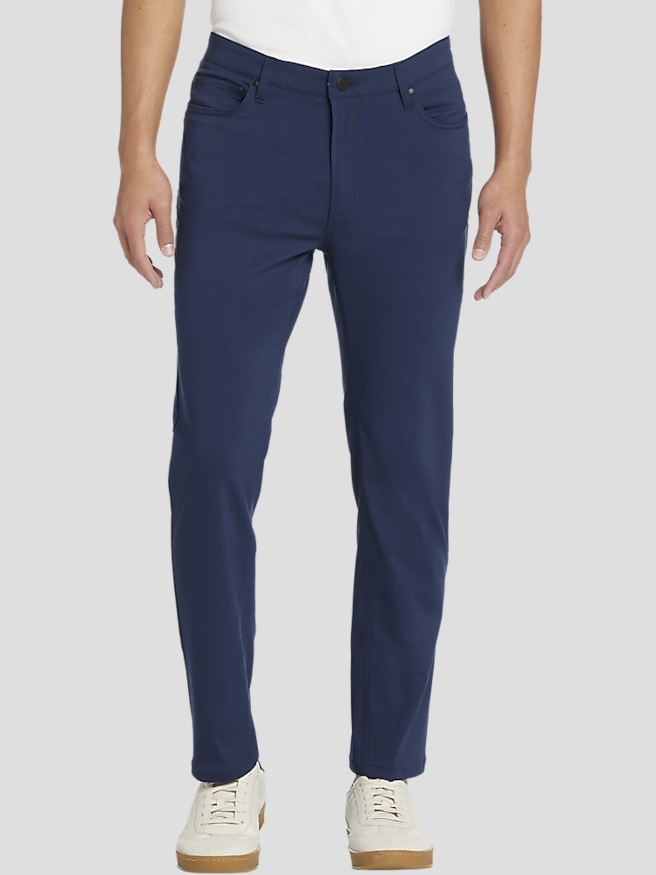
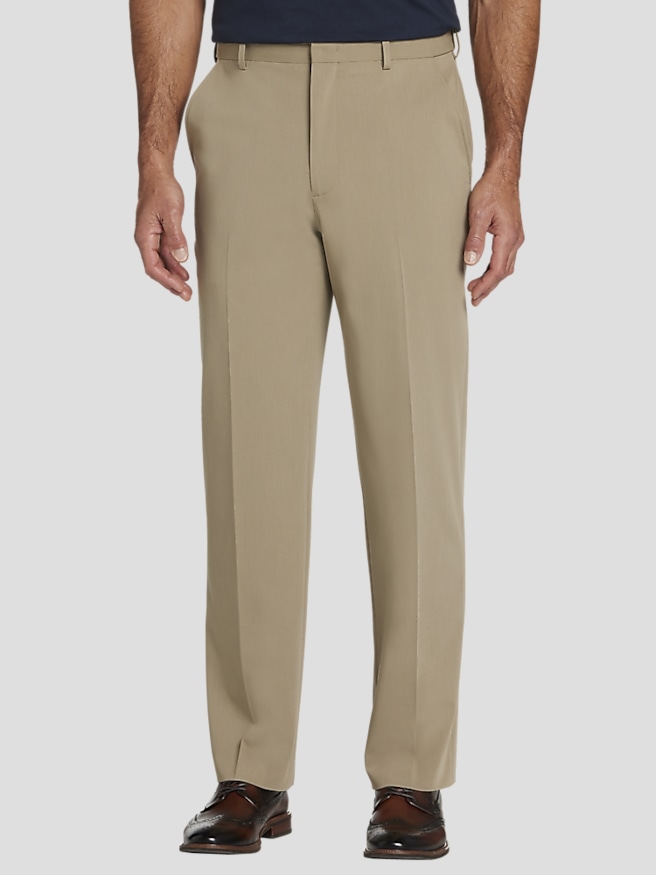
Belted dress pants bring a defined waistline and a finished look to outfits built around tailored clothing. The combination feels equally at home with a tucked-in shirt for a presentation, a blazer for a wedding reception, or a fine-knit polo for dinner. A belt adds a clear visual boundary between shirt and trousers, while the pants establish the shape of the outfit from waist to shoe. Flat-front styles create a clean, uninterrupted line across the hips; pleated fronts add dimension and can provide extra room through the upper leg, depending on the cut. Neither detail determines how formal the pants will feel on its own. Fabric texture, leg shape, color, and the clothing worn alongside them all contribute to the effect. Charcoal, navy, and black tend to support a traditional dress wardrobe, while lighter neutrals and subtle patterns offer another way to pair tailored pants with solid shirts and jackets. A restrained check or a fine woven texture can add interest without drawing attention away from the overall outfit. For someone who moves between desk work, client meetings, and evening plans, the appeal is practical: one pair of well-fitting trousers can support several combinations without looking like an afterthought. Belted styling is especially useful when the waistband remains visible, whether a jacket is open or set aside. The belt should complement that line rather than dominate it, with a width that passes comfortably through the loops and a buckle proportionate to the waistband. A tucked shirt, a smooth front, and a neatly positioned buckle create a composed appearance without requiring elaborate accessories. Dress pants can also make a thoughtful gift for a graduate beginning a professional wardrobe or someone stepping into a new role, particularly when their preferred size and cut are known. Their usefulness comes from the everyday details: pockets that sit neatly, a waistband that stays comfortable, and a leg that hangs cleanly through a full day of wear.
Fabric and fit shape how belted dress pants look in motion, not just how they appear on a hanger. Wool is valued for its drape and resilience, with a surface that can look refined without appearing glossy. Wool blends combine that tailored character with other fibers, though the exact blend influences texture, weight, and care requirements. Polyester blends may offer useful wrinkle resistance, while fabrics with a small amount of stretch can make sitting, reaching, and walking more comfortable. Stretch does not replace proper sizing; pants should still have enough room through the seat and thighs to fall smoothly rather than pull against the body. Cotton-based dress fabrics often have a more matte appearance, making them a natural companion to textured jackets and less formal button-front shirts. Fabric weight also affects the silhouette: a more substantial cloth may hold a defined crease, while a lighter cloth can move more freely. At the waist, a comfortable fit allows the closure to lie flat without a deep indentation or excess material gathered beneath the belt. The belt is a finishing accessory and a modest support, not a fix for a waistband that is several sizes too large. Rise matters here, too, because it determines where the waistband rests and how the trousers balance with a tucked shirt or jacket. A closer cut creates a narrow outline, while a straighter or roomier cut leaves more space through the leg; either can look polished when the proportions suit the wearer. Sitting at a conference table or settling into a car often reveals fit issues that standing still does not. Pulling across the pockets, strain at the closure, or fabric catching behind the knees may signal a need for another size or shape. Hem length completes the picture. A slight break offers a familiar tailored finish, while little or no break produces a sharper line that puts more emphasis on the shoes. Alterations can refine the waist and length, although the original cut should already feel comfortable.
The best finishing details support the pants rather than compete with them. Smooth leather belts with understated hardware usually pair easily with tailored fabrics, and coordinating the belt with the shoes helps the outfit feel connected. Exact color matching is not always necessary, but similar tones and a comparable level of formality create a more consistent result. Black leather footwear generally works naturally with a black belt, while brown footwear leaves room for shades ranging from medium brown to deep chocolate. Texture matters as much as color: a heavily distressed belt can feel out of place against crisp trousers, while a sleek finish follows their more refined character. A selection of Dress Belts can help complete the look with an accessory suited to the waistband, shoes, and occasion. For an interview, quiet combinations keep the focus on the person wearing them; for a celebration, a patterned shirt or distinctive jacket can add personality while the trousers provide a composed foundation. Long-term appearance depends on care as well as styling. The care label is the starting point, since some fabrics require professional cleaning while others permit washing under specified conditions. Excessive heat, harsh treatment, and cleaning methods unsuited to the fabric can affect shape, color, or finish. Between wears, emptying the pockets and hanging pants neatly helps preserve their line and prevents forgotten objects from stretching the cloth. A supportive trouser hanger can reduce unwanted folds, and any pressing should follow the fabric’s care directions. Removing the belt before storing the pants also allows the waistband to rest without being pulled into one position. Durability shows up in small construction details, including secure belt loops, tidy seams, and a dependable closure. Even sturdy fabric benefits from a comfortable fit, since persistent tension places added stress on the seat, pockets, and waistband. With thoughtful proportions and appropriate care, belted dress pants can remain a dependable part of a wardrobe for office days, milestone gatherings, and occasions that call for a little more polish.