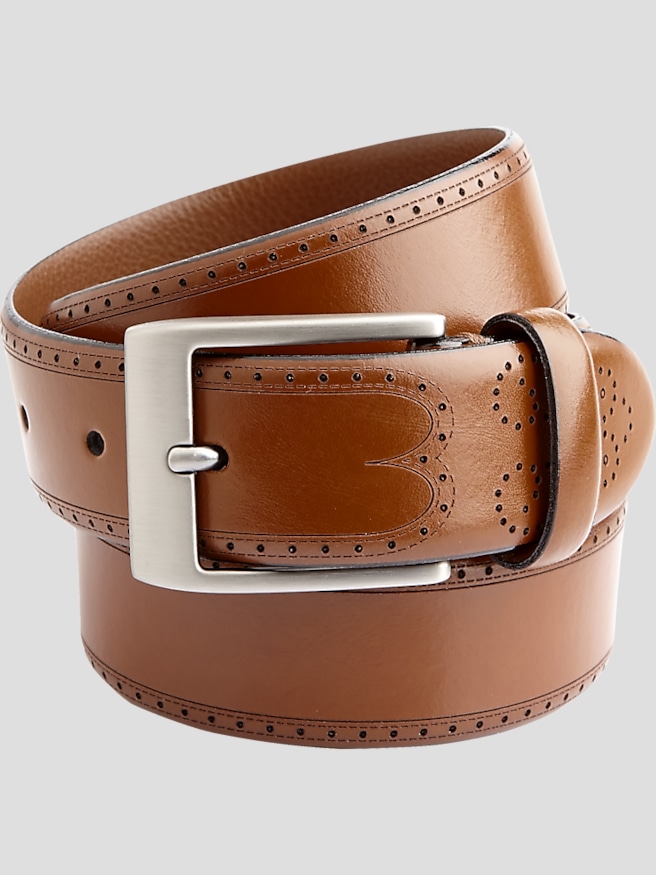
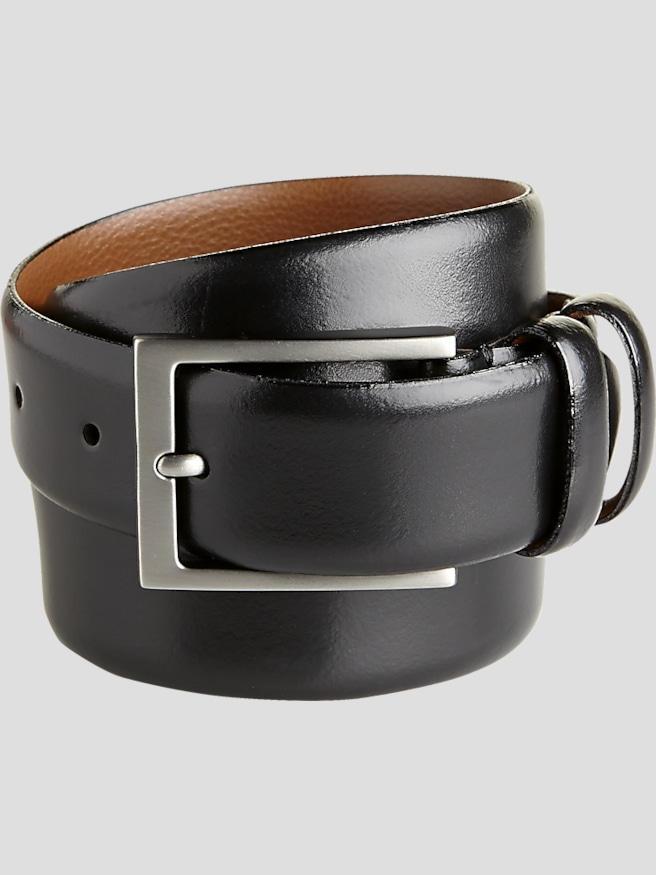
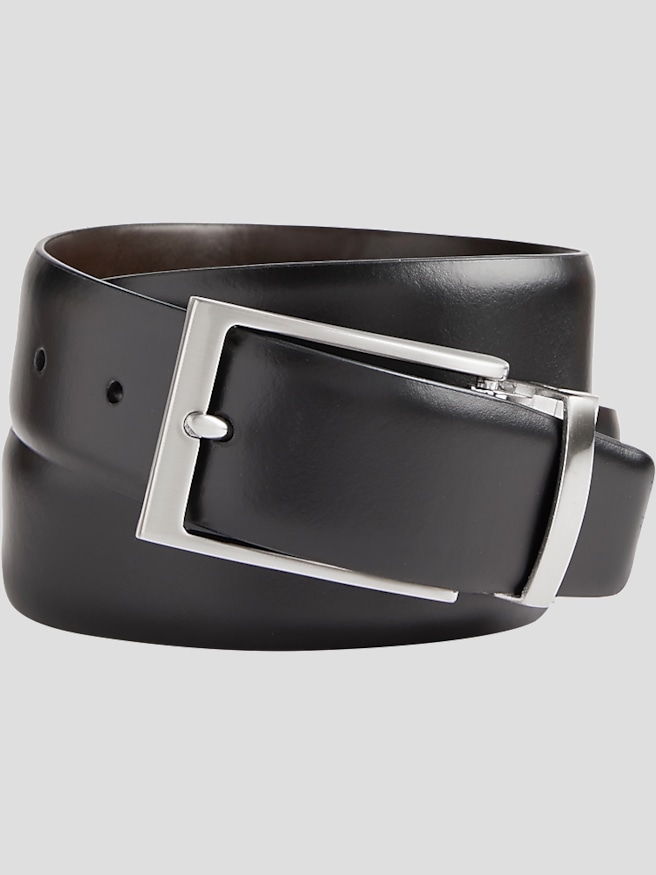
Dress belts bring a clean, finished line to tailored trousers, connecting the color of dress shoes with the rest of an outfit while helping the waistband sit securely. A classic dress belt typically features a smooth leather strap, a restrained metal buckle, and a width of about 1¼ to 1½ inches. Narrower proportions tend to complement refined tailoring, while the wider end of that range can bridge dress trousers and polished business-casual clothing. The best proportion also depends on the trouser loops: the strap should pass through comfortably without folding at the edges or overwhelming the waistband. Smooth finishes are a defining feature of men's dress leather belts, giving them an understated appearance that works with a tucked-in dress shirt, a coordinated suit, or a sport coat and trousers. Black leather creates a crisp connection with black oxfords or loafers and pairs naturally with charcoal, gray, and navy tailoring. Brown leather offers a broad spectrum, from lighter cognac tones to deep chocolate shades that complement brown footwear. An exact color match is not always necessary, but a similar depth and undertone help the belt and shoes feel intentional together. A dark brown belt generally looks more cohesive with dark brown shoes than a pale tan strap would. Buckle design contributes just as much to the overall effect. A modest single-prong frame in silver-tone or gold-tone metal keeps attention on the outfit rather than the hardware. Brushed finishes have a quieter appearance, while polished metal adds a small point of contrast against matte leather. Coordinating that metal with a watch case or cuff links can pull the details together without requiring every accessory to match precisely. For office presentations, interviews, wedding receptions, and dinners that call for tailored clothing, these small connections make a noticeable difference without looking elaborate.
Leather quality and construction influence how a dress belt feels at first wear and how it develops with repeated use. Full-grain leather retains the natural grain surface and can develop a distinctive patina, with subtle variations that reflect regular handling. Top-grain leather has a refined surface that can provide the smooth, consistent appearance associated with dress accessories. Calfskin is valued for its fine grain and supple feel, although the finished belt’s performance also depends on its thickness, backing, and construction. The words “genuine leather” alone do not establish a particular quality level; the way the strap is assembled matters alongside the material description. Some belts use a solid leather strap, while others combine a leather face with additional layers that provide structure. Bonded leather contains leather fibers joined with binders, and its wear characteristics differ from those of an intact leather hide. Across constructions, neatly finished edges, even stitching where present, and securely attached hardware contribute to a tidy appearance and dependable use. The strap should have enough flexibility to follow the waist without feeling limp, and enough structure to lie smoothly through the loops. Heavy embossing, thick contrast stitching, and oversized buckles generally create a more casual impression; subtle grain and tonal stitching remain easier companions for fine wool trousers. Reversible construction can provide two color options in one accessory, though the rotating buckle and both strap surfaces deserve the same attention as the primary finish. Traditional prong buckles offer familiar styling, while discreet track-style closures can allow smaller fit adjustments. The intended occasion still matters more than any single feature. A dress belt suits many business and social settings, but traditional tuxedo trousers generally use side adjusters or suspenders rather than a belt, keeping the waistline uninterrupted beneath formal eveningwear.
A comfortable fit allows a dress belt to support the waistband without drawing it into tight gathers or leaving a long tail hanging past the first few loops. On many traditional five-hole belts, fastening near the middle hole leaves useful room for adjustment in either direction. Belt sizing often runs about two inches above the labeled trouser waist, but that convention is not universal, and trouser labels do not always reflect the measurement where the belt sits. The maker’s sizing information and the fit of an existing belt provide a more dependable reference than assuming every size label means the same thing. Sitting through a meeting, walking between appointments, and standing at a reception all put slightly different demands on the waistband; a comfortable setting accommodates those movements without digging in. A belt should refine the fit of trousers, not compensate for a waistband that is substantially too large. That balance also protects the strap from unnecessary strain around the fastening hole. Routine care helps preserve its appearance: a soft, dry cloth removes surface dust, while occasional conditioning with a product suitable for the leather can help maintain flexibility. Testing any treatment on an inconspicuous area is especially important for light colors, specialty finishes, or textured surfaces. Soaked leather benefits from drying naturally away from direct heat, and prolonged contact with moisture can affect both the strap and its hardware. Hanging a belt straight or storing it in a loose coil helps prevent sharp creases; folding it tightly or leaving it compressed beneath heavy objects can distort its shape. Alternating between belts gives each one time to rest between wears, particularly when an accessory is used through long workdays. These practical qualities also make dress belts thoughtful gifts for a graduate preparing for interviews, a partner building a professional wardrobe, or a dad who appreciates useful finishing touches. Knowing the recipient’s belt size, usual shoe color, and preferred hardware finish makes the choice more personal. An understated design can become a familiar part of getting dressed, equally at home with a carefully pressed suit or a favorite pair of tailored trousers.