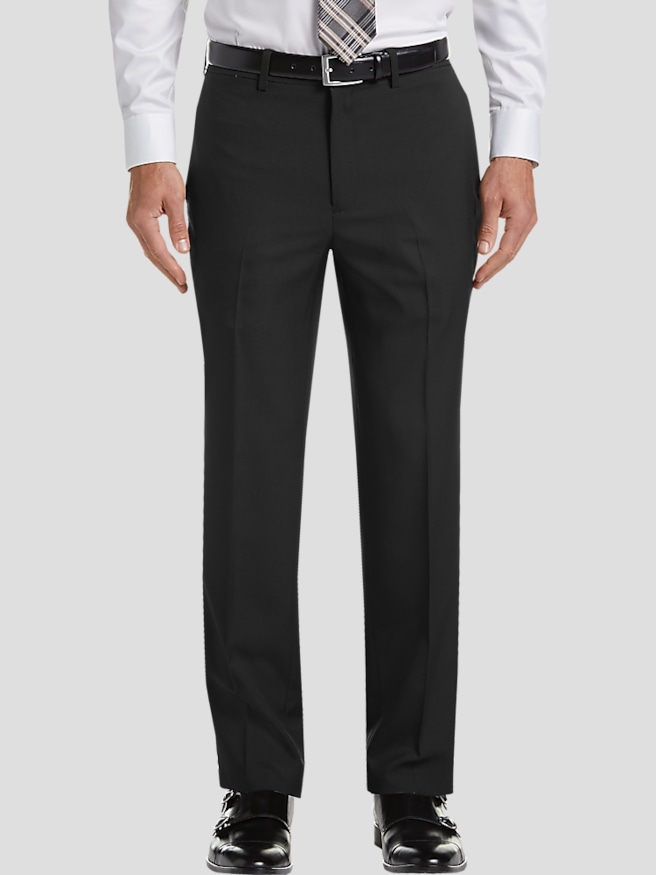
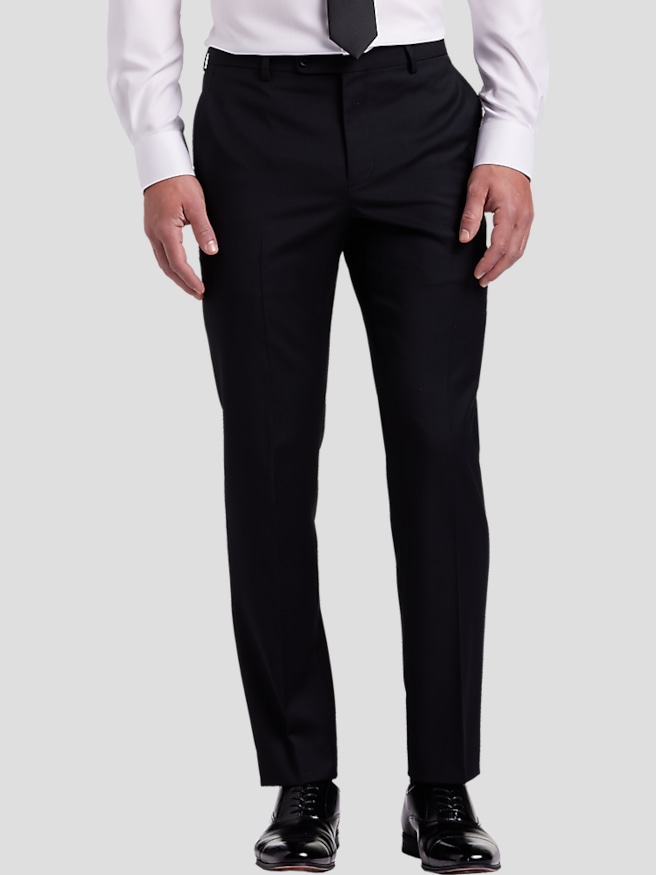
Dress pants with belt loops are tailored trousers with loops sewn around the waistband to hold a belt in place. They bring together the clean lines of dress trousers and the familiar finishing detail of a belt, making them a practical choice for office wardrobes, wedding guest outfits, interviews, and dinners that call for something sharper than jeans. The loops help keep the belt aligned, while the belt itself can provide a modest adjustment at the waist and a visual connection between the trousers and shoes. A tucked-in dress shirt makes that detail especially noticeable: a smooth waistband, neatly positioned buckle, and well-fitting trousers create a composed appearance without requiring a full suit. With a sport coat, these pants can feel appropriate for a client presentation or an evening celebration; with a knit polo or fine-gauge sweater, they can suit a workplace with a more relaxed dress code. Flat-front styles offer an uninterrupted line through the front, while pleated styles introduce additional fabric that can provide room through the hips and upper thighs. Neither detail determines the entire fit, since the rise, leg shape, and overall cut also influence how the trousers sit and move. Charcoal, navy, and black are familiar foundations for dressier outfits, while medium gray and tan can offer useful contrast with darker jackets. Subtle patterns add interest without necessarily making an outfit feel busy, particularly when paired with a solid shirt. Within the broader category of Belt Loop Pants, dress trousers stand apart through their fabric, tailoring, and polished finish. Their appeal is less about wearing a belt every time and more about having that option when the outfit calls for it. A pair that fits correctly should also sit comfortably without relying on a tightly cinched belt to stay in place.
Fabric and fit determine much of how dress pants feel over a full day. Wool is valued for its drape, natural resilience, and ability to maintain a refined appearance, while wool blends can combine those qualities with other performance characteristics. Polyester and viscose blends are also common in tailored trousers, offering varying degrees of smoothness, softness, and wrinkle resistance depending on the fabric construction. Cotton-rich dress pants often have a more relaxed character, and fabrics containing a small amount of elastane can provide useful give when sitting, walking, or bending. Stretch does not replace a suitable fit, but it can make a noticeable difference during a commute, a long meeting, or a reception with plenty of time on the dance floor. Fabric weight, weave, and surface texture also affect the result: a fluid cloth tends to fall differently from a crisp, structured one, even when the pants share the same labeled size. At the waist, a comfortable fit allows the waistband to lie flat without digging in or folding under the belt. Through the seat and thighs, the fabric should have enough ease for sitting without pulling across the pockets or creating pronounced horizontal strain lines. Slim cuts generally follow the leg more closely, straight cuts maintain a more consistent line, and roomier cuts provide additional space, although those descriptions can vary by maker. Rise matters just as much as leg width. A waistband positioned comfortably on the body can help a tucked shirt stay neat and keep the proportions balanced beneath a jacket. Hem length completes the silhouette: a slight break creates a familiar tailored finish, while little or no break produces a cleaner view of the shoe. For someone who spends much of the day seated, comfort at the waist and knees deserves as much attention as the standing view in a mirror. Useful construction details include evenly secured belt loops, tidy pocket openings, and seams that lie smoothly rather than twisting along the leg. Loop width and spacing also affect how neatly a dress belt threads through and rests against the waistband.
Dress pants with belt loops work best when the belt complements the tailoring rather than overwhelming it. A relatively slim, understated belt usually looks more natural with dress trousers than a thick, heavily textured style with an oversized buckle. Black leather creates a straightforward pairing with black dress shoes, while brown shades can coordinate with brown footwear and add contrast against navy or gray. The leather colors do not need to be identical, but a similar tone and level of formality help the outfit feel intentional. A belt should fasten comfortably without pulling the waistband into gathers; extra fabric bunching beneath it often points to a waist that needs adjustment. For workdays involving a phone, keys, or a card case, keeping pocket contents light helps preserve the smooth shape through the hips. That same attention extends to care, which depends on the actual fabric and garment label rather than the presence of belt loops. Some dress pants require dry cleaning, while others permit machine washing under specified conditions. Following those directions helps protect the finish, dimensions, and construction. Between cleanings, hanging trousers neatly and allowing them to air out can help maintain their appearance. A garment brush may remove surface lint from suitable fabrics, and pressing or steaming should follow the care instructions, especially when stretch fibers or heat-sensitive blends are involved. Repeated friction from a rough belt edge or frequent overstuffing of pockets can contribute to wear, so everyday handling matters alongside fabric choice. For a graduate beginning an office role, a partner refreshing a professional wardrobe, or someone preparing for an important celebration, these trousers can also be a thoughtful gift when size and fit preferences are known. Waist and inseam measurements, preferred rise, and usual leg shape are more useful than guessing from appearance alone. The lasting value of a well-chosen pair comes from comfortable movement, dependable construction, and an appearance that feels appropriate whenever a more polished outfit is needed.