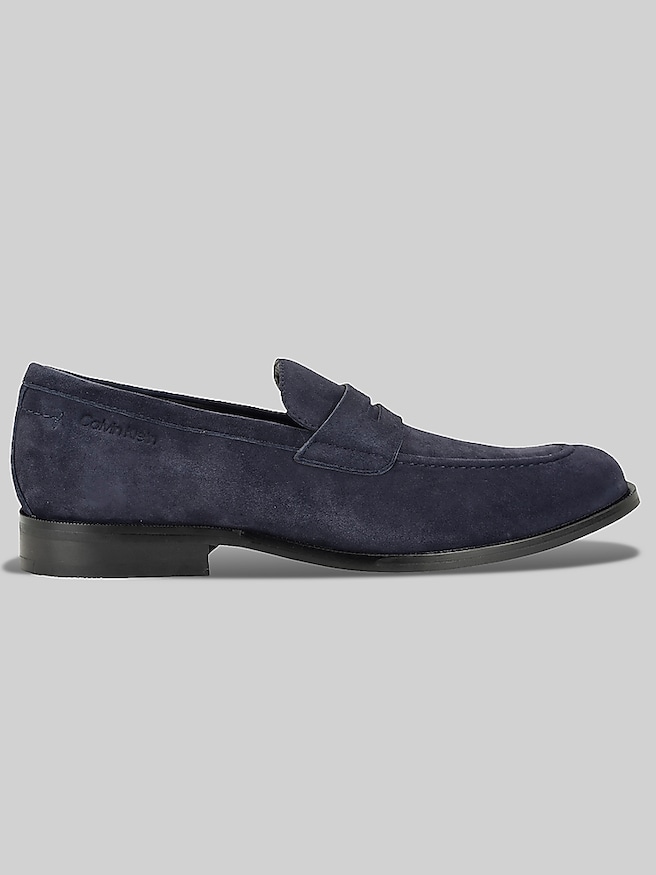
The penny loafer is a slip-on shoe defined by a low profile, a moccasin-style toe seam, and a leather strap across the instep with a small, diamond-shaped opening. That strap, often called the saddle, gives the shoe its familiar identity without buckles or laces. Drawing inspiration from Norwegian slip-on footwear, the style gained a foothold in American menswear in the 1930s and later became closely associated with college campuses and Ivy League dress. Its lasting appeal comes from a balance of polish and ease: the shape looks intentional with tailored trousers but feels equally at home beneath straight-leg jeans. Traditional moccasin construction wraps leather around and beneath the foot, creating a flexible cradle rather than relying solely on a rigid platform underneath. Construction methods vary, however, so a moccasin-style appearance does not necessarily indicate the same structure inside every shoe. Materials also influence the experience. Smooth leather provides a clean surface that can develop creases and character with wear, while suede brings a softer texture and a more relaxed appearance. A highly polished finish creates a sharper impression, although its care requirements may differ from those of lightly finished leather. Black tends to read as more restrained and dressy; brown and burgundy introduce depth and work naturally with navy, gray, olive, and denim. The sole deserves as much attention as the upper. Leather soles offer a traditional appearance and can feel sleek underfoot, while rubber soles may provide additional grip and cushioning, depending on their design. Neither material alone determines comfort or longevity. The quality of the leather, the way the sole is attached, the shape of the shoe, and the conditions in which it is worn all contribute. Together, those details distinguish a loafer chosen mainly for its appearance from one that also suits the practical demands of a regular routine.
Fit matters especially with penny loafers because there are no laces to adjust the hold across the foot. A secure fit usually means the instep feels comfortably supported, the widest part of the foot aligns with the widest part of the shoe, and the toes have room without sliding forward. The heel should remain reasonably stable during a normal stride. A little movement can occur as a firm sole begins to flex, but persistent lifting or rubbing is not something to dismiss as inevitable. Leather may soften and give slightly across pressure points; it should not be expected to correct a shoe that is too short or fundamentally the wrong shape. Trying on loafers with the socks intended for regular wear provides a more useful sense of fit than relying on a size number alone. Thin dress socks, cushioned socks, and low-profile liners each change how much space the foot occupies. Anyone who uses an orthotic should also consider whether the interior has enough depth and whether the footbed can accommodate it without crowding the instep. For a day that includes a commute, several hours at a desk, and an evening meal, secure heel hold and comfortable forefoot flex can matter more than an especially narrow silhouette. In an office with a business-casual dress code, smooth leather loafers pair easily with flat-front trousers, an oxford shirt, and an unstructured jacket. With denim, a clean hem and limited stacking help preserve the shoe’s low, streamlined shape. With a suit, the result is more relaxed than a lace-up dress shoe, making the combination better suited to occasions that allow some flexibility in presentation. Weddings, client meetings, and graduation celebrations each have their own expectations, so the invitation, setting, and dress code should take priority. A penny loafer can bridge casual and tailored clothing, but that versatility does not make it a substitute for every kind of formal footwear.
Consistent care helps leather loafers retain their shape and appearance without trying to erase every sign of use. After wear, a soft brush or clean cloth can remove surface dust before it settles into seams and creases. Smooth leather generally benefits from occasional conditioning with a product appropriate to its finish, applied sparingly and tested first in a discreet area. Excess conditioner can leave residue, and products intended for smooth leather should not be assumed suitable for suede or coated finishes. Suede needs a dedicated brush and careful attention to its nap rather than ordinary shoe polish. Manufacturer care directions are the best starting point when the finish is unfamiliar. Letting shoes rest between wears allows absorbed moisture to dissipate, while properly sized shoe trees help support the uppers and reduce deep creasing. Cedar shoe trees can also help absorb moisture, but they should fit without stretching the leather. Shoes that become damp should dry naturally away from direct heat, which can stiffen or damage leather. Sole edges, heels, and stitching deserve periodic attention as well; a worn heel or separating seam is easier to address before the damage spreads. Some constructions allow a cobbler to replace soles or heels, extending useful wear, while others have more limited repair options. Durability therefore depends on both the original construction and the habits that follow. For someone building a dependable wardrobe, a well-fitting penny loafer can serve as a familiar finishing touch for workdays, dinners, and family gatherings. It can also make a thoughtful gift for a graduate, a partner starting a new role, or someone who appreciates traditional menswear, provided the recipient’s size, width, and preferred fit are known. The appeal is less about novelty than about a recognizable shape that earns its place through repeated wear. For a related look at classic footwear, explore Men's Bass Shoes Outlet.