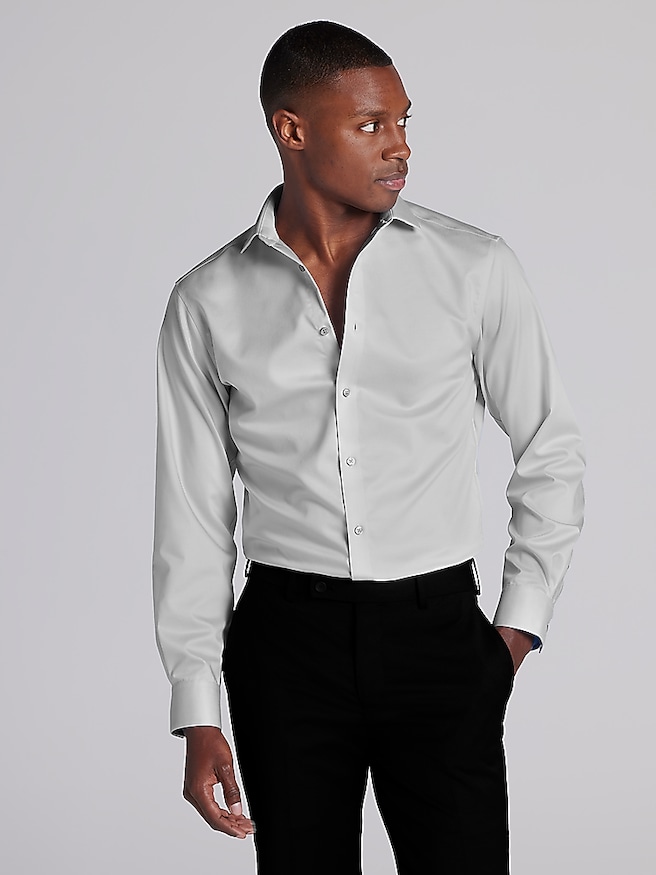
Back-to-office attire for men brings together tailored trousers, chinos, button-down shirts, knit polos, and jackets that suit the expectations of a professional workplace. In a business casual setting, that often means a collared shirt with well-fitting pants and leather shoes, with a blazer or sport coat adding definition for meetings and presentations. More formal offices may call for a coordinated suit, dress shirt, and tie, while relaxed workplaces may welcome dark-wash jeans and clean, understated sneakers. The common thread is clothing that looks intentional without getting in the way of the workday. A shirt should stay neatly tucked through a morning commute and an afternoon at a desk; pants should allow comfortable sitting without sagging at the knees or pulling across the lap. For someone returning to regular office hours, joining a new team, or moving into a client-facing position, versatile separates make it easier to dress for a range of responsibilities. Navy, charcoal, gray, and tan offer a practical foundation because they coordinate readily with white, light blue, and subtly patterned shirts. Olive chinos or a textured brown jacket can introduce variety without making an outfit feel overly casual. An unstructured blazer has a softer outline that works naturally with chinos, while a more defined jacket complements dress trousers and formal shirts. A fine-knit polo offers a clean alternative to a button-down where the dress code permits, and a lightweight sweater can add another layer of visual interest over a collared shirt. On a day that moves from focused desk work to a meeting with leadership, these combinations provide a consistent professional appearance. Office culture still matters: denim, sneakers, and untucked shirts belong in workplaces where those choices are accepted, rather than serving as universal substitutes for business attire. The most useful office wardrobe reflects both the setting and the person wearing it, with enough consistency that getting dressed feels familiar rather than complicated.
Fabric, construction, and fit shape how office clothing looks after several hours of actual wear. Wool and wool-blend trousers can offer a smooth drape and natural resilience, making them well suited to tailored outfits and repeated time at a desk. Cotton chinos have a more relaxed character, with twill weaves providing recognizable texture and a substantial feel. Blended fabrics may add stretch, wrinkle resistance, or easier care, although those qualities depend on the fabric composition and garment construction. Oxford cloth gives a button-down shirt a textured surface that pairs comfortably with chinos and sport coats, while smoother poplin creates a crisper appearance with dress trousers or a suit. Fine-gauge knitwear supplies subtle texture without the visual bulk of a heavier knit, helping a polo or sweater sit neatly beneath a jacket. Across these categories, a comfortable fit follows the body without clinging. Jacket shoulders should sit close to the natural shoulder line, sleeves should allow easy movement, and the front should close without pronounced pulling around the button. A shirt collar needs room to sit comfortably when fastened, particularly when worn with a tie. Through the chest and waist, excess fabric can bunch beneath a jacket, while an overly close cut may strain when reaching for a laptop or settling into a chair. Trousers work best when the waistband stays in place without relying on a tightly cinched belt, with enough room through the seat and thighs for ordinary movement. Both pleated and flat-front styles can look professional; their effect depends on the overall cut and how the fabric falls. The hem should meet the shoe cleanly rather than gather in a heavy stack. Durability also comes from details that are easy to overlook, including secure buttons, even stitching, reinforced stress points, and pocket openings that lie flat. Well-balanced construction helps clothing maintain its shape through regular wear, while a suitable fit reduces unnecessary strain on seams and closures.
A dependable office wardrobe also needs to work beyond the fitting room, from the first train ride of the day to the last conversation before heading home. Loafers, lace-up dress shoes, and streamlined leather boots each bring a distinct level of formality, with comfort depending on fit, support, and the amount of walking a workday involves. A belt in a compatible leather tone gives the outfit a cohesive finish, while socks that coordinate with the trousers keep the transition to the shoe understated. Ties and pocket squares can add personality in dressier settings, but restrained patterns are often easier to combine with an existing wardrobe. The broader range of Men’s Office Wear reflects these varied needs, from straightforward business casual combinations to more traditional professional dressing. Keeping those clothes in good condition is part of their everyday usefulness. Care labels establish whether a garment is washable, requires professional cleaning, or needs particular handling; wrinkle-resistant fabric does not necessarily mean that every crease will disappear without attention. Prompt treatment of small marks, appropriate washing settings, and pressing suited to the material can help preserve a neat appearance. Jackets benefit from supportive hangers, and trousers stay tidier when stored without being crowded or crumpled. Giving shoes time between wears and using care products appropriate to their material can help maintain their finish. Rotating frequently worn garments also spreads out wear instead of asking one shirt or pair of pants to handle every office day. For a recent graduate beginning a professional role or an experienced employee taking on new responsibilities, clothing that coordinates easily can become a dependable part of the routine. An understated tie or leather belt may also make a thoughtful gift when the recipient’s preferences are known. The lasting value of back-to-office clothing lies in that combination of presentable style, comfortable movement, manageable care, and suitability for the work at hand.