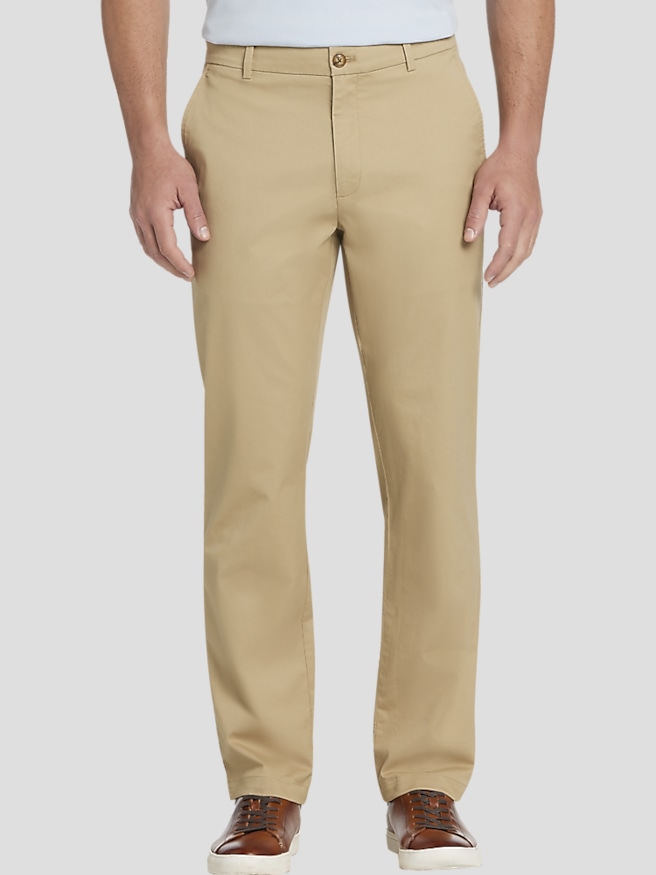
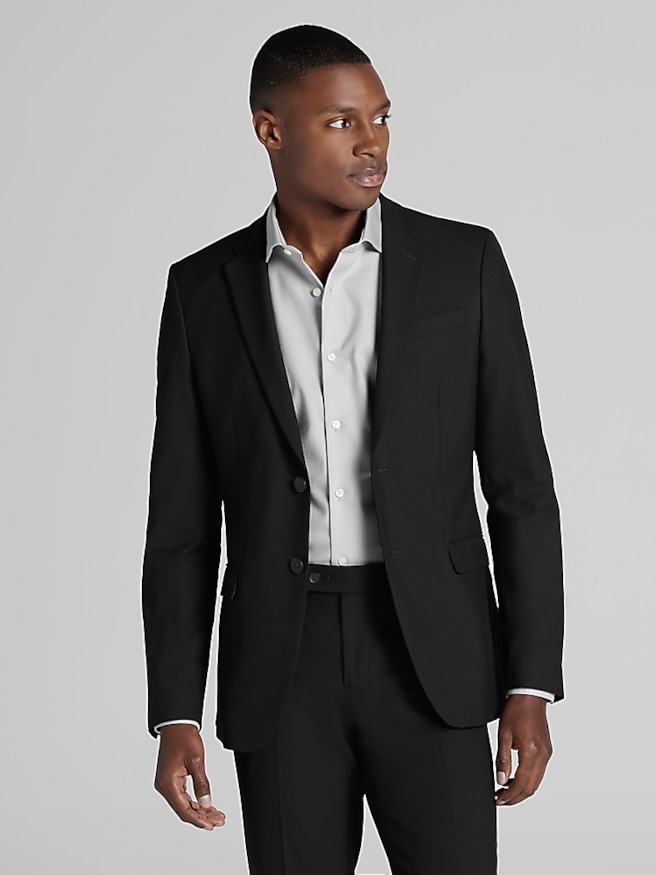
Men’s office wear includes the clothing, footwear, and accessories worn in professional settings, from suits and dress shirts in formal workplaces to chinos, knit polos, and sweaters in business casual offices. The right balance depends on the workday: a client presentation may call for a coordinated jacket and trousers, while a day of desk work and internal meetings may feel more natural in an open-collar shirt and tailored pants. Business casual generally means polished separates without the requirement of a matching suit or tie, although expectations vary by workplace. In more relaxed settings, dark, evenly colored denim and understated leather sneakers can fit the dress code; in conservative environments, dress trousers and leather lace-ups remain more appropriate. Across these settings, good fit does more for a professional appearance than unnecessary formality. A shirt collar should sit comfortably against the neck, shoulder seams should follow the shoulders, and the front should lie smoothly without pulling between buttons. Trousers need enough room through the seat and thighs for sitting, climbing stairs, and moving between meetings, with a waistband that stays comfortable through a full day. A clean hem keeps fabric from gathering heavily over shoes, while jacket sleeves should allow a small amount of shirt cuff to show. Slim, tailored, and classic fits describe varying proportions rather than levels of professionalism; the most useful shape follows the body without restricting movement or leaving excess fabric to bunch under layers. Navy, charcoal, gray, and khaki provide a flexible foundation, especially when shirts and knitwear share complementary tones. Subtle stripes, small checks, and textured solids bring variety without making combinations difficult. For someone starting a first office job, returning to an in-person schedule, or taking on a more client-facing role, that consistency makes getting dressed less complicated. A wardrobe of compatible separates can move from a routine morning meeting to a more formal afternoon appointment with a change of jacket, shoes, or neckwear.
Fabric helps determine how office clothing feels at the beginning of the day and how it looks by the commute home. Wool is widely used in tailored clothing because it breathes, drapes cleanly, and naturally resists some wrinkling, though weight and weave affect its performance. Lightweight wool trousers can work across seasons, while flannel brings a softer surface and added warmth during the cooler months. Cotton shirts offer a familiar, breathable feel, with smooth poplin looking crisp under a jacket and Oxford cloth adding visible texture to less formal combinations. Twill fabrics have a diagonal weave that can provide substance and a supple drape, making them useful for trousers worn repeatedly through a busy work schedule. Blended fabrics may add stretch, wrinkle resistance, or easier care, but the fiber label and garment construction give a clearer picture than any single performance term. A modest amount of stretch can make a noticeable difference during a long train ride or hours at a desk, especially at the knees, elbows, and waistband. Fine-gauge merino wool and cotton knitwear layer neatly over shirts without creating bulky folds beneath a jacket. Heavier sweaters bring more warmth but need enough room through the outer layer to keep shoulders and sleeves comfortable. Office temperatures matter as much as outdoor conditions: a chilly walk from the parking lot can lead directly into a warm conference room, making removable layers more practical than one heavy garment. A breathable shirt, lightweight sweater, and softly structured jacket provide flexibility without looking overly casual. Seasonal texture can be understated, too, with brushed cotton, muted checks, and deeper earth tones adding depth alongside familiar navy and gray. The combinations associated with Men's Fall Office Outfits carry naturally into cooler-weather workdays when the emphasis stays on comfortable layers and versatile colors. Clothing that sits smoothly at the collar, cuffs, and waist tends to look more composed, whether worn through a video call, a working lunch, or an evening professional gathering.
Durability in a work wardrobe comes from the relationship between fabric, construction, fit, and care rather than thickness alone. Seams should lie flat, buttons should feel securely attached, and pocket openings should retain their shape without stretching or gaping. Clothing that is too tight places repeated stress on stitching and fabric, particularly across the seat, elbows, and thighs; enough ease for movement helps preserve both comfort and appearance. High-friction areas deserve attention, including trouser pockets, shirt cuffs, and the lining where a jacket meets a shoulder bag. Rotating frequently worn clothing gives fabrics time to air out and recover between uses. Care labels remain the best reference for washing, drying, ironing, and professional cleaning, since garments with similar fiber content may have distinct linings, finishes, or construction. Washable shirts generally hold their appearance better when stains are addressed promptly and the recommended heat settings are followed. Excessive dryer heat can contribute to shrinkage and wear, while ironing at the appropriate temperature helps restore a crisp collar and placket. Tailored jackets benefit from supportive hangers that follow the shoulder shape, and knitwear is usually better stored folded to avoid stretching. Dress trousers hung neatly along their crease are easier to keep ready for another workday. Footwear completes the same practical picture. Leather loafers and lace-up shoes suit many professional environments, while simple boots can work well during cooler weather when their shape and finish complement tailored clothing. Comfort depends on secure heel placement, sufficient toe room, and soles suited to the amount of walking the day involves. Regular cleaning and care appropriate to the material help shoes maintain a polished appearance; suede requires a separate approach from smooth leather. Belts, socks, and ties can connect an outfit through color without matching every element exactly. Office clothing can also make a thoughtful gift for a graduation, career milestone, or new position when the recipient’s measurements, workplace expectations, and care preferences are known. Ultimately, useful professional clothing looks appropriate, feels comfortable in motion, and stands up to the ordinary rhythm of repeated wear.