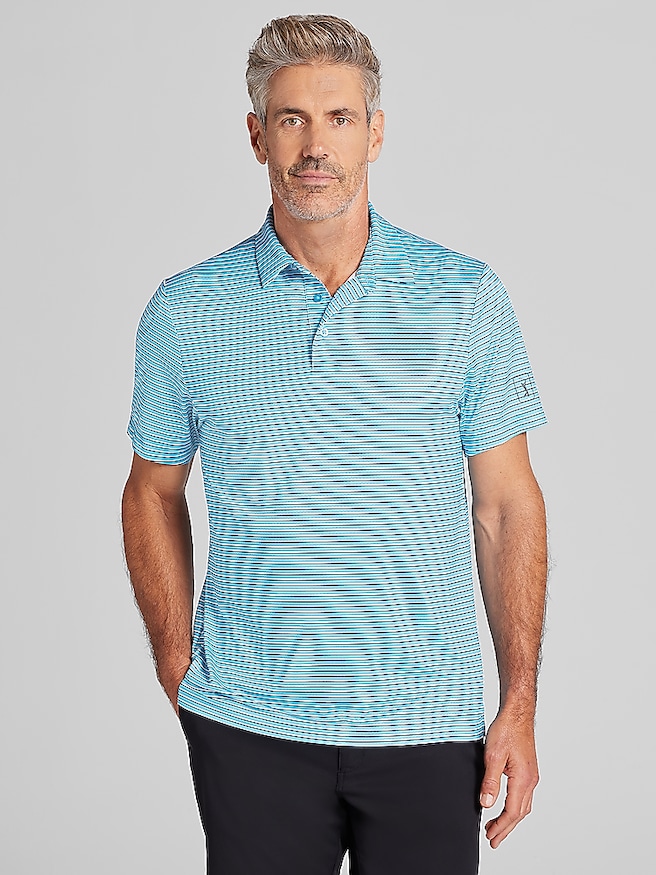
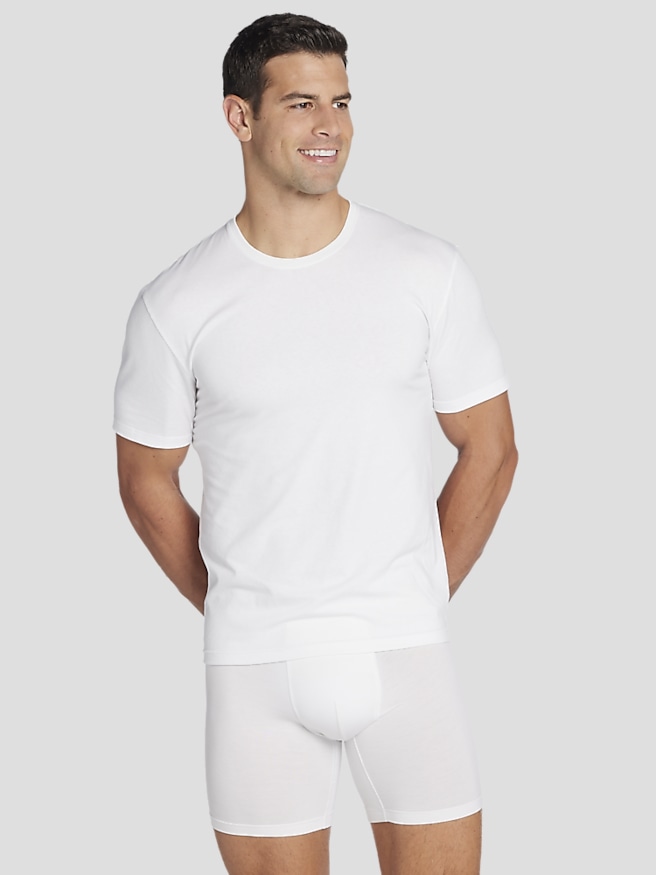
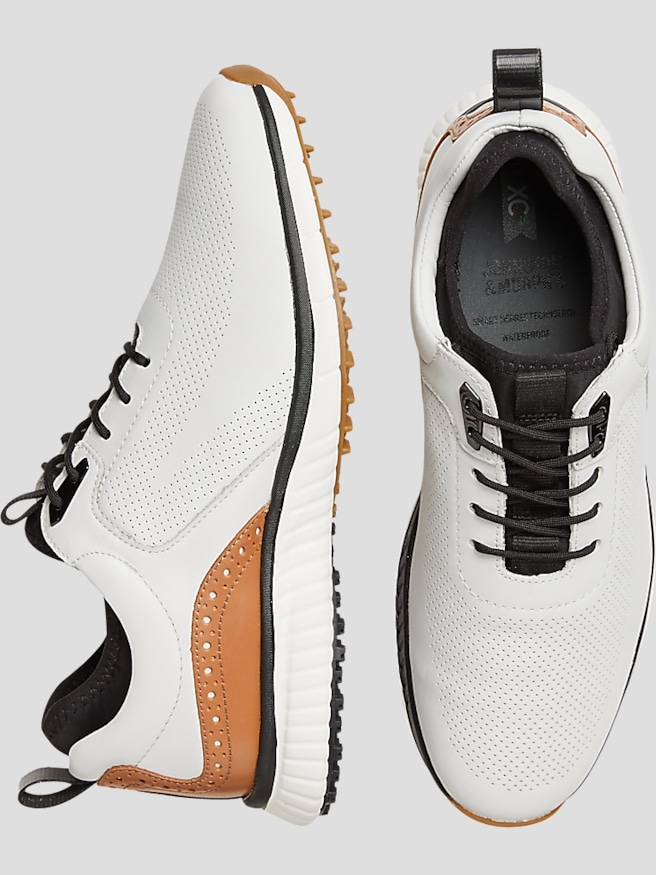
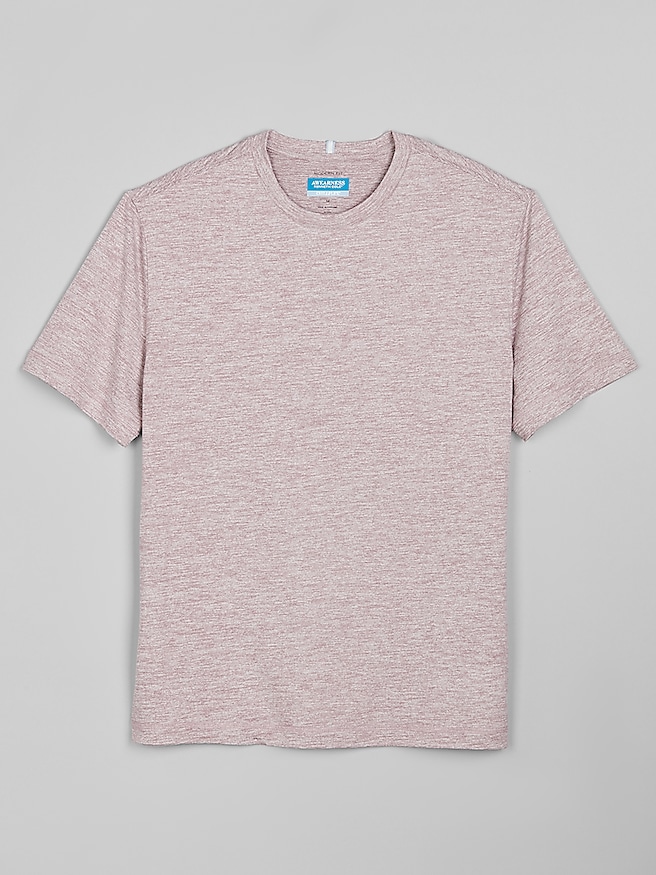
Athletic tees bring the familiar simplicity of a T-shirt to clothes made for movement, whether that means a strength session, a lunchtime walk, or a full day of errands. The category includes performance T-shirts designed to manage perspiration and athletic-fit tees shaped to accommodate broader shoulders with a more tapered waist. Those descriptions are not interchangeable: an athletic fit describes the silhouette, while performance features depend on the fabric and construction. A shirt can have either quality or combine both. For exercise, useful characteristics include breathable knit structures, freedom through the shoulders, and fabric that feels comfortable against the skin through repeated motion. Polyester is common in performance tees because it absorbs little moisture and typically dries faster than cotton, although the finished fabric and any treatments influence how it behaves. Moisture-wicking construction helps move perspiration away from the skin so it can spread across the fabric and evaporate. That is distinct from breathability, which concerns how readily air and moisture vapor pass through the material. Cotton offers a soft, familiar hand and works well for casual activity, but it tends to hold moisture longer during sustained exercise. Blends can balance cotton softness with the drying characteristics of synthetic fibers, while a small amount of elastane adds stretch and helps the shirt recover its shape. Nylon can contribute a smooth feel and abrasion resistance, depending on the knit. Fabric weight matters as much as the fiber list: a fine jersey may feel light and fluid, while a more substantial knit provides greater coverage and a firmer drape. Mesh inserts or open-knit sections can encourage airflow, though their placement affects coverage. The most useful athletic T-shirt is not necessarily the one with the most technical features. It is the one whose materials suit its main purpose, from steady walking and mobility work to lifting, running, or relaxed everyday wear.
Fit gives men's athletic tees much of their character, but comfort depends on more than a close outline. A fitted tee follows the chest and torso without pulling sharply across either area; a regular fit leaves more space between the body and fabric. An athletic cut often provides additional room across the upper body before narrowing toward the hem, making it useful for someone whose shoulders and waist fall into different sizing proportions. It should not be confused with compression apparel, which is designed to apply a closer, more consistent level of pressure. For a conventional set-in sleeve, the shoulder seam generally sits near the edge of the shoulder, while raglan sleeves use diagonal seams that create a different shape through the upper body. Neither construction guarantees better movement on its own. Sleeve width, underarm space, fabric stretch, and the overall cut work together when reaching for a pull-up bar or pressing weights overhead. A comfortable sleeve opening allows the arm to bend without a tight band around the biceps. Across the chest, pronounced horizontal pulling can signal insufficient room; at the waist, excess fabric can bunch during floor exercises or beneath another layer. Hem length is equally practical. Enough coverage to reach overhead without constant readjustment is helpful, while an overly long body may interfere with a preferred shorts or joggers silhouette. A crew neckline offers a familiar athletic appearance, and a well-constructed neckband should lie smoothly rather than feel restrictive. Low-profile seams and smooth interior finishes may reduce friction during repetitive movement, especially around the underarms. Printed neck information can eliminate a sewn-in label, although comfort still depends on the finish. Size charts and garment measurements provide better context than a size letter alone. Someone who prefers a close fit for casual outfits may appreciate slightly more ease for training, particularly when a tee has limited stretch. The goal is a shirt that stays comfortable through the activity rather than needing frequent tugging into place.
The appeal of athletic tees also lies in how easily they move between exercise and everyday dressing. A simple crew neck pairs naturally with training shorts for the gym, tapered joggers for a walk, or casual pants for a low-key afternoon. Solid colors keep the outfit understated, while heathered fabrics add visual texture without a prominent pattern. A smooth, less glossy finish often feels more at home in casual outfits; an open mesh structure has a more visibly technical character. Coordinating a tee with athletic sneakers creates a cohesive casual outfit, while footwear selected for the activity supports its practical purpose. For someone carrying a change of clothes in a gym bag, lightweight construction and efficient drying can be especially useful. For someone wearing a tee through errands and downtime, softness, opacity, and a neckline that holds its shape may matter more. Athletic tees can also make thoughtful gifts for a partner, parent, sibling, friend, or teammate whose routine includes regular exercise, particularly when their usual size and preferred fit are known. Familiar colors and an easy-to-style silhouette can make the choice more personal than an unfamiliar technical feature. Ongoing care helps preserve those qualities. The garment's care label takes priority, since fiber blends, prints, and fabric treatments may require different handling. Washing after sweaty activity and letting damp shirts dry rather than remain bundled in a bag can help limit lingering odors. Fabric softener can interfere with moisture management on some performance textiles, and excessive dryer heat can affect stretch fibers or applied graphics. Washing with similar fabrics and securing zippers on other garments may help reduce snagging and abrasion. Durability shows up in everyday details: even stitching, a resilient neckband, stable hems, and fabric that recovers after stretching. No tee is immune to wear, but a suitable fit, thoughtful construction, and consistent care can help it remain a dependable part of an active wardrobe.