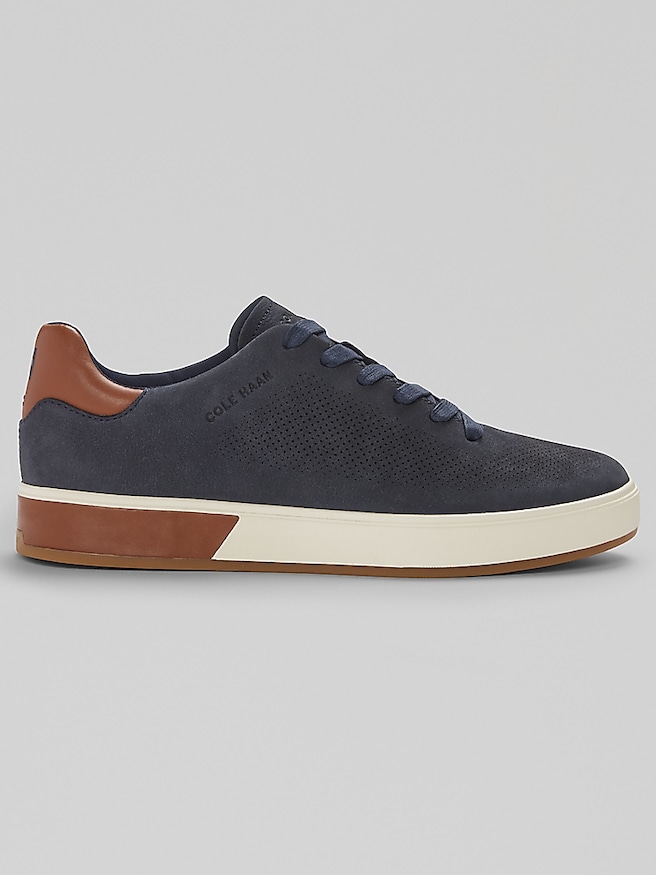
Arch support sneakers combine the easygoing look of everyday athletic footwear with a shaped footbed that follows the curve beneath the foot. Unlike a flat insert, a contoured footbed provides contact through the arch, while the surrounding shoe helps hold the heel and forefoot in position. That combination can make a difference on days spent walking between meetings, standing through a presentation, or covering several blocks on the way to lunch. Support and cushioning serve separate purposes: cushioning softens the feeling underfoot, while support creates a more stable foundation. An especially soft sneaker is not necessarily a supportive one, and a firmer footbed can feel comfortable when its shape matches the foot. Useful features to consider include a defined arch contour, a heel cup that seats the foot securely, and a midsole that does not collapse immediately under pressure. The sole should allow comfortable movement through the forefoot without feeling loose or unstable through the middle. Low, medium, and high arches do not all respond to the same shape, so the most pronounced arch is not automatically the best choice. A well-matched contour feels like steady contact beneath the foot rather than a hard ridge pressing into it. Fit matters just as much as construction. Toes need room to spread, the widest part of the foot should align with the widest part of the shoe, and the heel should stay reasonably secure during a normal stride. Roughly a thumb’s width ahead of the longest toe is a useful starting point, although the shoe’s shape and intended activity also matter. Adjustable laces make it easier to fine-tune pressure across the instep, especially when one foot is slightly larger than the other. The arch should feel properly positioned during a short walk, not only while standing still. Supportive footwear should not depend on an uncomfortable break-in period to become wearable. Persistent foot pain deserves professional attention rather than an assumption that a new pair of sneakers will resolve it.
Materials influence how arch support sneakers feel, how they hold their shape, and how easily they fit into a daily wardrobe. Mesh uppers allow airflow and often have a lightweight feel, while knit construction can provide a flexible fit across the top of the foot. Stretch alone does not create stability, however; reinforcement around the heel and midfoot helps keep a flexible upper from feeling overly loose. Smooth leather offers a more structured appearance and a surface that can usually be wiped clean according to the care instructions. For a closer look at that material, Leather Sneakers With Arch Support brings the same comfort-focused theme into a polished everyday style. Suede has a softer, textured finish but calls for a suitable brush and more careful treatment of marks. Synthetic uppers vary considerably, making the lining, flexibility, and seam placement worth considering alongside the outer material. Inside the shoe, a smooth lining and cushioned collar can reduce distracting friction around the heel and ankle. A removable footbed makes cleaning and drying easier and can leave room for an appropriate orthotic, provided the shoe has enough depth and the replacement does not crowd the foot. Stacking inserts can change the fit, raise the heel, and place the arch contour incorrectly. Underneath, foam midsoles provide cushioning with less bulk, while rubber outsole sections help protect areas exposed to repeated contact with the ground. Tread pattern and traction should match the intended setting; an everyday sneaker is not automatically suitable for a job with slip-resistance or protective-footwear requirements. Durability depends on construction, frequency of wear, walking surfaces, and care rather than the upper material alone. Removing surface dirt promptly, following the cleaning label, and allowing shoes to air-dry away from direct heat help preserve their shape. Machine washing should be reserved for footwear whose care instructions explicitly permit it. Flattened cushioning, uneven outsole wear, or a heel that no longer feels secure can indicate that support has diminished, even when the upper still looks presentable.
The appeal of arch support sneakers is their ability to handle ordinary days without making comfort look like an afterthought. A streamlined silhouette can sit neatly beneath straight-leg jeans, chinos, or casual trousers, particularly when the outsole has a restrained profile and the upper has minimal contrast. Black, white, brown, and other neutral tones make coordination straightforward, while textured panels can add interest without competing with the rest of an outfit. For an office with a relaxed dress code, a clean leather-style sneaker can complement chinos and an unstructured jacket; a breathable athletic shape makes more sense with joggers and a casual shirt. Sneakers still need to suit the setting, so traditional dress shoes remain the more appropriate choice when an invitation or workplace calls for formal footwear. Intended use also separates everyday comfort shoes from performance footwear. Walking through a museum, moving around a campus, or navigating an airport puts different demands on a shoe than running, court sports, or heavy training. Arch support by itself does not establish that a sneaker is designed for those activities. For travel and errands, a secure heel, manageable weight, and an easy-to-adjust closure can be more useful than a bulky appearance that merely suggests extra cushioning. Socks affect the final fit, too: a thicker pair takes up more space, while a thin pair may expose seams or pressure points that went unnoticed during an initial try-on. Trying both shoes with the socks normally worn, then walking and turning naturally, gives a clearer sense of comfort than checking length alone. These sneakers can also make a practical gift for a partner, friend, or recent graduate building an everyday wardrobe, especially when their preferred size, width, and style are already known. Because arch shape and instep volume vary, fit should remain the priority over choosing a familiar size by habit. The strongest choice brings together a comfortable contour, dependable construction, straightforward care, and a look that fits the wearer’s routine—from the first stretch of a commute to the last walk across the parking lot.