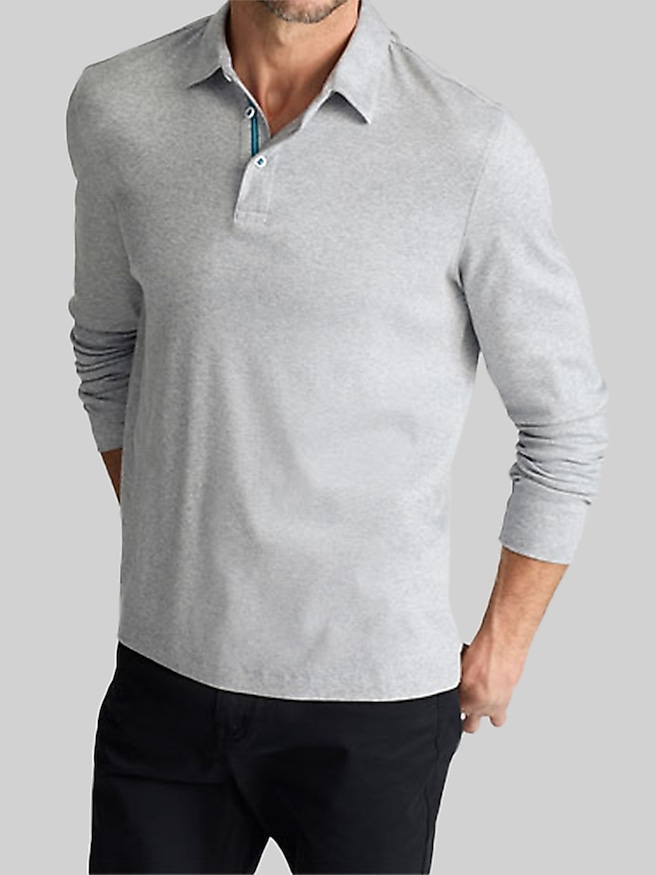
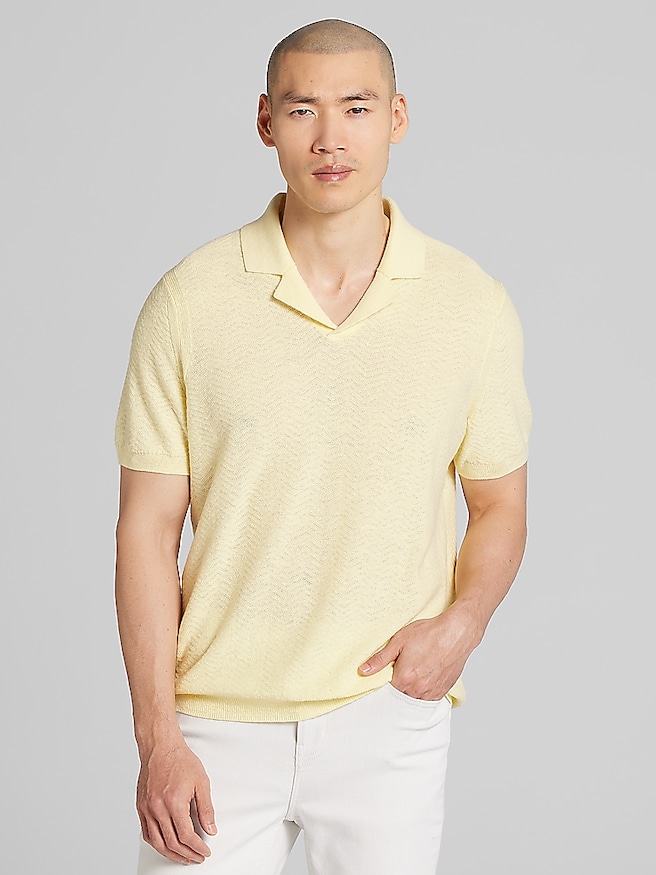
Affordable polos bring the comfort of a knit shirt together with the more finished appearance of a collar, making them a practical part of an everyday wardrobe. Their familiar design—a soft collar, a short button placket, and a straightforward silhouette—sits comfortably between a basic T-shirt and a button-front shirt. That balance works for men whose days move from a casual office to a family dinner, or from errands to an afternoon on the golf course. A polo can look relaxed with jeans, clean and composed with chinos, or slightly more dressed up beneath an unstructured jacket. Solid colors keep those combinations simple, while stripes, subtle patterns, and textured knits give the shirt a little more presence without requiring elaborate styling. Fit has a considerable effect on how any of these combinations look and feel. A shoulder seam that sits near the edge of the shoulder helps the shirt hang naturally, and enough room through the chest and midsection allows comfortable movement without excess fabric gathering at the waist. Slim silhouettes sit closer to the body, while classic or relaxed shapes provide more ease; neither should make the placket pull open when the wearer sits down. Sleeves generally look balanced when they follow the upper arm without squeezing it or extending far beyond its natural shape. For untucked wear, a hem that falls around the middle of the fly usually creates a tidy proportion, although the right length depends on height and torso length. A longer hem can be useful for keeping a tucked shirt in place through a seated workday. Side vents, ribbed sleeve openings, and different collar constructions can also influence comfort and appearance. These small details matter when a shirt needs to feel comfortable at a desk, remain neat during a presentation, and still look appropriate at a casual restaurant afterward. The appeal of a polo is that it can handle those ordinary changes in setting without feeling either overly formal or unfinished.
Fabric gives polo shirts much of their character, from the crisp, lightly textured surface of piqué to the smoother feel of jersey knit. Cotton piqué has a recognizable raised texture that can give the shirt structure while allowing air to move through the knit. Cotton jersey often feels softer and more fluid, with a surface closer to that of a familiar T-shirt. Cotton-rich blends combine some of that natural softness with qualities supplied by other fibers, such as improved shape retention or added stretch. A small amount of elastane can make reaching, bending, and sitting more comfortable, especially in a closer-fitting shirt, but fabric construction and the overall cut remain important. Polyester is commonly used in polos designed for easy care, wrinkle resistance, and quicker drying than comparable cotton fabrics. For shoppers interested in that material, Polyester Polos offer another way to explore the category by fabric. Moisture management depends on the knit, fiber treatment, and garment design rather than the fiber name alone, so performance descriptions are worth considering alongside the fabric composition. A lightweight, smooth knit may suit an active day with plenty of movement, while a more substantial textured knit can provide the visual structure preferred for a desk job or a casual meeting. Care also affects how a polo looks over repeated wears. The garment label is the best reference for washing, drying, and ironing because cotton, synthetic blends, and stretch fabrics can have different requirements. Turning a shirt inside out can help reduce surface abrasion, and keeping it separate from rough fasteners helps protect the knit. Excessive dryer heat may contribute to shrinkage or damage stretch fibers, while leaving a damp shirt crumpled can set creases into the collar and placket. Reshaping the collar and smoothing the body before drying can help preserve its appearance. Some knits benefit from flat drying, while others can be dried according to the label and folded neatly once dry.
Durability in a polo is not simply a matter of fabric thickness. Consistent stitching, securely attached buttons, a placket that lies flat, and a collar that maintains its shape all contribute to a shirt that remains presentable through regular use. The fabric should feel comfortable against the skin, but it also needs to recover after movement rather than staying stretched at the elbows, sleeve openings, or hem. Pilling can occur where knitted fabric experiences repeated friction, including beneath a bag strap or along areas that rub against a chair. Gentle laundering and a careful approach to removing surface pills can help maintain a cleaner finish, provided the care method is appropriate for the fabric. Rotating shirts between wears also gives each garment time to air out and reduces repeated strain on the same piece. For a small, versatile wardrobe, navy, charcoal, black, and other understated colors pair easily with several trouser shades, while a brighter color can bring personality to an otherwise simple outfit. A textured polo with straight-leg chinos and loafers can suit a casual workplace, while a smooth knit with jeans and clean sneakers feels natural for a weekend lunch. Golfers may prefer a cut that permits an unrestricted swing, and course dress requirements should take priority over styling preferences. Frequent travelers may appreciate fabrics that resist wrinkling and stay comfortable during long stretches of sitting. Polos can also make useful gifts for a father, brother, partner, or friend who favors uncomplicated clothing, particularly when the giver knows the recipient’s usual fit, preferred colors, and tolerance for different fabric textures. A shirt that feels familiar is more likely to become part of a regular rotation than one chosen only for its appearance. Although a polo does not replace a dress shirt for formal occasions, it serves many everyday settings where a collar is welcome and a tie is unnecessary. Its lasting usefulness comes from that combination of comfort, uncomplicated care, and the ability to look put together with familiar wardrobe staples.