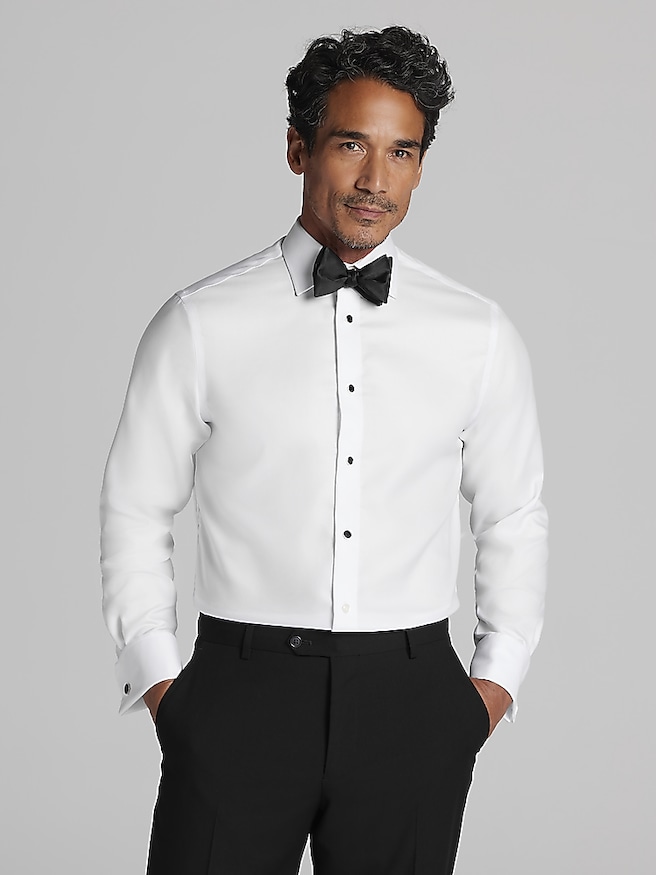
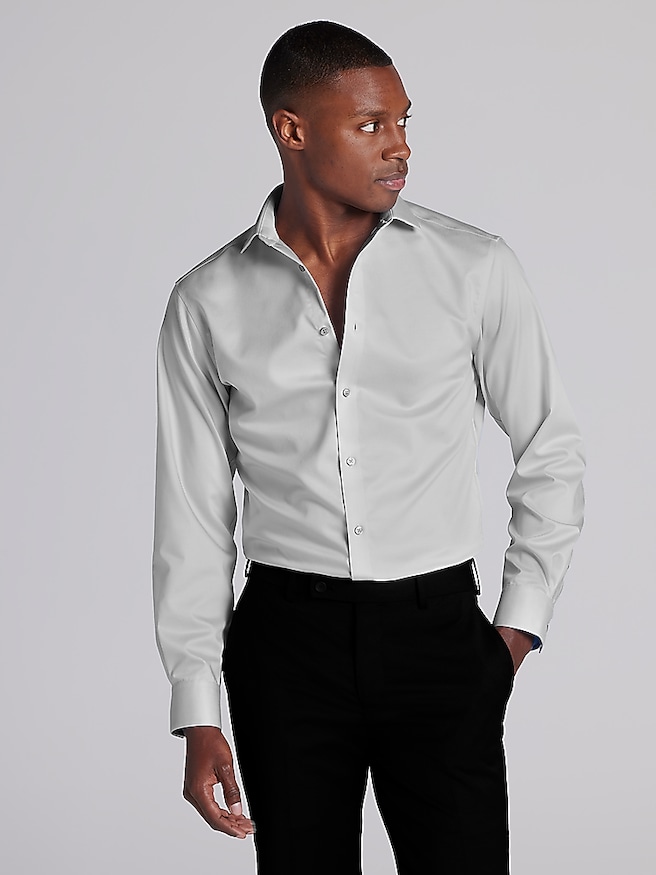
Affordable formal shirts provide a polished foundation for suits, tuxedos, and dress trousers, with fabric, collar shape, and construction helping distinguish everyday business dressing from special-occasion attire. A formal shirt generally has a structured collar, a button or stud front, and long sleeves with finished cuffs, creating clean lines beneath a jacket. White remains a classic choice for ceremonies and evening events because it creates a crisp contrast with dark tailoring, while light blue offers a softer look for business settings and daytime celebrations. Subtle stripes and restrained woven patterns can add interest when the occasion allows, especially alongside a solid suit and tie. Cotton is a familiar choice for its breathability and comfortable feel against the skin, although its texture varies considerably with the weave. Poplin typically has a smooth, fine surface that works well with refined tailoring; twill has a subtle diagonal texture and often a slightly fuller drape. Cotton-blend fabrics may offer practical benefits such as easier wrinkle management, depending on their composition and finish. Fabric opacity also matters, particularly with white shirts worn without a jacket for part of an event. A smooth, close-fitting undershirt in a tone that blends with the wearer’s skin can help reduce visible contrast. Collar and cuff details establish the level of formality: a point or spread collar pairs naturally with many suit-and-tie combinations, while French cuffs create space for cufflinks. Tuxedo dressing has its own requirements, and a shirt with a pleated or textured bib, stud openings, or a particular collar style should complement the tuxedo and the event’s dress code. A standard business dress shirt and a tuxedo shirt serve related but distinct purposes. For a wedding guest, a presentation at work, or an awards dinner, those distinctions help create an outfit that looks considered rather than simply dressed up. The strongest impression often comes from a smooth collar, balanced proportions, and a shirt that sits neatly beneath the jacket.
Fit shapes both the appearance and the comfort of formal shirts, especially during occasions that involve several hours of sitting, standing, and moving between conversations. The collar should close comfortably without pressing into the neck, while remaining close enough to frame a tie neatly. Shoulder seams that sit near the natural shoulder edge help the sleeves fall cleanly; seams that extend too far can create excess fabric beneath a suit jacket. Across the chest, a smooth button placket is a useful sign of adequate room. Pulling between buttons suggests a close fit, while large folds around the waist can interrupt the line of tailored trousers. Slim, tailored, and classic fit descriptions offer a starting point, but their proportions vary, making neck, sleeve, chest, and waist measurements more useful than the fit name alone. A comfortable shirt leaves room for ordinary movement, whether the wearer is reaching across a conference table or raising a glass at a reception. Sleeve length deserves equal attention: cuffs should reach the wrist without swallowing the hand, and a small amount of shirt cuff can show beneath a properly fitted jacket sleeve. A longer shirttail helps the shirt stay tucked through a full day, while a smooth undershirt reduces bunching beneath the fabric. Collar shape can also support the overall balance of an outfit. A wider spread leaves room for a fuller tie knot, while a narrower point collar suits a more compact knot. Neither needs to feel exaggerated; proportion usually looks more natural than a dramatic mismatch. For someone building a work wardrobe, preparing for interviews, or attending family celebrations, a versatile formal shirt can serve several settings through changes in ties, jackets, and trousers. Formal shirts can also make thoughtful graduation or career-milestone gifts when the recipient’s measurements and preferred fit are known. Matching the measurements of a shirt that already fits well is generally more dependable than guessing from a casual T-shirt size.
Durability in a formal shirt depends on more than the thickness of its fabric. Even stitching, securely attached buttons, neatly finished seams, and cuffs that hold their shape all contribute to a shirt that continues to look composed after repeated wear. The collar and cuffs receive frequent handling and friction, so their construction and care have an especially visible effect on the shirt’s appearance over time. Care requirements vary by fiber, weave, and finish, and the garment’s label is the best reference for washing, drying, pressing, or professional cleaning. An easy-care finish can reduce maintenance, but it does not mean every wrinkle will disappear without attention. Cotton shirts often benefit from careful pressing, particularly along the collar, cuffs, and front placket, where a clean finish is most noticeable beneath tailoring. When ironing is permitted, the appropriate heat setting helps protect the fabric and any surface treatment. Prompt attention to collar marks and spills can help prevent discoloration from becoming more difficult to address, while avoiding excessive dryer heat can help preserve fit and fabric condition. Removable collar stays should come out before laundering when the care instructions call for it, and replacing them before wear helps collar points sit neatly. Storage matters, too: a suitable hanger supports the shoulders, and enough space between garments helps prevent deep creases. For travel, folding along natural seams and unpacking upon arrival can make preparation for a meeting or ceremony simpler. A shirt’s intended use helps put all these details in perspective. Someone wearing formal clothing several days a week may prioritize uncomplicated care and a comfortable, consistent fit, while an occasional wearer may place more emphasis on a particular cuff or collar for a celebration. Less formal plans call for another approach; Affordable Polos offer a distinct option for casual settings rather than a substitute for dress-code-appropriate formal shirting. For suited occasions, balanced proportions, suitable fabric, and attentive care give a formal shirt its lasting usefulness.