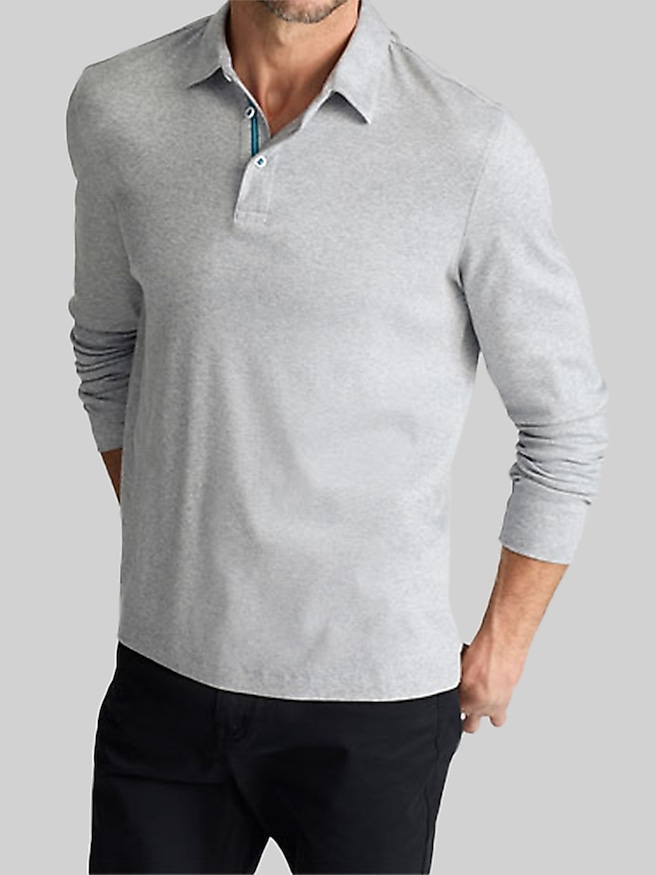
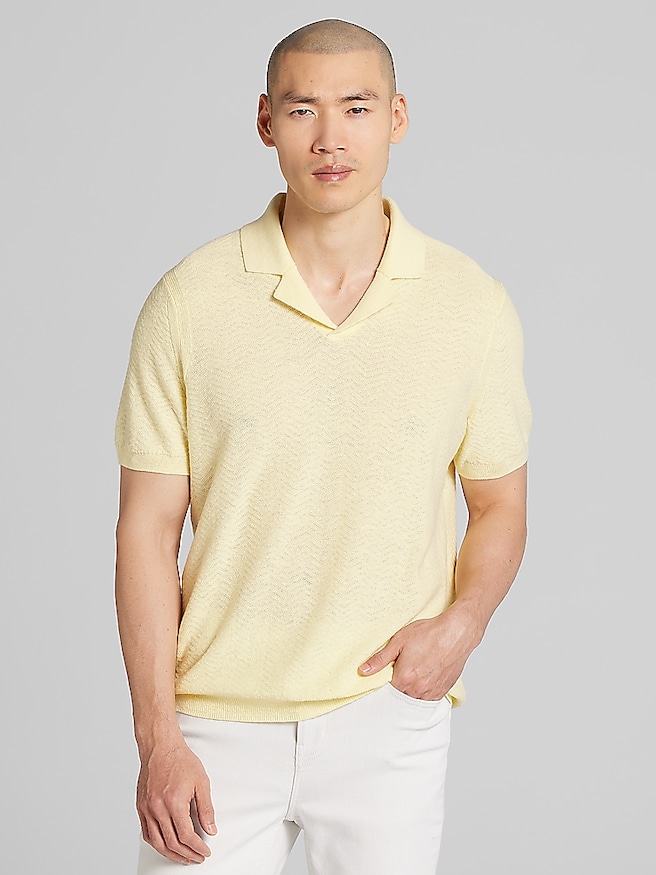
Polyester polos are knit, collared shirts valued for wrinkle resistance, durability, and relatively quick drying. Many also feature moisture-wicking construction, which helps move perspiration across the fabric so it can evaporate, making them useful for golf, active workdays, travel, and everyday wear. Those performance qualities depend on the knit, fabric weight, and any added treatments; a polyester label alone does not guarantee the same feel or performance from every shirt. Polyester fibers absorb relatively little moisture compared with cotton, helping the fabric dry after washing or activity. A smooth jersey knit often has a sleek surface that slides easily beneath another layer, while a piqué knit has a subtly raised texture that gives a solid color more visual depth. Fabric weight matters, too: a lightweight knit can feel fluid and easy to move in, while a more substantial construction can give the collar, placket, and body a firmer shape. Some polos combine polyester with cotton for a different hand feel, or with elastane for added stretch. A blend with stretch can be especially comfortable when reaching across a desk, swinging a golf club, or spending several hours behind the wheel. Breathability also varies with the fabric structure, so fiber content is only part of the picture. The appeal is practical: the collar creates a more finished appearance than a crewneck T-shirt, while the knit body keeps the shirt approachable and easy to wear. For workplaces that permit polos, that balance can suit a day split between computer work, casual meetings, and time on the sales floor. In team or uniform settings, consistent colors and a neat silhouette can help create a coordinated appearance without the structure of a traditional dress shirt. Beyond work, polyester polos fit naturally into a wardrobe built around simple pieces that can handle repeated wear.
Fit has as much influence on a polyester polo’s appearance as its fabric. The shoulder seams generally sit near the edge of the shoulders, allowing the sleeves to fall cleanly rather than pulling toward the neck or dropping far down the arms. Through the chest and waist, enough room for comfortable movement helps the fabric hang smoothly instead of stretching across the buttons or catching at the midsection. A closer silhouette can look streamlined with tailored trousers, but it should still allow an easy reach without the hem climbing excessively. A roomier cut may suit someone who prefers extra space through the torso or spends much of the day moving between tasks. Stretch can support movement, but it does not replace the right size. Sleeve length and opening also affect the overall balance: a sleeve that rests comfortably around the upper arm usually looks neater than one that grips tightly or flares dramatically. The hem deserves similar attention. A shirt intended to stay untucked should provide coverage without overwhelming the proportions of the pants, while a polo worn tucked in benefits from enough length to remain secure when sitting or bending. Side vents can help the hem move more freely, particularly when the shirt is worn outside the waistband. With chinos and loafers, a solid polo can work for an informal office or a dinner where a jacket is unnecessary. With clean denim and understated sneakers, the same type of shirt feels relaxed without looking unfinished. Textured knits, subtle stripes, and contrasting collar details offer different levels of visual interest, while a quiet solid makes coordinating pants and layers straightforward. For gifting, polyester polos can be a thoughtful choice for someone who appreciates easy-care clothing, plays golf, travels regularly, or wears collared shirts to work. A familiar fit and a color that already appears in the recipient’s wardrobe are often more useful than an unfamiliar cut or a bold pattern chosen only for novelty.
Good care helps polyester polos retain the qualities that make them convenient in the first place. Polyester generally resists shrinking and creasing, but the complete fabric blend, collar construction, decorative details, and finishing treatments still determine how a shirt should be washed and dried. The care label is the best reference, especially for shirts containing stretch fibers or performance finishes. Washing with similar colors and turning the shirt inside out can help reduce surface friction, while keeping it away from exposed zippers, hook-and-loop fasteners, and other abrasive surfaces can limit snags. A loosely textured knit may catch more easily than a compact, smooth one, even when both use durable fibers. Repeated rubbing from a bag strap or rough work surface can also contribute to pilling over time. Prompt washing after perspiration-heavy wear helps prevent lingering odors, and using the recommended amount of detergent supports thorough rinsing. Fabric softener may interfere with certain moisture-management finishes, so any product-specific care directions should take priority. Excessive dryer heat can affect the fabric or its shape; following the drying instructions and removing the shirt promptly can help preserve a smooth appearance. Reshaping the collar and smoothing the placket before the shirt finishes drying can make a noticeable difference when it is time to get dressed. Folding neatly or hanging on a supportive hanger keeps the shirt ready for another day without unnecessary handling. For a wardrobe that needs a different collared silhouette alongside polos, polyester button-up shirts offer a full front opening and another way to wear the same general fiber category. Neither style replaces clothing required by a formal dress code, but both can serve practical roles in less formal settings. A well-fitting polyester polo earns its place through that combination of straightforward care, dependable shape, and adaptable styling: polished enough for many everyday plans, comfortable enough for movement, and simple to coordinate without making an outfit feel overworked.