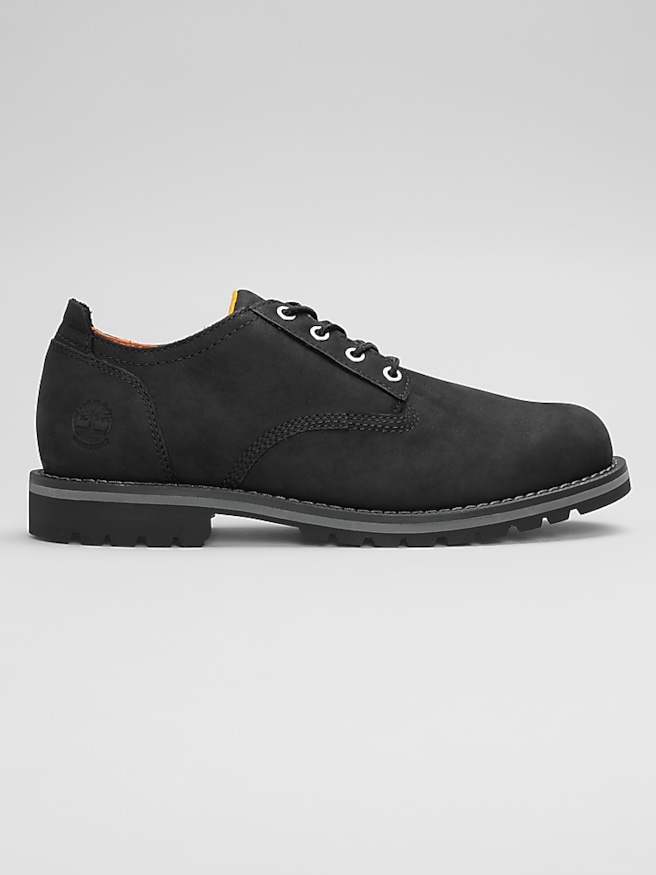
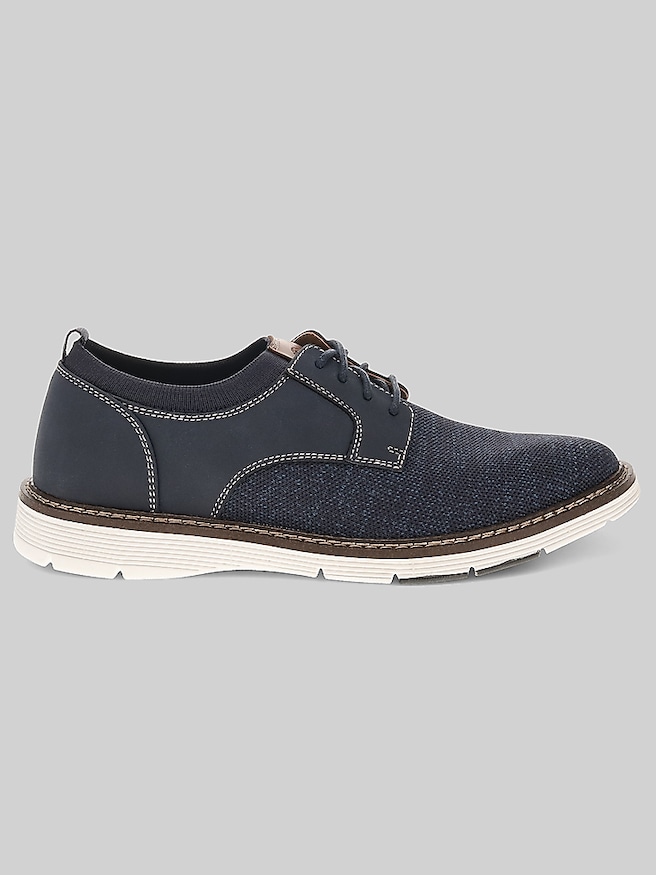
Oxford shoes are lace-up dress shoes defined by closed lacing: the sections holding the eyelets are stitched beneath the vamp, the portion of the upper that covers the top of the foot. This construction gives oxfords a neat, close-fitting appearance that works especially well with tailored trousers and suits. Their appeal comes from that balance of structure and simplicity. A smooth plain toe keeps the silhouette clean, while a cap toe adds a horizontal seam across the front for subtle definition. Perforated detailing, known as broguing, gives the shoe more visual texture; a wingtip extends that detailing into a sweeping shape across the toe. These details affect the overall impression, with restrained designs generally looking dressier than heavily decorated styles. Black oxfords offer a crisp foundation for charcoal trousers, dark suits, interviews, and formal wedding attire. Brown shades pair naturally with navy, medium gray, and earth tones, while deeper brown finishes can move comfortably between business settings and dressier dinners. Materials also influence the look and feel. Smooth leather develops creases where the foot bends and can take on character with regular care. Suede has a softer, matte appearance that feels less formal, while synthetic uppers offer another approach to the classic shape and require care suited to their particular finish. Full-grain leather retains the hide’s natural surface, although the quality of the finished shoe depends on more than that designation alone. Lining, stitching, sole attachment, and fit all contribute to how a pair performs over time. For a first dress-shoe wardrobe, a simple shape and a versatile color make outfit coordination straightforward. Someone heading to a graduation ceremony, giving a presentation, or joining a wedding party can wear the same general style in several settings without the shoes becoming the focal point. A moderately rounded or almond-shaped toe also sits naturally beneath many trouser cuts, creating a balanced line from the hem to the floor without the exaggerated length of a sharply pointed design.
Comfort in oxford shoes starts with the shape of the shoe matching the shape of the foot. Closed lacing creates a streamlined profile, but it can feel restrictive across a high instep if the upper does not provide enough room. The eyelet sections should draw together comfortably without forcing the foot downward or leaving the laces under excessive tension. Toes need space to rest naturally, with enough clearance ahead of the longest toe and no pinching along the sides. A secure heel matters just as much: repeated lifting or rubbing can become distracting during a long ceremony or a day of walking between meetings. Trying shoes with the dress socks intended for regular wear gives a more useful sense of fit than trying them with unusually thick athletic socks. Both feet deserve attention, since small differences in length or width are common. Leather may soften with wear, but persistent pressure, cramped toes, or a painful seam should not be treated as normal break-in. Inside the shoe, a smooth lining and well-placed cushioning can make standing and walking more pleasant, while arch support needs vary by foot. Anyone using an orthotic needs sufficient interior depth and, where appropriate, a removable footbed. Outsole construction changes the experience as well. Leather soles have a traditional appearance and can feel firm underfoot, while rubber soles may offer more flexibility or traction depending on their design. A rubber outsole alone does not establish slip resistance; that feature depends on the materials, tread, and testing associated with the shoe. For a commute that includes several blocks on foot, flexibility through the forefoot and a stable heel can matter more than decorative details. For mostly seated office work, a sleek profile may take greater priority. Construction also influences long-term upkeep. Some stitched constructions allow professional resoling, while many cemented designs are less practical to rebuild. Even stitching, neatly finished edges, and a sole that bends where the foot naturally flexes are useful details to consider alongside appearance.
Regular care helps oxfords retain their shape and finish through repeated wear. Dust and grit can work into creases, so gentle brushing or wiping after use keeps surface buildup from becoming part of the shoe’s texture. Smooth leather generally benefits from an appropriate conditioner applied according to the maker’s directions, followed by compatible cream or polish when the finish needs attention. Excess product can leave residue, and a highly polished surface is not suitable for every leather treatment. Suede calls for a suede brush and products specifically intended for its nap rather than ordinary shoe polish. Synthetic uppers often need only careful surface cleaning, but their care instructions remain the best reference for avoiding discoloration or damage. Shoes should dry naturally away from direct heat, and cedar shoe trees can help manage interior moisture and support the shape between wears. Alternating pairs gives linings and uppers time to air out. Heel wear, loose stitching, and thinning soles are worth addressing early, before a small repair becomes a larger problem. That attention makes particular sense for shoes worn regularly to the office or kept ready for important occasions. Styling is equally practical: trouser hems should fall cleanly rather than collect in heavy folds over the laces, and a belt in a similar color family creates a cohesive finish without requiring an exact match. Fine dress socks maintain a smooth fit, while subtle patterns can add personality beneath otherwise understated tailoring. For someone who prefers a slip-on silhouette for relaxed business outfits or social plans, Affordable Loafers offer a useful style comparison. Oxfords remain a thoughtful gift for a graduate, a new professional, or someone preparing for a milestone celebration, especially when the recipient’s size, width, and preferred fit are known. A versatile finish, comfortable proportions, and manageable care requirements give these classic lace-ups a lasting role in a well-used wardrobe.