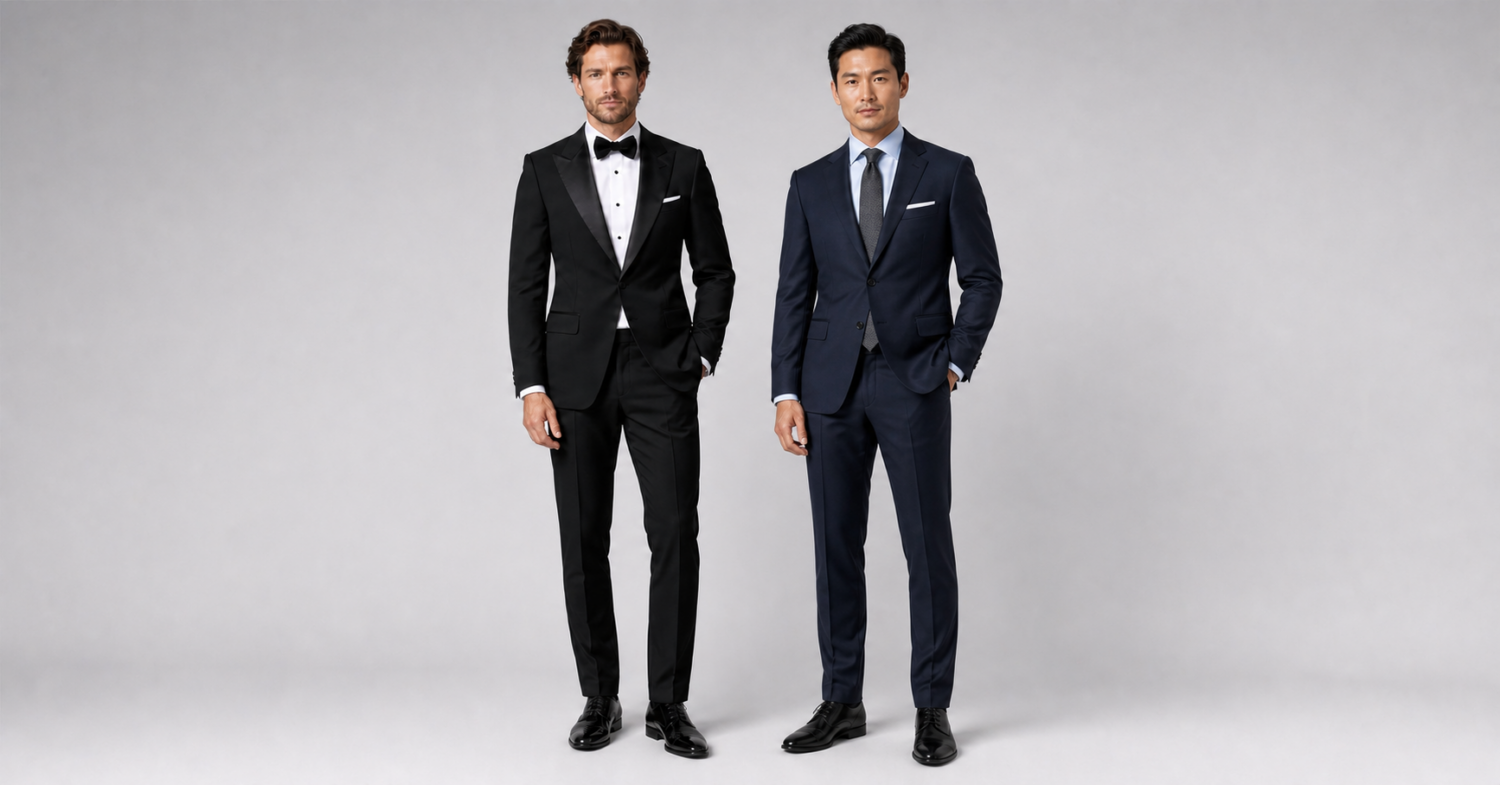

A tuxedo and a suit look similar from a distance. But these two tailored looks serve different purposes and dress codes. We’ll walk you through what makes a tuxedo a tuxedo, when to reach for a suit instead, and how to wear either one so that you feel confident from the moment you put it on.
Tuxedo vs. Suit: Key Differences
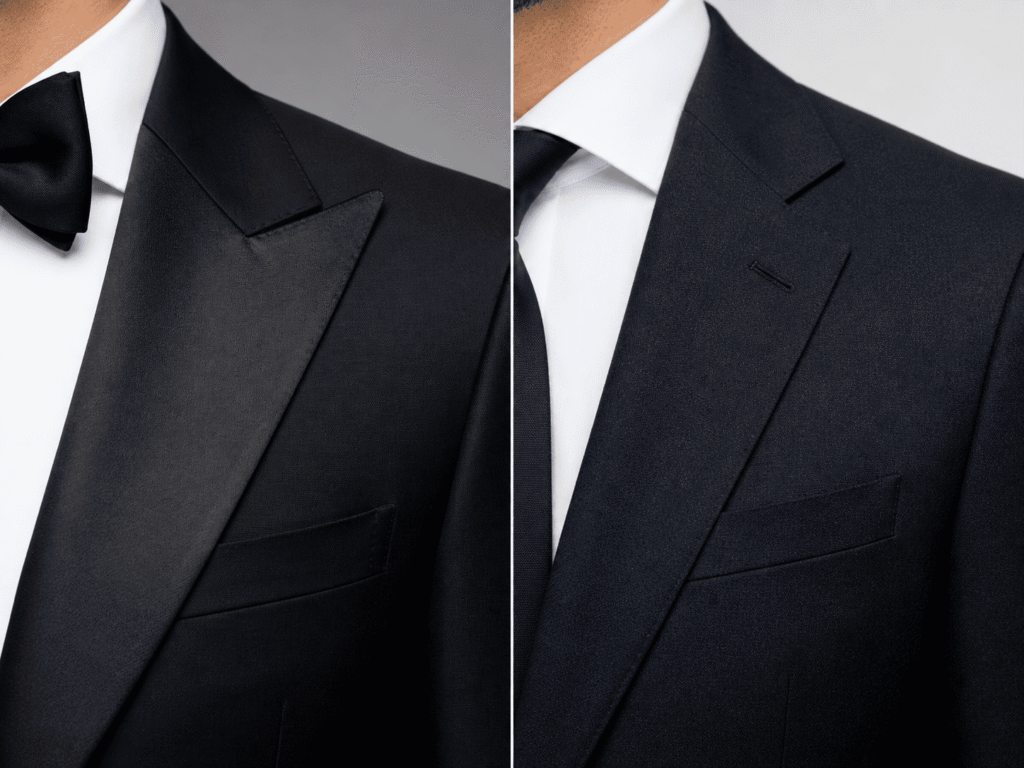
Tuxedos and suits are traditionally made of wool and share a similar silhouette. But a tuxedo is the more formal garment, made recognizable by its satin trim. Look for a soft sheen on the lapels, the buttons, the pocket trim, and the stripe running down both trouser legs. The lapels and buttons on a suit are cut from the same cloth as the rest of the jacket, creating a more understated appearance.
| Detail | Tuxedo | Suit |
| Jacket | Satin-faced lapels in a peak or shawl shape, usually a tux in black or midnight blue | Lapels cut from the same cloth as the suit, in any color |
| Trousers | A satin stripe down each leg, with side adjusters or suspenders | Plain dress trousers, no stripe, with belt loops |
| Accessories | Often paired with a bow tie, shirt studs, and a cummerbund or vest | A necktie or bow tie, a standard dress shirt, and leather shoes |
| Satin Detailing | On the lapels, buttons, pocket trim, and trouser stripe | None |
| Formality | Formal evening wear | Versatile, from the office to a black tie optional event |
You can also tell tuxedos and suits apart by looking at the folded flap of cloth on front of the jacket, known as the lapel. Tuxes tend to have peak or shawl lapels. A peak lapel has edges that point up toward the shoulder, elongating the torso. A shawl lapel has one rounded piece of fabric that winds around the collar. Suit jackets typically use a notch lapel, which has a triangular cutout where the collar meets the jacket.
Suit trousers have belt loops, while tuxedo pants rely on side adjusters or suspenders for support. The shirts differ, too: A tux calls for a white formal shirt, often with a pleated or textured front, while a suit typically pairs with a standard dress shirt in nearly any color. A tux is paired with a bow tie, shirt studs, and a vest, while suit accessories typically include neckties, pocket squares, and classic leather shoes.
When it comes to formalwear, tuxedos and suits are not interchangeable. A black suit is plenty sharp: You can dress it up or down, wear it with or without a tie, and add a vest or skip it entirely. It can be a great option for a black tie optional event, but a tuxedo is mandatory for black tie affairs.
What Is a Suit?
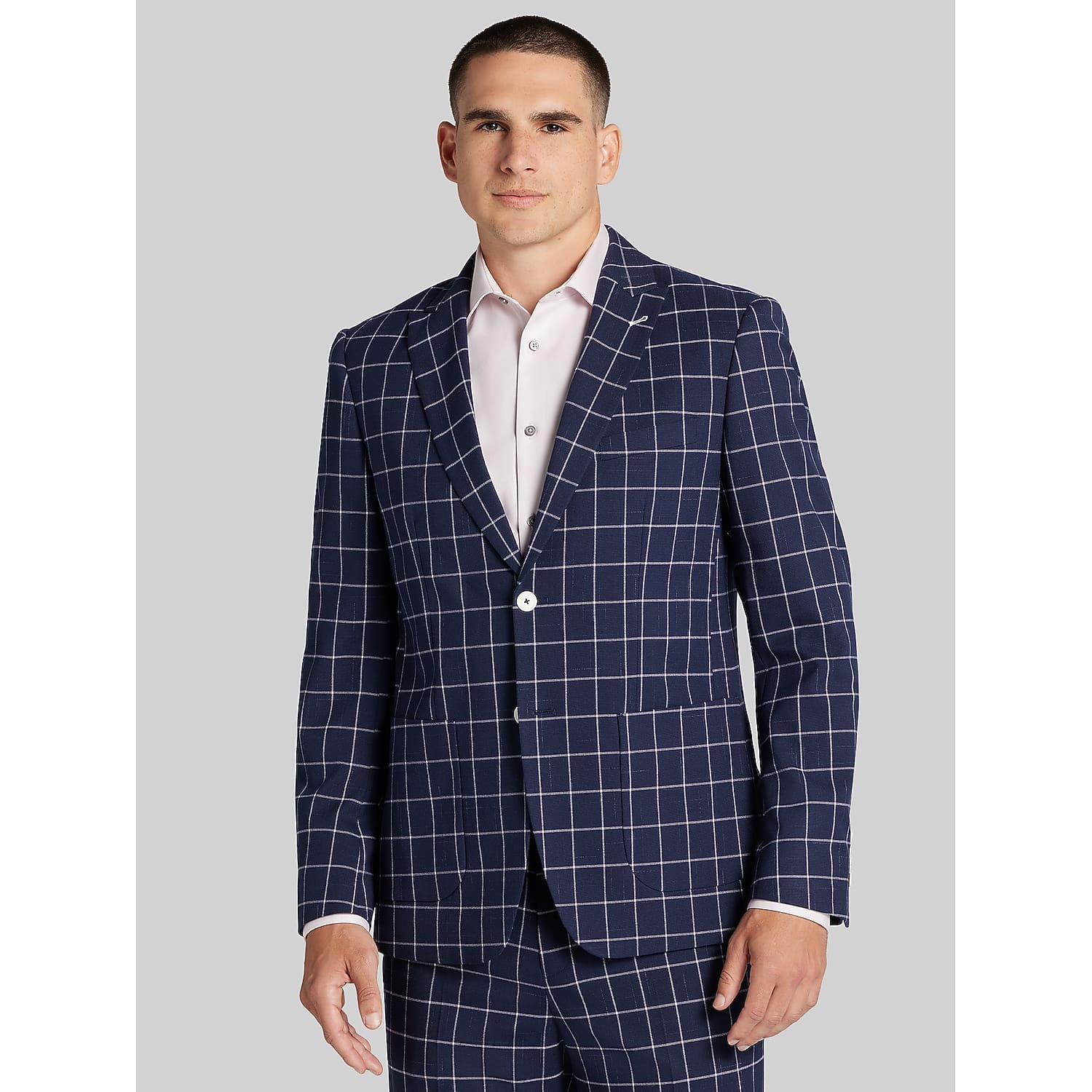
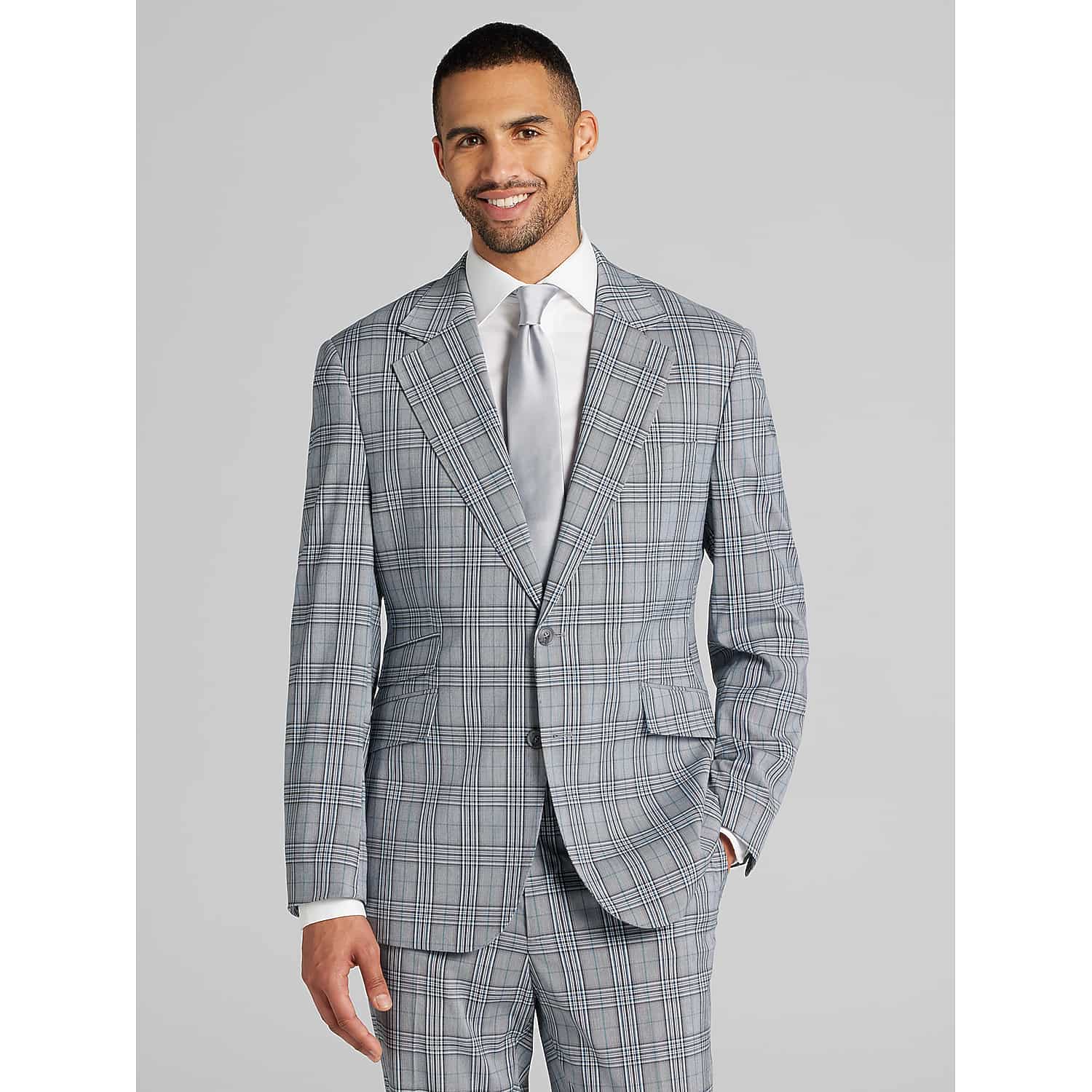
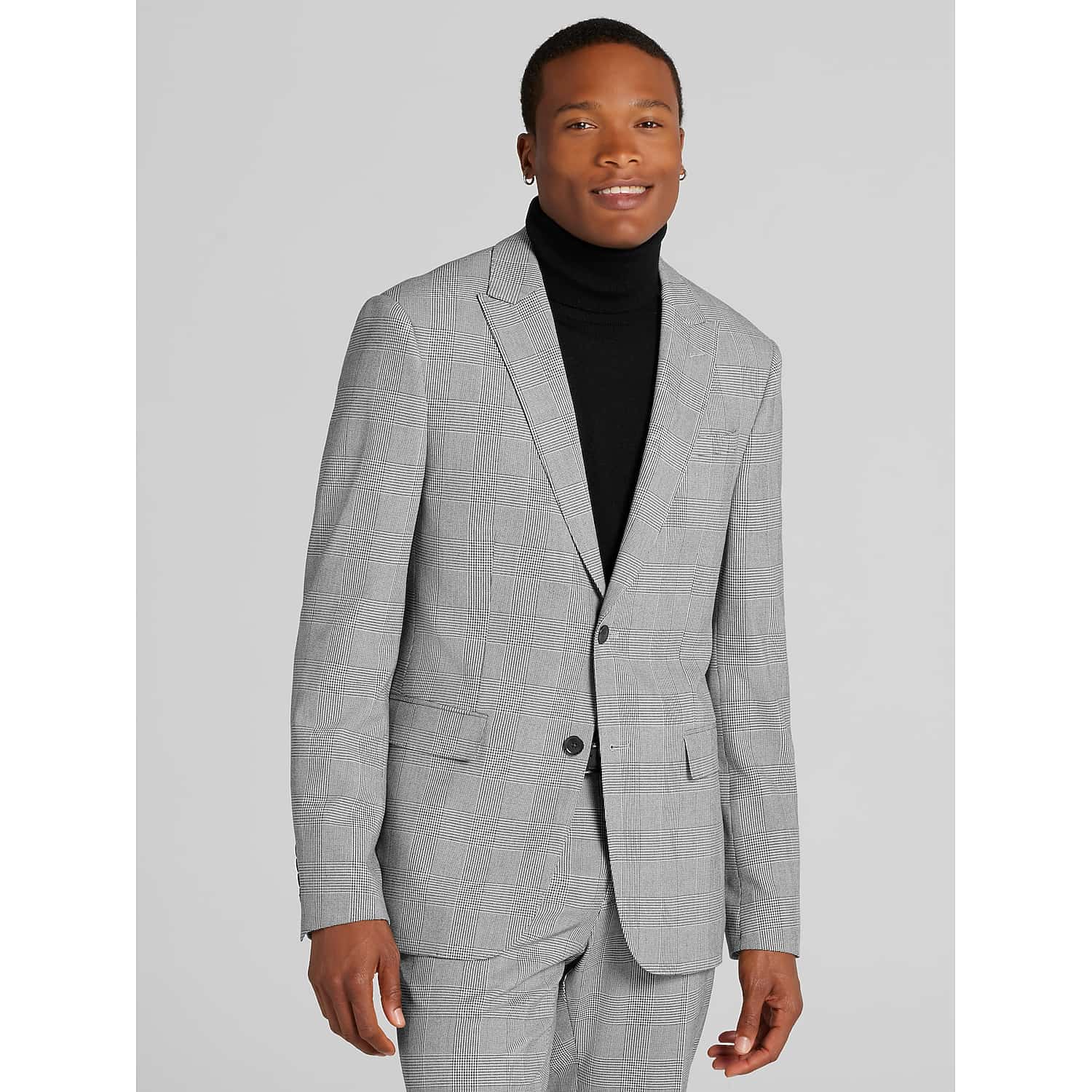
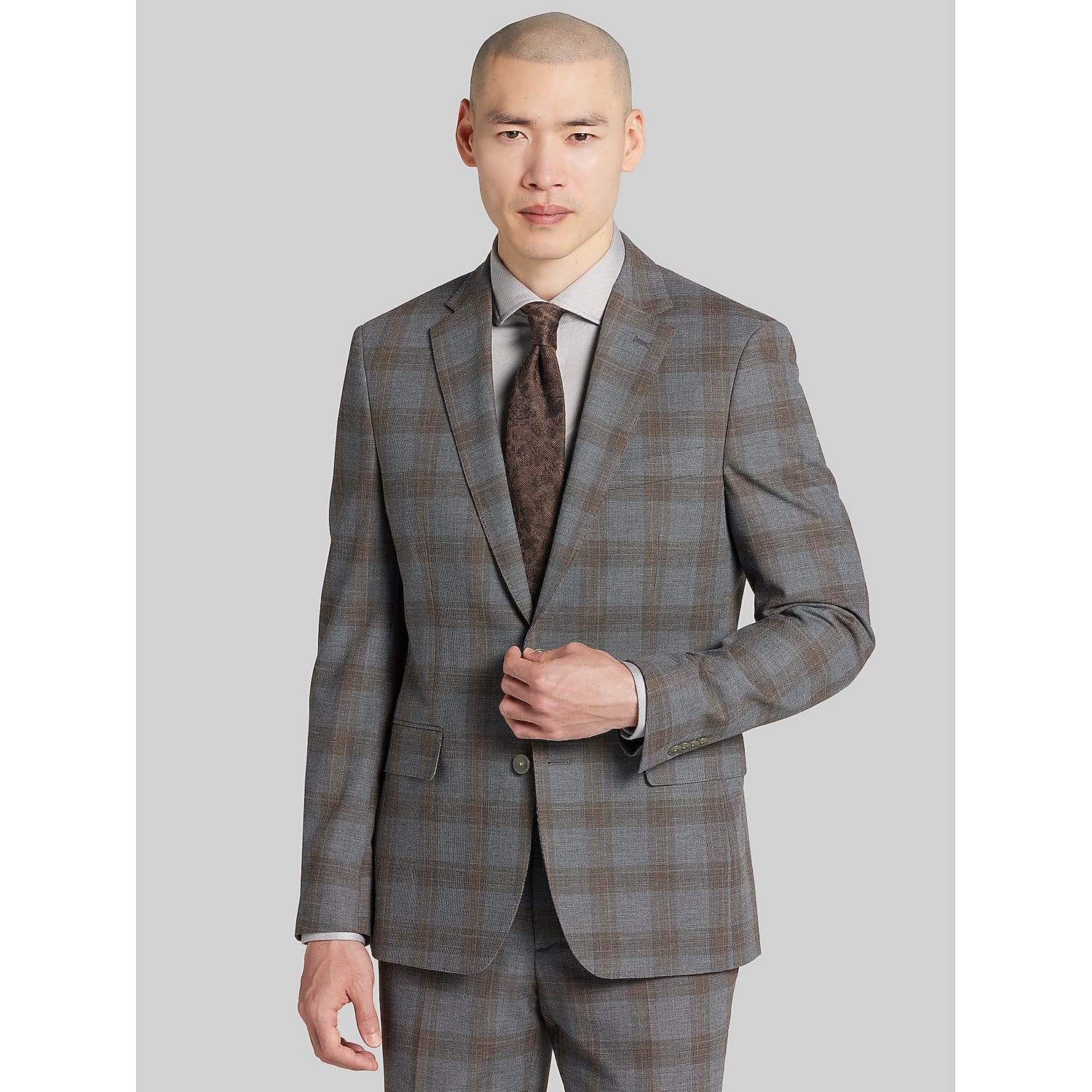
A suit consists of a tailored jacket and trousers cut from the same fabric, paired with a dress shirt and a tie. They’re one of the most versatile options in your wardrobe and come in a variety of cuts, such as slim-fit or classic, to flatter your build. One tailored suit can carry you through job interviews, corporate meetings, graduations, and weddings. Add a matching vest, and you have a dressier three-piece option appropriate for more elegant settings.
The suit has been a cornerstone of tailored clothing for centuries. The version we wear today owes a lot to George Bryan “Beau” Brummell, a trendsetter from the early 1800s. Brummell challenged the fashion norms of his era, foregoing embroidered garments that the upper classes favored and opting for a simpler approach with dark wool fabric, clean lines, and a close fit.
We’ve come a long way since the 1800s, and now suits come in a variety of styles, colors, and fabrics. Navy and charcoal pair well with almost anything; lighter grays and earth tones work well in the daytime; and breathable cloths like cotton or linen keep the wearer cool in hot weather. Whatever fabric or color you pick, fit is what makes or breaks the look, so make sure you know your measurements. A properly fitting suit has clean lines through the shoulders and chest and with no pulling or bunching.
What Is a Tux?
The modern tuxedo was designed with formal evening affairs in mind. It’s cut similarly to a suit, but features a satin trim and pairs with a bow tie and a formal shirt. If you receive an invitation that calls for black tie, a classic black tux is your go-to move.
The tux originated in October 1886 at the highly exclusive Tuxedo Park Club’s first Autumn Ball, held just outside New York City. There, a member of the wealthy Lorillard family ditched the long tailcoats popular at the time and arrived wearing a tailless black dinner jacket instead. The trend caught on, and soon, the “tuxedo” popped up elsewhere, taking its name from the club where it first appeared.
The tuxedo hasn’t evolved much since the late nineteenth century: It includes studs and cuff links instead of buttons, a cummerbund or low-cut vest at the waist, and polished leather shoes. While cuts have gotten trimmer over the last few decades, the tux continues to define black-tie dressing today.
When to Wear a Suit vs. a Tuxedo
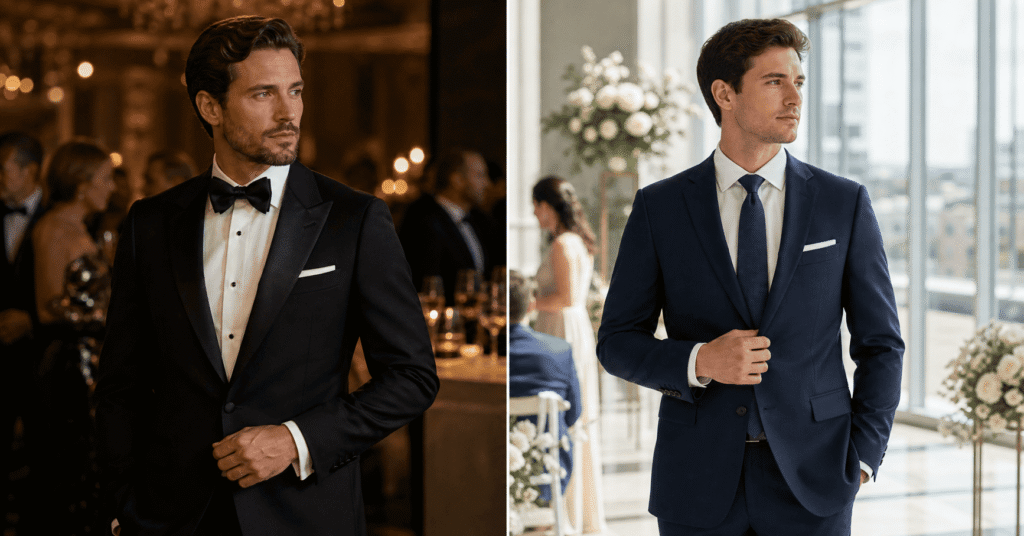
Invitations for weddings, balls, and other events should request a specific dress code. If it says black tie, you should wear a tuxedo. If it says business, cocktail, or semi-formal, then a suit will suffice. “Black tie optional” means a tux is welcome, but a sharp suit is perfectly acceptable, too. You can choose whichever you’re more comfortable wearing.
Time of day also makes a difference. A tuxedo is typically reserved for evening events, after the workday concludes, while a suit works for morning, noon, or night.
Tuxedo Events
A formal evening event like a gala calls for a tuxedo. Reach for one when you’re heading to:
- Black tie affairs: Galas, charity balls, and formal weddings
- Society events: A movie premiere, an award dinner, and evenings at the opera
- Milestone occasions: Proms or cotillions, retirement dinners, and some New Years’ Eve celebrations
Suit Events
Pull on a suit for just about everything else, from mid-week meetings to weekend events. A suit makes the most sense when you’re heading to:
- Business environments: Workplace meetings, conferences, and job interviews
- Daytime celebrations: Parties, graduations, and awards ceremonies
- Semi-formal and cocktail events: Weddings, office parties, and bar or bat mitzvahs
You have room to play for black tie optional events. Dress a dark suit up with a crisp white shirt and a bow tie, or tone down a tux down by swapping out the cummerbund for a simple vest. You’re better off showing up slightly overdressed rather than underdressed, but when in doubt, ask your host or other attendees what they think of your planned outfit.
Find Your Perfect Outfit at Men’s Wearhouse
Once you’ve decided between a tux or a suit, the final piece of the puzzle is ensuring it fits you, and that’s easier with someone who handles formalwear daily. At Men’s Wearhouse, you can try on tuxedos and suits in person, rent a tux for a one-night event, or buy a stylish suit you’ll wear for years. The in-store team can explain the fundamentals of suit sizing and give you the right accessories and style tips.
Whether you’re shopping for a classic black suit or a statement tuxedo, the goal is the same: finding a look that fits the occasion and helps you look your best.
Shop Related Products