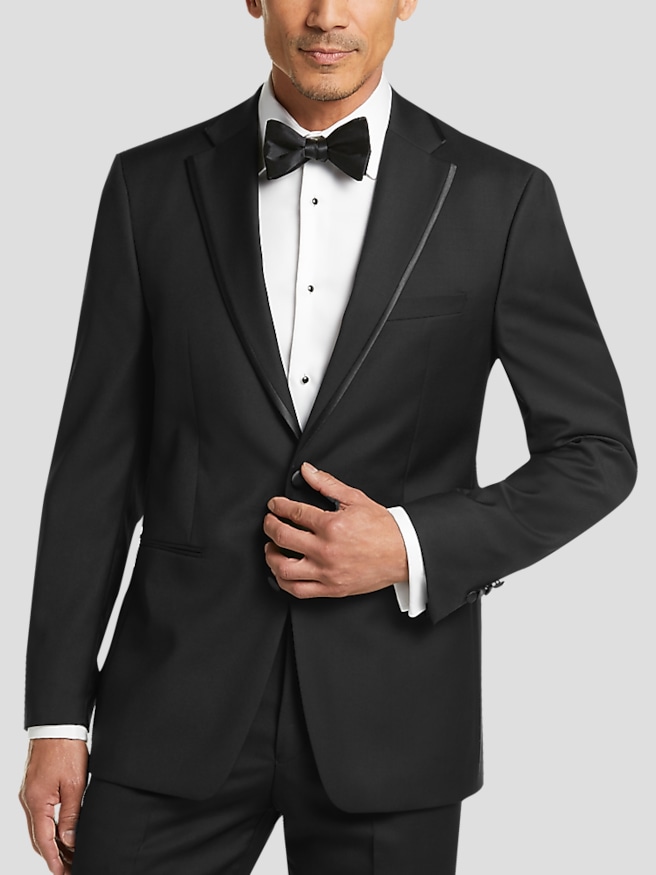
Groomsmen tuxedos are formal wedding ensembles that give the wedding party a coordinated appearance while complementing the groom’s attire. A traditional tuxedo is distinguished from a standard suit by contrasting lapel facings, often in satin or grosgrain, along with details such as covered buttons and a coordinating stripe along the outside of the trousers. These finishes create the crisp, dressed-up look associated with black-tie weddings and formal receptions. Classic black is an enduring choice, while midnight blue offers a subtle alternative that still feels at home in a formal setting. The wedding’s dress code provides the clearest starting point: tuxedos suit black-tie occasions, while a conventional suit is often more appropriate for cocktail or semiformal attire. Within a tuxedo ensemble, the lapel shape has a noticeable effect on the overall impression. Peak lapels create a defined, angular line through the shoulders and chest; shawl lapels have a continuous curved edge with a softer appearance. Consistent lapels, shirts, and bow ties can bring the group together without requiring every member to wear the same jacket cut. The groom can remain visually distinct through a contrasting dinner jacket, a separate lapel treatment, or a thoughtfully chosen accessory, while the groomsmen share a quieter, cohesive look. In photographs, that balance gives the wedding party a clear connection without making every outfit identical. A restrained palette also leaves room for flowers, pocket squares, and other wedding details to carry accent colors. Rather than matching every accessory to a decoration or floral arrangement, repeating one or two colors usually creates a more natural result. The strongest groomsmen tuxedo combinations look intentional from the ceremony entrance through the final group portrait, with proportions and finishing details doing as much work as color. A coordinated wedding party depends on that shared visual language, not on making every person’s outfit fit exactly alike.
Fabric and fit shape how groomsmen tuxedos look in person and how comfortably they move through a full celebration. Wool is a traditional choice because it drapes cleanly, breathes well, and has natural resilience that helps the fabric recover from ordinary creasing. Wool blends can offer practical durability, although the fabric’s weight, weave, and construction matter as much as its fiber content. A smooth, matte body fabric gives satin lapels a clear contrast, while grosgrain introduces a finely ribbed texture with a more understated finish. Jacket lining, secure seams, neatly finished buttonholes, and lapels that lie flat all contribute to a polished appearance. Fit should begin at the shoulders, where the jacket ought to follow the body without extending noticeably beyond the natural shoulder line or pulling across the upper back. The front should close comfortably without pronounced wrinkles radiating from the button. Slim, modern, and classic fits describe broad silhouettes rather than universal measurements, so the same label can sit quite differently on two members of the wedding party. A trim outline can still allow room to sit, reach forward, and lift an arm for a toast. Jacket sleeves generally leave a small amount of shirt cuff visible, and the collar should rest close to the shirt without a large gap. Coordinating Groomsmen Pants with the jacket involves more than choosing a similar color: fabric, finish, and the shade of the side stripe all affect whether the pieces read as a complete ensemble. Trousers should sit securely at the intended waist position, with enough room through the seat and thighs for comfortable movement. A clean hem with little or no break keeps the lower half streamlined, while excess fabric pooling over the shoes can make an otherwise well-fitted tuxedo appear unfinished. For a group with varied heights and builds, consistent proportions are more convincing than identical measurements, especially when everyone stands together for photographs.
The supporting pieces give groomsmen tuxedos their finished character and help the group look consistent at close range. A white formal shirt creates a clear contrast beneath a dark jacket, with a turndown collar offering a versatile foundation for a bow tie. Shirt fronts may have pleats, a textured bib, or a clean covered placket; whichever direction the wedding party takes, repeating that choice keeps the overall effect deliberate. Studs and cuff links should work with the shirt’s construction, and coordinating their metal finishes creates continuity without drawing attention away from the ensemble. A black bow tie remains a traditional companion to a black tuxedo, while a low-cut waistcoat or cummerbund can cover the waistband when that detail suits the look. These waist coverings are alternatives, not pieces that need to be layered together. Tuxedo trousers with side adjusters or suspender buttons maintain a clean waistline without a visible belt. Polished formal footwear and dark socks long enough to cover the calf when seated help preserve the line of the trousers during both the ceremony and dinner. Comfort matters here: shoes should fit securely and feel familiar before a long stretch of standing, walking, and dancing. After the celebration, careful handling helps preserve the tuxedo’s shape and finish for another formal occasion. A broad, supportive hanger protects the jacket’s shoulders, while trousers hung neatly along their crease are less likely to develop unnecessary folds. Following the care label is especially important when the main fabric, lining, and decorative facings require separate consideration. Professional cleaning when needed, prompt attention to spills, and appropriate pressing help protect the materials; direct heat can leave shine or damage delicate trim. Clean, dry garments stored with breathing room are better positioned to retain their appearance between occasions. With coordinated details, comfortable proportions, and attentive care, a groomsmen tuxedo can serve beyond the wedding as dependable attire for future black-tie celebrations.