Yellow fashion accessories add color where it can make a clear impression: at the collar, above a jacket pocket, or just beneath a trouser hem. The yellow family spans pale butter and soft lemon through vivid canary, golden yellow, and muted mustard, giving each accent a distinct character. Pale shades offer a restrained contrast against navy or charcoal, while brighter yellows stand out sharply against deep blue and black. Mustard has an earthy quality that sits comfortably beside olive, brown, cream, and textured gray. For men who usually wear neutral clothing, a yellow accent can introduce personality without changing the foundation of an outfit. A navy suit and white shirt, for example, provide a clean backdrop for a yellow necktie; a small patterned pocket square can carry the same color more discreetly. Yellow socks create a less prominent detail, visible mainly when seated or in motion, while a bow tie places the color directly at the center of the look. Pattern affects the impression as much as shade. Narrow stripes and small geometric repeats break yellow into manageable touches, and paisley or floral designs allow it to mingle with complementary colors. A navy ground with yellow details generally reads more quietly than a solid yellow surface, even when both use an equally bright shade. Accessories do not need to match exactly to look coordinated. A golden tie and a pocket square with a small yellow motif can share a color connection without looking like identical fabric cut into separate shapes. White, gray, or blue elsewhere in the pattern helps connect the accent to the shirt and jacket. Metal details also influence the result: gold tones echo yellow’s warmth, while silver tones provide a cooler contrast. The strongest combinations usually give one detail the leading role, leaving enough neutral space for its color and texture to remain distinct.
Material determines how yellow accessories drape, reflect light, and hold up to repeated wear. Silk can give a necktie fluid movement and a subtle sheen, although its appearance varies with the weave; a textured silk surface looks less reflective than a smooth satin weave. Cotton and linen generally have a more matte character, with linen’s natural irregularities adding visible texture. Wool can give muted yellow a soft, substantial appearance that complements textured tailoring, while polyester and microfiber blends may offer practical wrinkle resistance depending on their construction. None of these fibers guarantees a particular level of performance on its own. A tie’s lining, seams, and overall construction affect how neatly it knots and how well it returns to shape afterward. For a necktie, useful proportions include both blade width and length: the width should look balanced with the jacket lapels, and the tied tip generally sits near the belt buckle. A larger knot uses more fabric, so collar shape and torso length matter alongside the stated tie length. A bow tie should sit securely without pressing into the neck, with its width proportionate to the face and collar rather than extending conspicuously beyond them. Pocket squares need enough fabric to hold their intended shape without creating a bulky lump inside the breast pocket. Thin silk may settle into a soft puff, while a crisper cotton or linen fabric can support a flatter, more defined fold. Socks benefit from attention to shoe size, stretch, and cuff construction; a comfortable pair stays in place without digging into the leg or bunching inside the shoe. Reinforcement at the heel and toe can help with everyday friction. On accessories with colored trim or enamel details, smooth edges and secure attachments are useful construction features to examine. These practical qualities matter because a yellow accent draws attention not only to its color but also to how neatly it sits within the outfit.
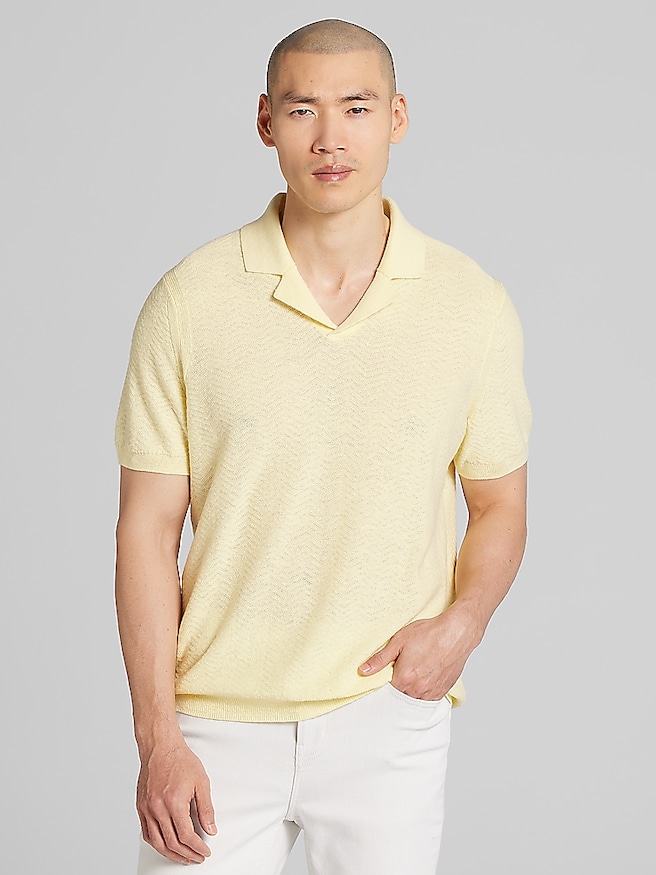
Yellow accessories suit a range of occasions, from an ordinary office day to a wedding, graduation, or celebratory dinner. In a workplace where tailoring is customary, a subdued golden pattern can add interest while keeping the overall impression composed. For a wedding guest, the invitation’s dress code remains the starting point; yellow can appear as a measured accent rather than competing with the formality of the occasion. Coordinated wedding-party accessories may share a shade while using distinct patterns or textures, giving the group a visual connection without making every detail identical. For outfits that carry the color beyond accessories, Yellow Clothing can connect with a small yellow motif, balanced by navy, gray, white, or brown elsewhere. A pale yellow shirt, for instance, does not require an equally pale yellow tie; a darker patterned accent can create separation and keep the layers visible. Accessories can also make thoughtful gifts for a graduate beginning a professional wardrobe, someone celebrating a promotion, or a person already known for wearing color. Familiarity with the recipient’s preferred shades, usual dress codes, and existing wardrobe makes the choice more personal, while sizing deserves attention for socks and fitted accessories. Care is equally important to preserving the appearance of yellow fabric. The care label should determine whether an accessory can be washed, needs professional cleaning, or requires another treatment, since fiber blends, linings, and decorative details can respond differently to moisture and heat. Prompt, gentle blotting is preferable to rubbing a spill into the surface, and stain treatments should be appropriate for the material. Ties keep their shape better when knots are fully undone after wear rather than pulled loose and left tied. Pocket squares should be unfolded before storage, and accessories are best put away clean, dry, and protected from prolonged direct sunlight, which can fade color. With sound construction, comfortable proportions, and suitable care, yellow accents can remain useful wardrobe details across repeated occasions, adding a recognizable touch of color without requiring a complete change of style.