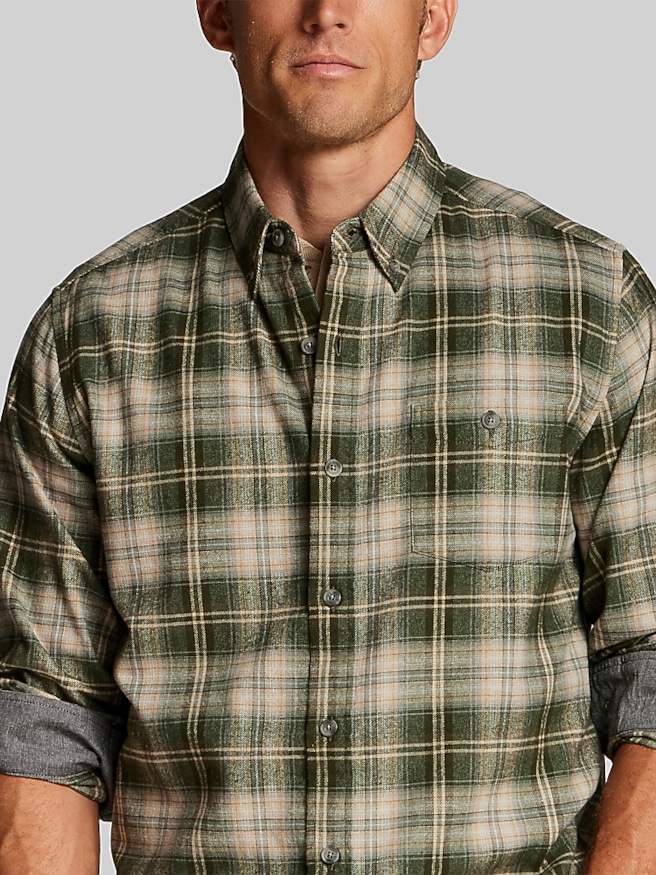
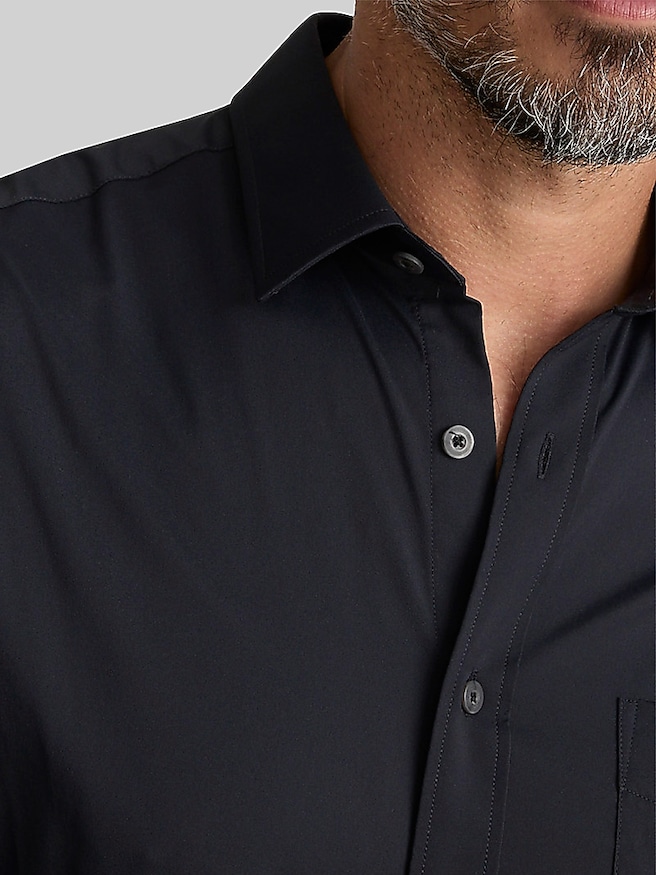
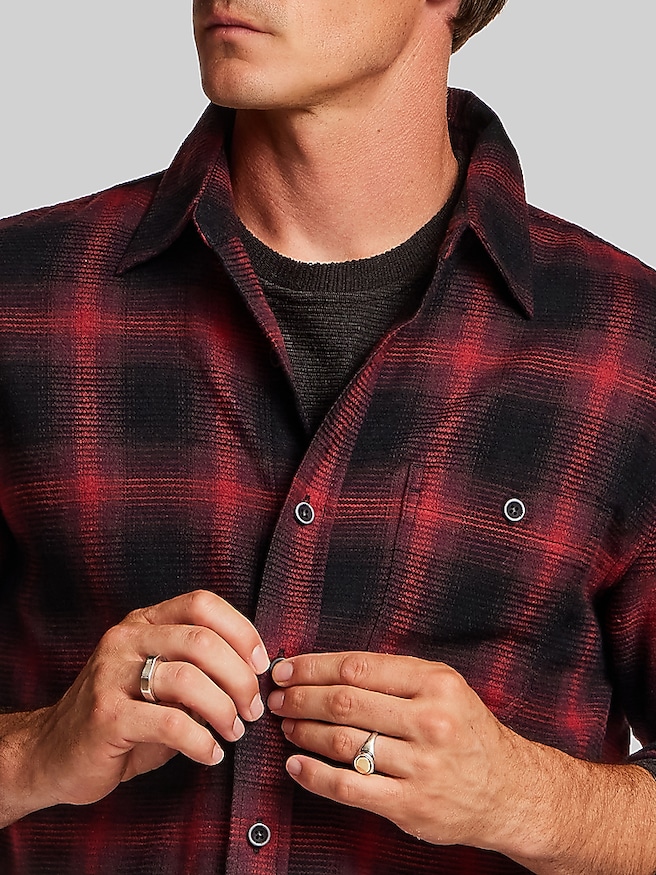
Winter button-up shirts bring together the structure of a collared shirt and the comfort of fabrics suited to cold-weather layering. Flannel, corduroy, substantial cotton twill, and wool blends are useful starting points, each with a distinct feel and level of warmth. Flannel gets its familiar softness from a brushed surface that helps hold warm air close to the body, making it a comfortable choice for a chilly commute or a relaxed weekend indoors. Cotton flannel is breathable and soft against the skin, although fabric weight and construction matter as much as the fiber itself. A lighter flannel can sit neatly beneath a sweater, while a heavier version has more presence worn over a T-shirt. Corduroy adds depth through its raised ribs, known as wales; fine-wale fabrics tend to look more understated, while wider ribs create a more pronounced texture. Twill has a diagonal weave that gives the fabric visual character and can make it suitable for repeated everyday wear. Wool blends offer another approach to insulation, with the blend, weave, and finish influencing softness, weight, and care requirements. Lined shirt styles provide additional warmth but usually need more room through the body and sleeves, particularly when worn over another layer. No single fabric is best for every winter setting. A heated office, a long drive, and an afternoon spent moving between indoor and outdoor spaces call for slightly different levels of insulation. A substantial shirt that still fits comfortably beneath a coat is often more versatile than the heaviest option. Texture also changes the overall impression: brushed checks feel relaxed, smooth twill looks restrained, and a muted corduroy shirt can bridge the space between casual clothing and a more polished outfit. These distinctions make winter button-up shirts useful for men who want warmth without giving up a defined collar, a clean front, or the flexibility to adjust layers throughout the day.
Fit determines how comfortably a winter shirt moves from one setting to another. Shoulder seams should sit close to the natural edge of the shoulders, and the front should lie smoothly without pulling between the buttons when seated. Enough space through the chest and upper arms allows for reaching across a desk, carrying a bag, or driving without the fabric binding. A trim fit can work well beneath a sport coat or fine-gauge sweater, while a classic or relaxed fit leaves more room for an undershirt. Extra room should feel intentional rather than oversized; excess fabric at the waist can bunch beneath knitwear and make a tucked shirt uncomfortable. Sleeve length matters, too, especially when several layers meet at the wrist. Cuffs should sit comfortably near the wrist without disappearing into the sleeve when the arms extend. Shirt length helps determine intended use: a longer, curved hem generally stays tucked more securely, while a shorter hem can create a cleaner untucked line. A button-up shirt refers to a front that fastens with buttons; a button-down collar specifically has collar points secured by small buttons. That collar detail can help maintain a tidy, relaxed appearance beneath a sweater. Styling can be equally practical. A small check or quiet solid works easily with wool trousers for an office that allows less formal dressing, while a larger plaid suits dark denim and boots. Navy, charcoal, olive, burgundy, and cream coordinate readily with many winter layers without requiring an exact color match. For relaxed combinations built around denim, chinos, and textured knitwear, Men's Winter Casual Shirts offer another way to approach everyday dressing. A patterned shirt usually looks most balanced when the surrounding pieces are quieter, allowing the fabric and color to carry the outfit. Under a crewneck sweater, a neat collar and a glimpse of cuff can provide enough contrast without adding another prominent pattern.
Care and construction help determine whether a winter button-up shirt remains a dependable part of a wardrobe. Dense fabric alone does not guarantee durability; even stitching, securely attached buttons, and well-finished seams all contribute to how a shirt holds up to regular wear. Areas that experience repeated friction, including cuffs, elbows, and the collar edge, benefit from a comfortable fit that does not place unnecessary strain on the fabric. The care label should always take priority because cotton, wool blends, brushed finishes, and linings can require different treatment. Many cotton shirts can be machine washed, but water temperature and drying instructions vary. Excessive dryer heat may cause shrinkage or affect the surface of a brushed fabric, so following the recommended settings helps preserve both shape and feel. Wool-blend shirts may call for a gentle wash process or professional cleaning, depending on their construction. Removing a washable shirt promptly after the cycle and smoothing the collar, placket, and cuffs can reduce deep creasing. Any ironing should follow the fabric instructions, with particular care around textured surfaces and heat-sensitive blends. Hanging shirts with enough space between them helps prevent crowding, while heavier styles may be better stored folded if the care guidance recommends it. These practical details matter for shirts worn on repeat, whether that means a weekday rotation for a casual workplace, comfortable clothing for winter travel, or an easy layer for dinner with friends. For someone who frequently moves between a warm building and a cold sidewalk, a shirt that layers smoothly beneath outerwear can be especially useful. Winter button-up shirts can also make thoughtful gifts for a father, partner, brother, or friend when the recipient’s usual size, preferred fit, and care habits are known. Familiar colors and manageable laundry requirements often make a gift easier to incorporate into everyday outfits. The strongest choice is ultimately a shirt whose warmth, texture, and proportions suit the way it will actually be worn.