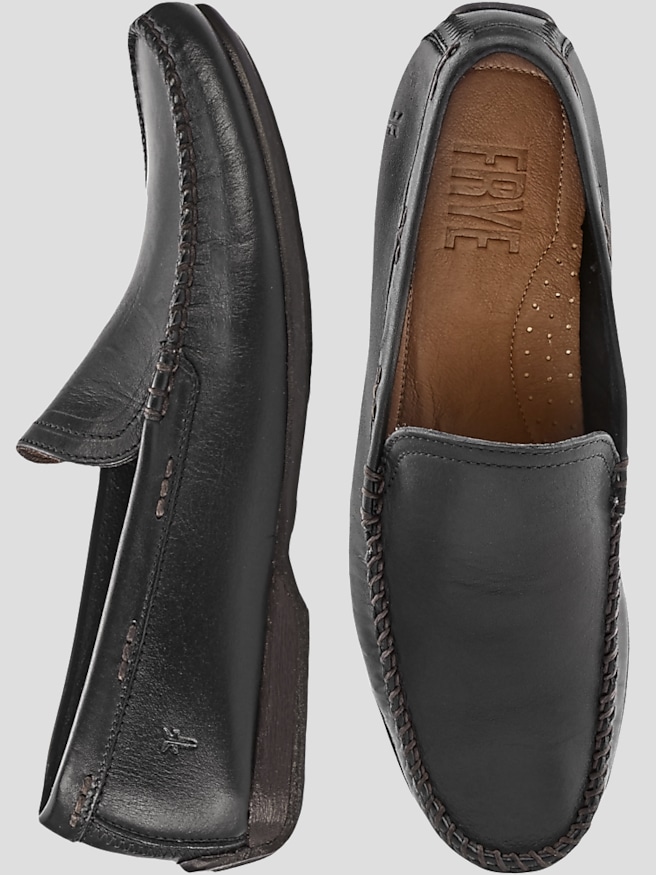
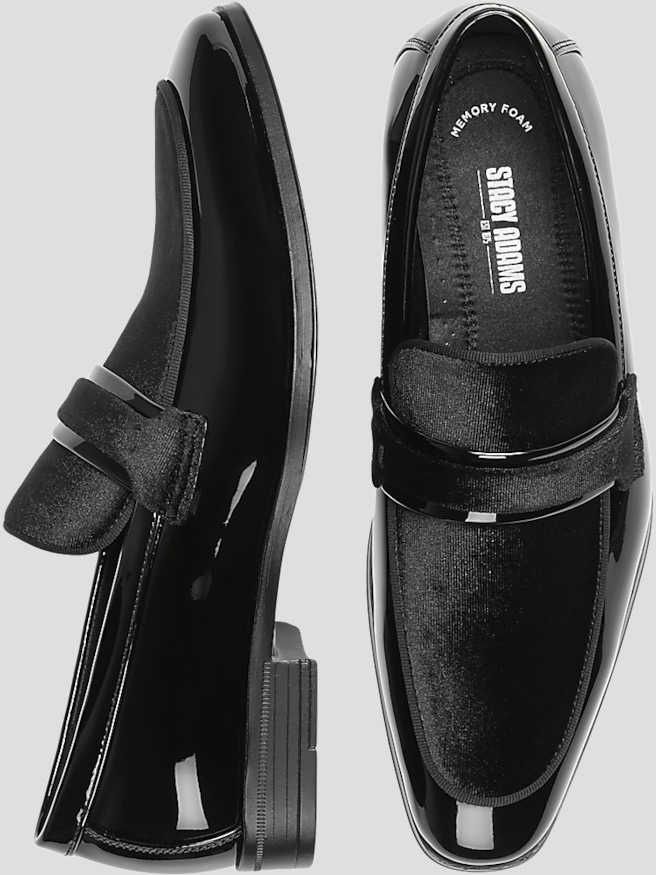
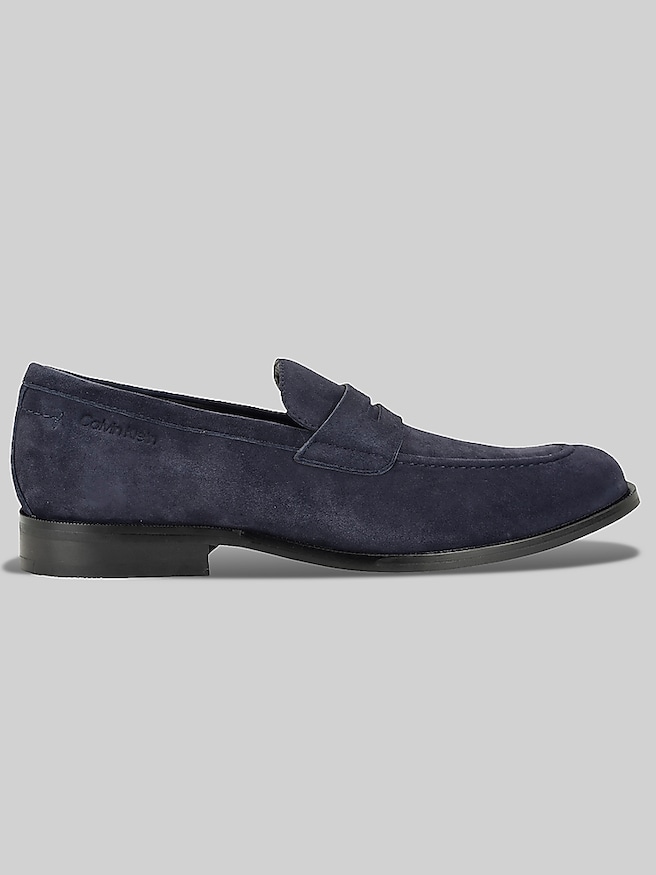
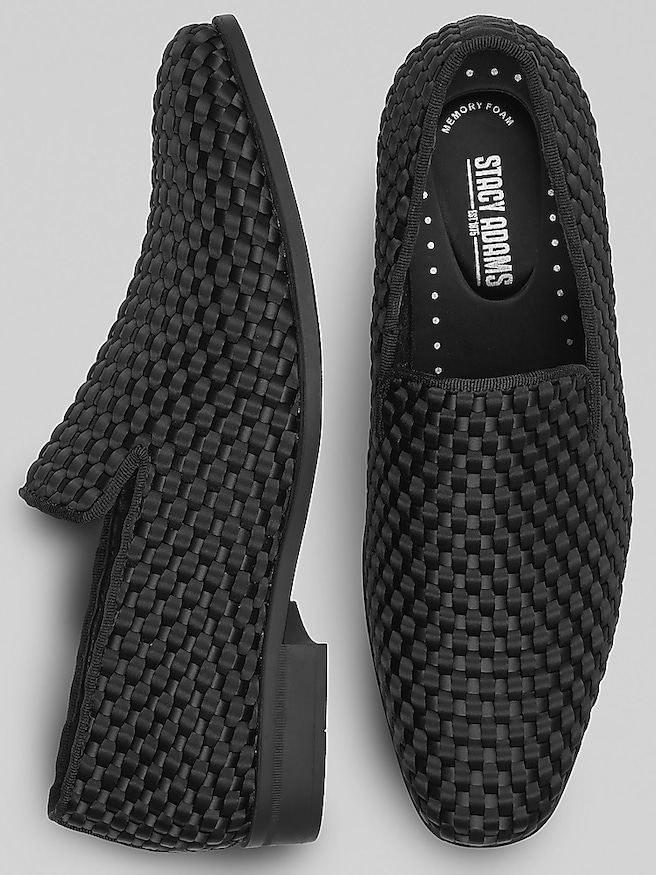
Wine loafers bring a deep red accent to men’s footwear, offering an alternative to black or brown without requiring a bold outfit. The color sits within a family of rich shades often described as burgundy or oxblood, although those names are not exact matches: some finishes lean purple, others reveal brown undertones, and others have a clearer red cast. That variation gives wine-colored loafers considerable range, from understated shoes worn with office trousers to more expressive pairs suited to dinner plans or wedding celebrations. Their slip-on construction keeps the silhouette uncluttered, while details across the upper establish the character. A penny loafer has a slotted strap across the instep and a familiar, restrained appearance. Tassel loafers add movement and texture, while metal-bit designs introduce a small point of contrast. An apron seam emphasizes the shape of the toe, and a plain, streamlined upper lets the color and finish take the lead. Materials make an equally noticeable difference. Smooth leather can develop subtle creasing and tonal variation with wear, giving the surface character rather than leaving it perfectly uniform. Full-grain leather retains its natural grain, though the quality of the hide, finish, and construction still matters. Suede presents wine tones with a softer, matte appearance, making the same color feel less polished and more relaxed. Brushed or burnished finishes may create lighter and darker areas, especially around the toe and seams. A high-shine finish reads dressier than a softly textured surface, but shine alone does not determine whether a shoe suits an occasion. Toe shape, sole thickness, and decorative details all contribute. A moderately rounded toe and slim sole tend to work easily with tailored clothing; a broader shape and substantial sole create a more grounded look with casual trousers. The appeal of wine loafers lies in this balance: recognizable enough to anchor an outfit, distinctive enough to keep simple clothing from feeling predictable.
Navy, gray, tan, and olive provide especially useful settings for wine loafers because they allow the red undertones to register without competing for attention. Navy chinos, a light blue button-down, and smooth leather loafers make a practical combination for an office with a business-casual dress code. Medium-gray wool trousers bring out the depth of the color, while charcoal creates a quieter contrast. With dark indigo denim, a clean hem and minimal fading help maintain the shoes’ polished character. Tan trousers create a stronger contrast, particularly when the leather has a darker, brown-red finish. A belt in a compatible burgundy or deep brown can connect the outfit without needing to match every shade exactly. Socks offer another way to control the effect: navy or charcoal creates continuity with trousers, while a restrained pattern can pick up a small amount of red without turning the shoes into part of a matching set. No-show socks give a bare-ankle appearance while providing a layer between the foot and the lining. Fit is particularly important with loafers because there are no laces to adjust the hold across the foot. The heel should feel secure, the instep comfortably supported, and the toes free from pressure at the front or sides. Slight heel movement may occur with a new, relatively firm sole, but repeated slipping or the need to grip with the toes suggests an unsuitable fit. Leather may soften and ease modestly across pressure points; it should not be expected to gain meaningful length or correct painful tightness. Foot width, instep height, and the shape of the shoe’s last can matter as much as the marked size. Trying loafers with the socks intended for regular wear gives a more useful sense of fit. For days involving standing, commuting, or walking between appointments, cushioning, flexibility, and a stable heel deserve attention alongside appearance.
Construction and care influence how wine loafers wear over time. Leather soles often complement a slim, traditional profile, while rubber soles may provide additional grip and a more cushioned feel, depending on their design. Neither material alone determines comfort or durability. Sole thickness, tread, attachment method, lining, and the quality of the upper all play a part. Some stitched constructions allow resoling, but repair options depend on the individual construction and a cobbler’s assessment. Regular care starts with removing dust and grit before they work into creases or abrade the finish. Smooth leather generally benefits from an appropriate cleaner and occasional conditioning, followed by a compatible cream or polish when needed. Because wine shades vary considerably, a color-matched treatment should be tested on a discreet area before broader application; a neutral treatment may also affect the finish and deserves the same caution. Suede needs a separate routine, typically involving a suede brush and products formulated for its textured surface rather than ordinary leather cream. Cedar shoe trees help support the shape between wears, and a shoehorn reduces stress on the heel when slipping the shoes on. Allowing footwear to dry naturally after wear, away from direct heat, helps protect both the upper and its construction. Protective sprays may reduce staining on suitable materials, but they do not make every loafer waterproof. These habits are especially useful for shoes worn repeatedly with office clothing or kept ready for dinners and celebrations. Wine loafers can also make a thoughtful gift for someone who enjoys tailored clothing or wants a distinctive alternative to familiar neutrals, provided the recipient’s size, width, and preferred silhouette are known. For a different color direction, Blue Loafers offer another option alongside neutral trousers and denim. Wine remains a compelling choice for its depth, its compatibility with established wardrobe colors, and its ability to look considered without making the entire outfit revolve around the shoes.