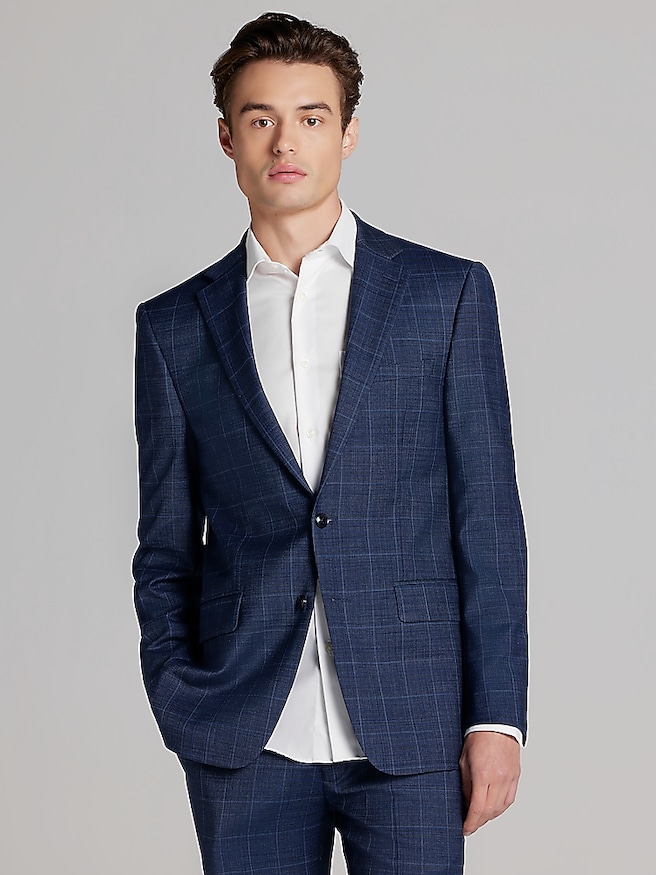
Windowpane suits are defined by a grid of intersecting lines that forms open squares or rectangles across the fabric, giving traditional tailoring a distinctive pattern without the density of a smaller check. The name comes from the resemblance to panes of glass framed by narrow borders. That simple structure leaves plenty of the background fabric visible, so the overall effect depends as much on the base color as on the lines themselves. A dark navy suit with a faint blue grid can look restrained from across a conference room, while a charcoal background crossed by lighter lines makes the pattern more noticeable. Wider spacing generally creates a more open appearance; stronger contrast gives the same basic design a bolder presence. Neither approach is inherently more formal, but a low-contrast pattern is often easier to wear in conservative professional settings. Windowpane suits work well for presentations, client dinners, weddings, and celebrations where a tailored outfit is appropriate and a little personality is welcome. For someone who already wears solid suits regularly, the grid offers a useful change of pace without requiring a completely new approach to getting dressed. For an occasional suit wearer, a muted pattern can feel distinctive while remaining easy to coordinate with familiar shirts and shoes. Single-breasted tailoring keeps the overall shape straightforward, while a double-breasted silhouette adds more visual structure through its overlapping front and broader lapel arrangement. The pattern should complement that shape rather than overwhelm it. At a wedding, a subtle windowpane can add interest to photographs while keeping attention on the person wearing it. In an office, the same suit can feel composed with a plain shirt and restrained tie. An invitation specifying black tie still calls for the requested formal attire rather than a patterned suit as a substitute. As a gift, a windowpane suit is most practical when the recipient’s measurements, preferred fit, and taste in patterns are known, especially for a graduation, career milestone, or important celebration.
Fabric and fit determine how a windowpane suit feels throughout the day, not just how it looks on a hanger. Wool is a traditional choice because it drapes well, offers natural resilience, and can recover from minor creasing between wears. Its appearance varies with the yarn and weave: a smooth worsted fabric gives the grid a crisp outline, while a more textured surface can soften the contrast. Wool blends may introduce additional strength, stretch, or a distinct surface finish, depending on their composition. A stretch blend can provide useful ease when sitting at a desk or reaching across a table, but it does not replace the need for adequate room through the shoulders, seat, and thighs. The lining and internal construction also influence comfort, movement, and how firmly the jacket holds its shape. Softer construction can feel relaxed, while more structured tailoring creates a defined shoulder and chest. Neither is automatically better; the right balance depends on the wearer’s proportions and intended use. A well-fitting jacket sits smoothly across the shoulders, with lapels that lie against the chest and a fastening that does not pull the front into an X-shaped crease. The collar should rest neatly against the shirt collar, and the sleeves should allow a small amount of shirt cuff to show without exposing too much wrist. Trousers should sit securely at the waist and provide enough room to sit comfortably without strain across the pockets or seat. The hem can meet the shoe with little or no break for a clean line, or carry a modest break for a more traditional finish. With windowpane fabric, fit issues can be especially visible because the grid makes pulling and distortion easier to notice. Clean pattern alignment at prominent seams and pockets contributes to a considered appearance, although perfect continuity is not possible at every shaped seam. Alterations should respect both the silhouette and the placement of the checks. For frequent wear, fabric resilience, sound seams, and comfortable proportions matter more than choosing the narrowest cut or the most delicate cloth.
Coordinating a windowpane suit is usually easiest when the grid remains the main pattern in the outfit. A solid white shirt creates a sharp contrast, while pale blue can make navy or gray tailoring feel less stark. A very fine shirt stripe can also work when its scale is clearly smaller than the windowpane, but several competing checks tend to make the outfit look busy. Ties with quiet texture, such as grenadine or a subtle woven finish, add depth without introducing another large motif. A navy tie with a charcoal suit, a burgundy tie against a blue background, or an earth-toned tie that picks up a muted thread in the grid can create a deliberate color relationship. The pocket square does not need to match the tie exactly; plain white or a restrained accent color often looks more natural. Black leather shoes keep darker combinations crisp, while dark brown can bring a softer contrast to navy tailoring when the occasion permits. A simple belt in a compatible leather tone finishes the outfit without competing with the fabric. For a less patterned look, Smooth Suits provide another direction for tailored dressing, particularly when accessories are intended to carry more of the visual interest. Keeping a windowpane suit looking sharp also depends on consistent, gentle care. Follow the garment’s care label, brush away surface dust with a suitable clothing brush, and let the jacket and trousers air after wear before returning them to the closet. A broad, shaped hanger supports the jacket’s shoulders, while trousers benefit from hanging neatly along their crease without crowding. Avoid overfilling pockets, which can stretch the fabric and interrupt the grid’s clean lines. Blot spills rather than rubbing them, and leave persistent stains to a professional cleaner. Professional cleaning is best used when needed rather than automatically after every wear. Rotating suits and allowing time between outings can help preserve their shape. With appropriate care, the pattern remains a distinctive detail within an outfit that feels polished, comfortable, and personal.