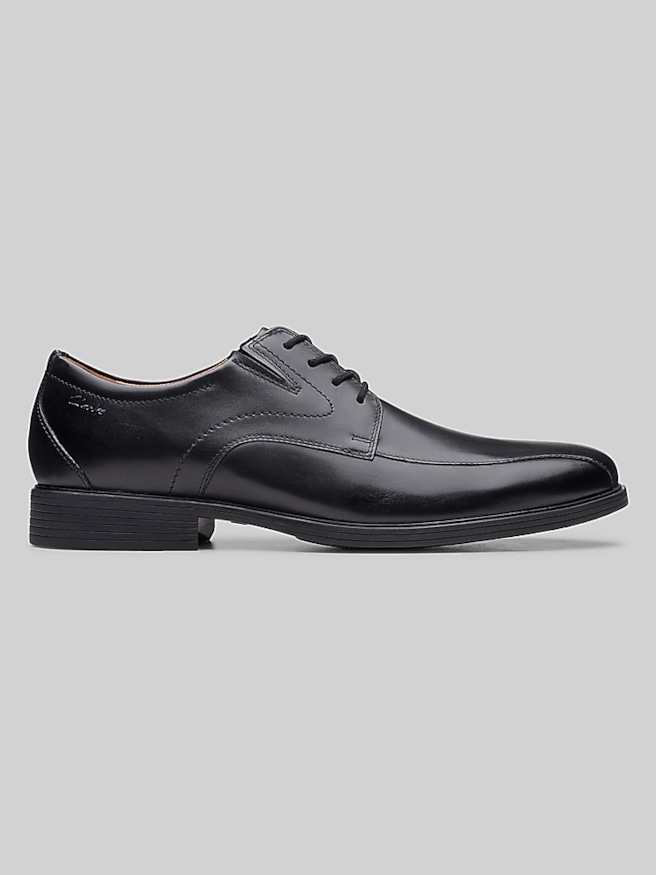
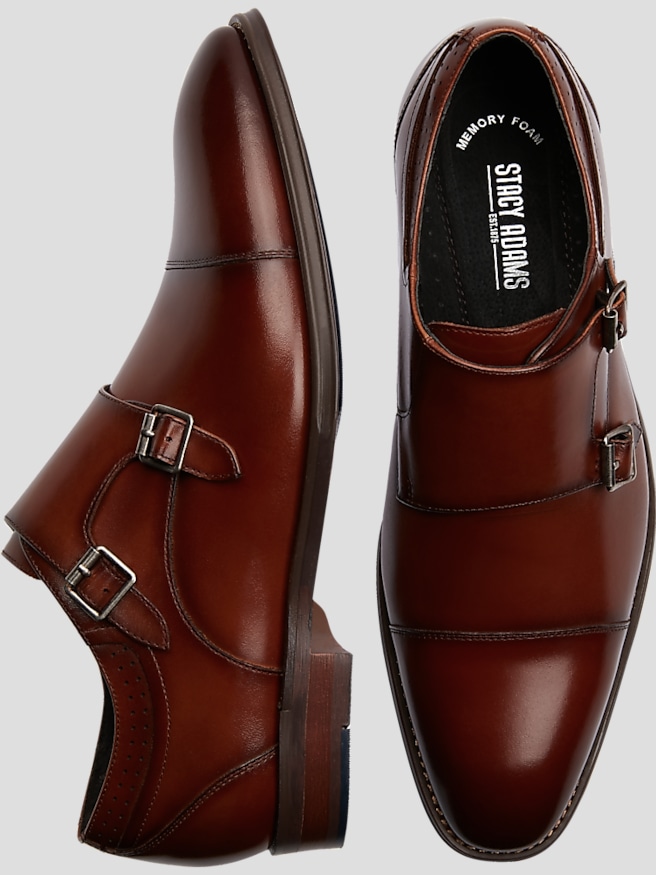
Wide width men's dress shoes pair a polished appearance with proportions that give a broader foot room where it needs it most. The distinction is more than extra space at the toes: a wide fit can provide additional room across the ball of the foot and through the upper, depending on the shape used to build the shoe. That matters when a regular-width pair feels tight along the sides even though its length seems correct. Going up in length to compensate can leave too much space in front, shift the shoe's flex point, and allow the heel to slip. Width markings offer a better starting point. Wide sizes may be labeled E, EE, or 2E, while extra-wide sizes may use EEE, 3E, EEEE, or 4E; these conventions vary by maker, so the corresponding size chart matters more than the letters alone. A rounded or almond-shaped toe can preserve a refined profile without the narrow taper of a sharply pointed design, although appearance alone does not confirm interior space. A comfortable fit leaves the toes free to move, holds the heel securely without rubbing, and places the widest part of the foot near the widest part of the shoe. The upper should feel supportive rather than stretched taut, with no concentrated pressure over the little toe or across the instep. Trying shoes with the dress socks intended for everyday wear gives a more realistic sense of fit than testing them with thick athletic socks. Both feet deserve attention, since one may be longer or wider than the other. For anyone who wears an orthotic, interior depth and a removable footbed can be just as important as the stated width. Leather may soften with wear, but a dress shoe should not depend on substantial stretching to become wearable. These details make wide-width dress footwear relevant to office professionals, wedding guests, graduates, and anyone who wants a sharp finish without squeezing into a standard-width shape.
The range of dress-shoe silhouettes makes it possible to match that fit to the occasion without treating every polished outfit the same way. Wide-width oxfords have closed lacing, where the eyelet sections are attached beneath the front of the upper, creating the clean appearance commonly associated with tailored suits. Derbies use open lacing, with the eyelet sections sitting on top of the upper; that arrangement can allow more adjustment across the instep, though the overall fit still depends on the shoe's construction. A plain toe keeps the look restrained, while a cap toe adds a defined line that works naturally with business attire. Brogue detailing introduces decorative perforations and a more textured appearance, making it useful for outfits built around patterned trousers or a sport coat. Loafers offer a slip-on alternative, but their lack of laces makes a secure heel and an accommodating instep especially important. Monk straps bring a buckle closure into the mix, with adjustment that depends on the strap placement and available buckle positions. Black smooth leather provides a formal-looking foundation for charcoal or dark suits, while brown and burgundy tones can complement navy, gray, and earth-toned clothing. Smooth leather also accepts polish for a more uniform finish; suede has a softer, matte surface that generally feels less formal. Supple leather uppers can adapt to the foot with use, while synthetic uppers vary in softness, breathability, and maintenance needs. Linings, seams, and edge finishing influence comfort, too, particularly around the heel and where the shoe crosses the top of the foot. A pair intended for client meetings may call for a cleaner silhouette than one worn with chinos at a relaxed office. For outfits that move further toward casual trousers and less structured layers, Wide Width Business Casual Shoes offer a related direction without requiring the same degree of formality.
Comfort and durability also depend on what sits beneath the upper. Rubber outsoles can provide cushioning and grip, while leather soles offer a traditional dress-shoe finish and a distinctive feel underfoot. Neither material tells the whole story: tread pattern, sole thickness, flexibility, and the surface underfoot all affect the experience. A long day that includes standing through a presentation, walking between buildings, and attending an evening reception puts different demands on footwear than a short ceremony spent mostly seated. Cushioning under the heel and forefoot may make those hours more comfortable, but it should not crowd the interior or push the foot against the upper. A stable heel counter helps the back of the shoe maintain its shape, and a sole that bends near the ball of the foot supports a more natural step. Construction influences longevity as well; some stitched designs can be resoled by a qualified cobbler, while other constructions have more limited repair options. Regular care protects the appearance that makes dress shoes useful in the first place. Dust and surface dirt can be removed with a soft brush or cloth before applying a product appropriate for the upper. Smooth leather benefits from suitable conditioner when needed and polish that matches the desired finish, while suede calls for a dedicated brush and products made for its nap. Excessive conditioner or the wrong cleaner can alter the surface, so care directions matter. A shoehorn helps prevent the heel from being crushed during dressing, and properly sized shoe trees can help maintain shape between wears. Giving shoes time to air out and storing them away from direct heat supports both the lining and the upper. For a graduation, a new professional role, or a milestone celebration, wide-width dress shoes can be a practical gift when the recipient's measurements and style preferences are known. The strongest choice is one that suits the wearer's routine, fits comfortably from the beginning, and looks at home with the clothing it will accompany.