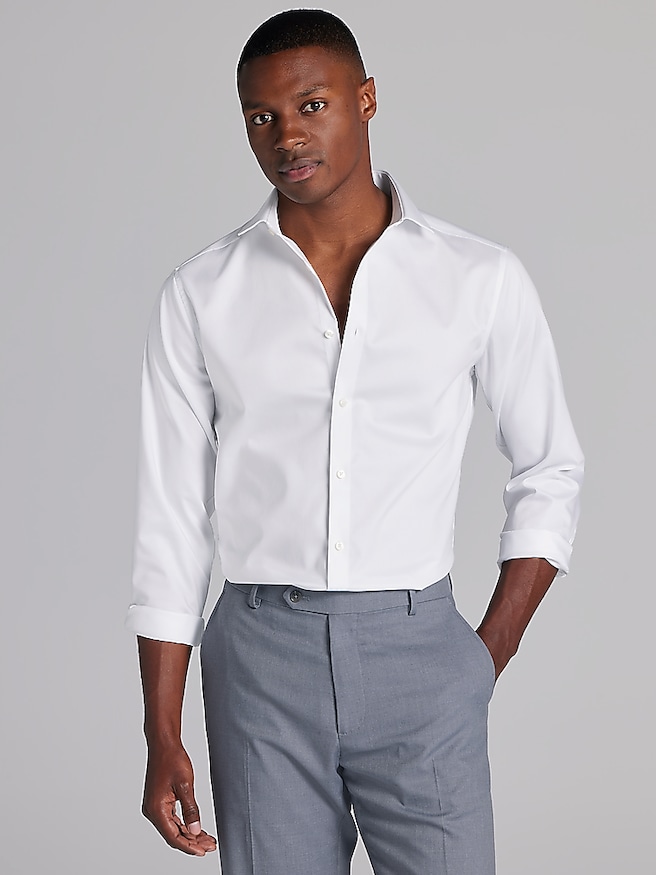
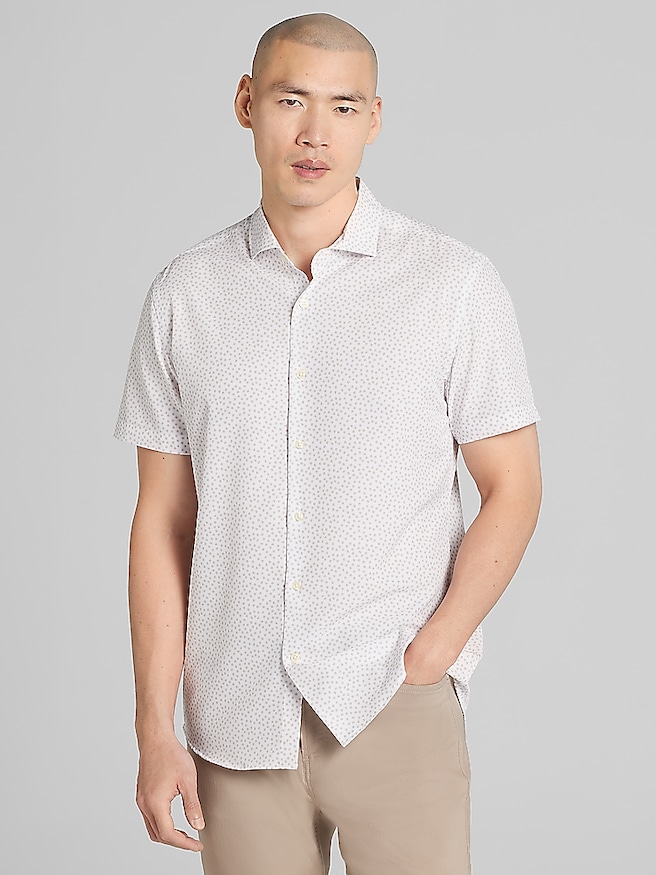
White slim fit shirts pair a clean, versatile color with a streamlined silhouette that works with suits, tailored separates, and more relaxed outfits. Compared with a regular fit, a slim fit generally has less fabric through the chest and waist, often with narrower sleeves for a closer shape beneath a jacket. The result should be neat rather than tight: a shirt that follows the body without pulling across the buttons or restricting movement. Slim fit is not limited to one body type, and the proportions can vary by maker and style. Someone with broad shoulders may need more room across the upper back, while someone with a straighter build may prefer a gentler taper through the middle. On a well-fitting woven shirt, the shoulder seams usually sit near the natural shoulder edges, the collar feels comfortable when fastened, and the cuffs stay close to the wrists without squeezing them. Sitting at a desk, reaching for a bag, and bending an elbow should all feel natural. Horizontal pulling across the chest or buttons that gape can signal that the cut is too narrow, even when the neck measurement seems correct. Shirt length matters as much as width. A longer hem helps a dress shirt stay tucked through a meeting or an evening of dancing, while a shorter, more even hem can suit an untucked outfit. Collar shape also changes the overall impression. A spread collar gives a tie knot room and frames the face beneath a suit jacket; a point collar creates a more traditional line. A button-down collar has a more relaxed character, especially worn open at the neck. These details make white slim fit shirts useful for job interviews, office presentations, wedding celebrations, and everyday occasions when a polished appearance matters. White provides a clear backdrop for patterned ties and textured jackets without competing with the rest of an outfit.
Fabric gives a white shirt much of its character, from the smoothness of its surface to the way it moves against the body. Cotton is a familiar choice for its softness and breathability, though the weave, yarn, and finishing process all influence how a shirt feels. Poplin typically has a smooth, relatively flat surface that looks crisp under tailored clothing. Twill has a subtle diagonal texture and often a slightly fuller feel, while pinpoint and Oxford weaves bring more visible texture. Fabric names alone do not establish thickness or opacity, so construction matters alongside fiber content. White fabric can reveal an undershirt or show contrast at the waistband, particularly in a lighter weave. A smooth undershirt close to the wearer’s skin tone generally creates less contrast than bright white beneath a translucent shirt. Cotton blends can bring different benefits, including easier care or improved shape retention, depending on their composition. A small amount of elastane adds stretch, which can make a closer-fitting shirt more comfortable when reaching across a table or spending several hours seated. Stretch does not replace adequate room through the shoulders, chest, or arms, but it can complement a good fit. Wrinkle-resistant and non-iron finishes can reduce the effort involved in keeping a shirt presentable, although neither means that every crease disappears under every condition. The care label remains the best reference for washing, drying, and pressing. For repeated wear, construction details matter too: even stitching, securely attached buttons, tidy buttonholes, and well-finished seams all contribute to how a shirt holds up. Collars and cuffs receive frequent handling and friction, making their construction especially relevant to long-term appearance. A smooth placket helps the front lie neatly beneath a tie, while removable collar stays, when included, help maintain defined collar points. Together, fabric and construction determine whether a shirt feels softly relaxed, sharply structured, or somewhere between the two.
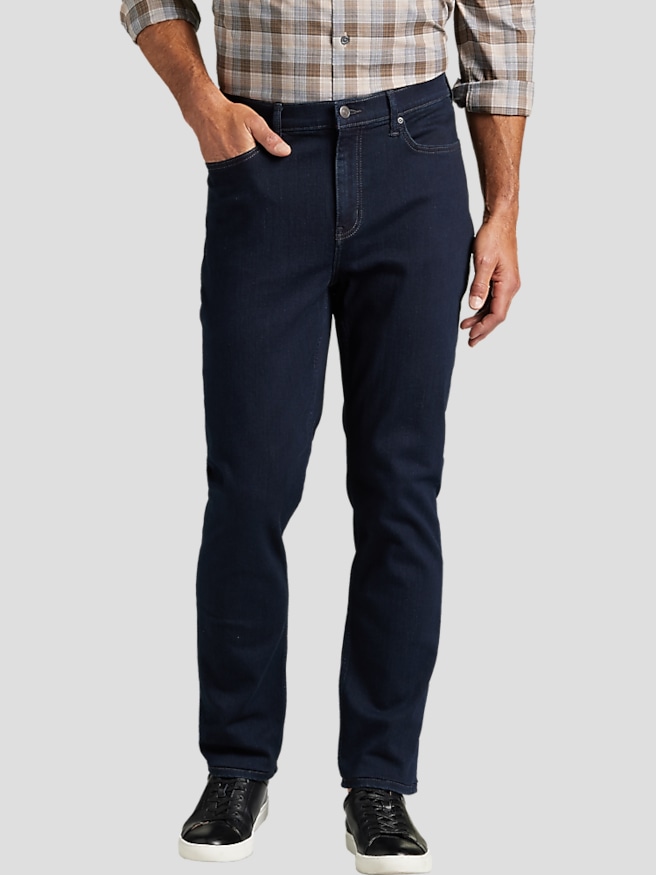
The versatility of a white slim fit shirt becomes clear in the outfits built around it. Beneath a navy suit, it creates a crisp contrast suited to an interview or client meeting; with charcoal trousers and a textured sport coat, it feels polished without requiring a matching suit. Worn open at the collar with dark denim or chinos, the same color takes on a more relaxed character. A neat tuck, a belt that complements the shoes, and sleeves that sit comfortably beneath a jacket can make the whole outfit feel considered. White also leaves room for personality elsewhere, whether that means a patterned tie, a pocket square, or a distinctive jacket texture. Within the broader category of Men's Slim Fit Shirts, white is a dependable foundation because it coordinates with such a wide range of colors and dress codes. Keeping that appearance fresh depends on consistent care rather than aggressive cleaning. Collar and cuff marks are often easier to address before they settle into the fabric, using a treatment compatible with the care instructions. Separating white shirts from dark clothing helps limit color transfer, and avoiding an overloaded washer gives garments room to move. Bleach is not appropriate for every fabric or finish, especially blends containing stretch fibers. Following the recommended drying method and heat setting helps protect both the material and the shirt’s shape; prompt removal from the dryer, when tumble drying is permitted, can also reduce creasing. A suitable hanger supports the shoulders between wears, while occasional attention to loose buttons can prevent a small repair from becoming a larger inconvenience. For gifting, a white slim fit shirt can be a practical choice for a graduate beginning a career, a partner refreshing a work wardrobe, or someone preparing for an important celebration. Knowing the recipient’s usual neck and sleeve measurements, preferred fit, and care preferences makes the gift more personal and more likely to become a regularly worn favorite.