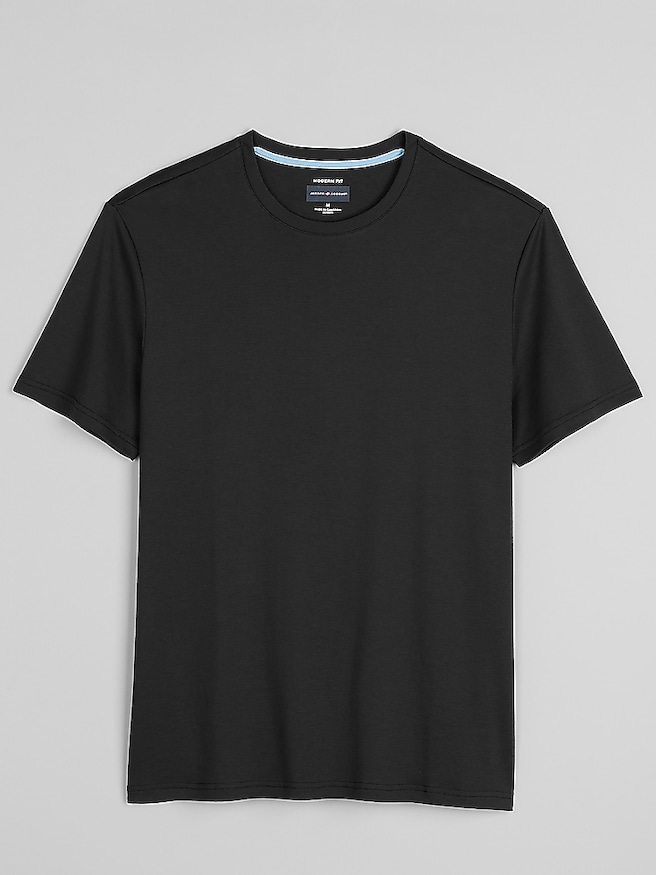
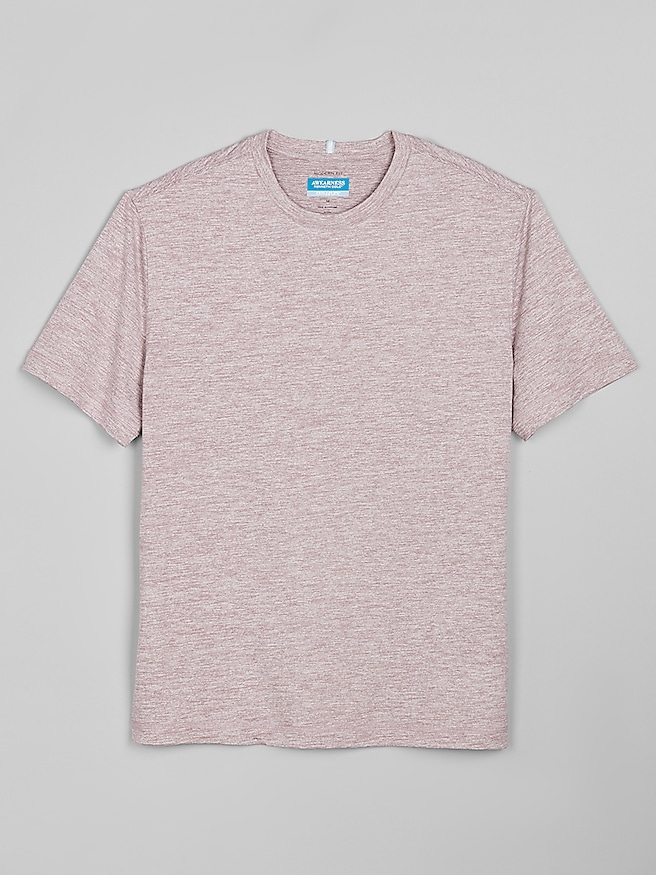
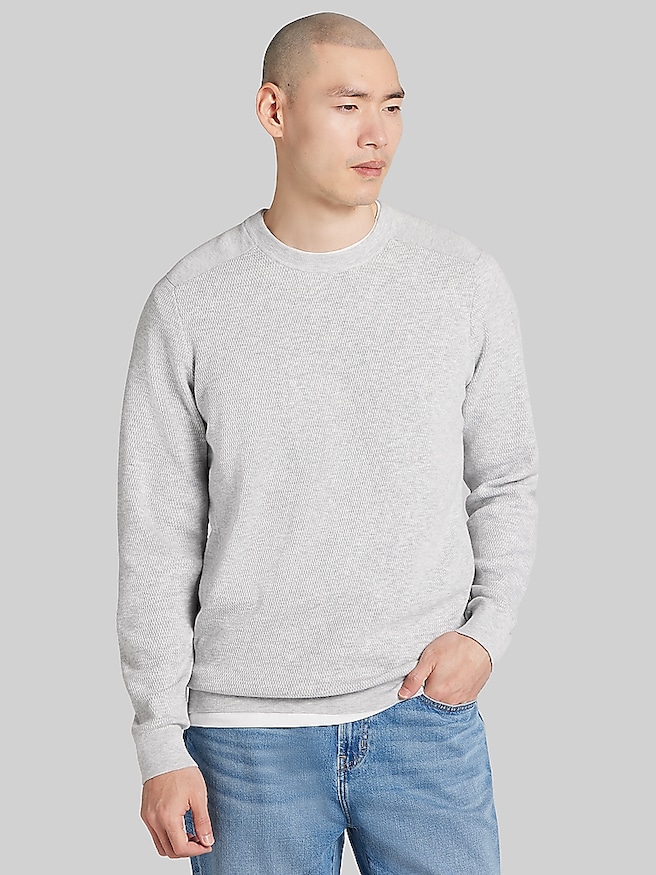
White crew necks bring a clean, understated look to everyday clothing, with a rounded neckline that sits close to the base of the neck and leaves the front free of collars, buttons, or zippers. The term describes a neckline rather than a single fabric or weight, so white crewneck clothing can include T-shirts, knit tops, and sweatshirts. In a white crewneck sweatshirt, the appeal often comes from the balance of a soft interior, a substantial outer surface, and an easy shape that works with jeans, chinos, or casual trousers. Cotton contributes a familiar, breathable feel, while cotton-polyester blends combine that softness with fibers that can help fabric maintain its shape through repeated wear and washing. Common sweatshirt constructions include brushed fleece, which has a fuzzy inner surface, and French terry, which has small loops on the inside and a generally smoother, less plush feel against the skin. Neither construction automatically determines quality; fabric density, stitching, finishing, and fit all contribute to how a garment wears over time. Ribbed collars, cuffs, and bottom bands give many crewneck sweatshirts their recognizable outline, helping define the edges without the structure of a woven shirt. A small amount of stretch in those areas can make pulling the top on easier and help the neckline recover afterward. White fabric also puts texture in clear view: a smooth knit looks crisp and simple, while a subtly textured surface gives the same color more depth. Opacity deserves attention, particularly in lighter fabrics, because an undershirt, waistband, or contrasting layer may show through. A denser knit may provide more coverage, though thickness alone is not a guarantee. For someone who prefers clothing without prominent graphics or complicated details, a plain white crew neck offers a straightforward foundation. Its character comes from the fabric, proportions, and finish rather than decoration, making the difference between a lightweight base layer and a substantial sweatshirt especially important to the way it looks and feels.
Fit gives a white crew neck much of its personality. A closer-fitting silhouette keeps the outline neat beneath a casual jacket, while a regular fit leaves comfortable space through the chest and body without appearing deliberately oversized. A relaxed cut creates a looser shape that pairs naturally with straight-leg jeans or easy-fitting pants. Shoulder placement is a useful distinction: a seam near the edge of the shoulder generally produces a more defined profile, whereas a dropped shoulder adds room and a more casual appearance. Sleeve length matters just as much. Cuffs that sit around the wrist keep the hands clear, and excess fabric gathered above the cuff changes the overall impression from tidy to slouchy. The bottom band should rest comfortably rather than grip so tightly that the fabric bunches above it. For men with broader shoulders or a fuller chest, enough room across the upper body helps prevent pulling at the neckline and underarms; for taller builds, body and sleeve measurements can be more informative than a size label alone. Personal preference still matters, especially when a crewneck will be worn over another shirt. A thin base layer adds little bulk, while a collared shirt needs enough space for the sleeves and shoulders to lie smoothly underneath. In an office with a relaxed dress code, a white crewneck sweatshirt with dark chinos and clean leather sneakers can look considered without feeling formal. With denim and simple canvas shoes, the same neckline reads more casually, suited to a coffee stop, a weekend lunch, or time spent visiting friends. A casual jacket can add definition when the sweatshirt has a relatively smooth surface and manageable bulk. White also provides a clear contrast against navy, charcoal, olive, and black, making familiar combinations feel distinct. The result depends less on adding accessories than on keeping proportions balanced: a roomy top often looks more intentional with pants that have enough structure to hold their own shape.
The lasting appeal of white crew necks depends partly on how the fabric and finish hold up to ordinary use. Even seams, a collar that lies flat, and ribbing that returns to shape after gentle stretching are useful details to consider. Areas exposed to friction, including the underarms and the sides where a bag rests, may develop pilling, particularly in some blended fabrics; fiber content alone does not predict how quickly that will happen. Care should follow the garment label, since different knits, trims, and finishes can require different treatment. Many cotton and cotton-blend sweatshirts can be machine washed in cold water with similar white clothing, but drying instructions vary. Low heat or air drying, when permitted by the label, can limit exposure to the heat that contributes to shrinkage. Separating white garments from darker clothing helps reduce the chance of dye transfer, and treating a coffee drip or food mark promptly with a fabric-appropriate method can keep a small spot from becoming harder to remove. Chlorine bleach is not suitable for every white fabric, especially garments containing certain stretch fibers or special finishes, so a white color should never be taken as permission to bleach. Using the recommended amount of detergent and allowing a garment to dry completely before storing it also supports a cleaner feel. Folded storage can help heavier knits avoid the shoulder bumps or stretching that some hangers cause. For gifting, a white crewneck can suit a college student building an everyday wardrobe, someone who appreciates minimal clothing, or a person who repeatedly reaches for comfortable, uncomplicated layers. The recipient’s preferred fit and usual neckline are better clues than assuming everyone wants the same silhouette. For another neutral with a softer visual contrast, Grey Crew Necks offer a related direction. White remains especially useful when the goal is a bright, uncluttered foundation, with fabric choice, comfortable proportions, and attentive care helping it stay part of a regular rotation.