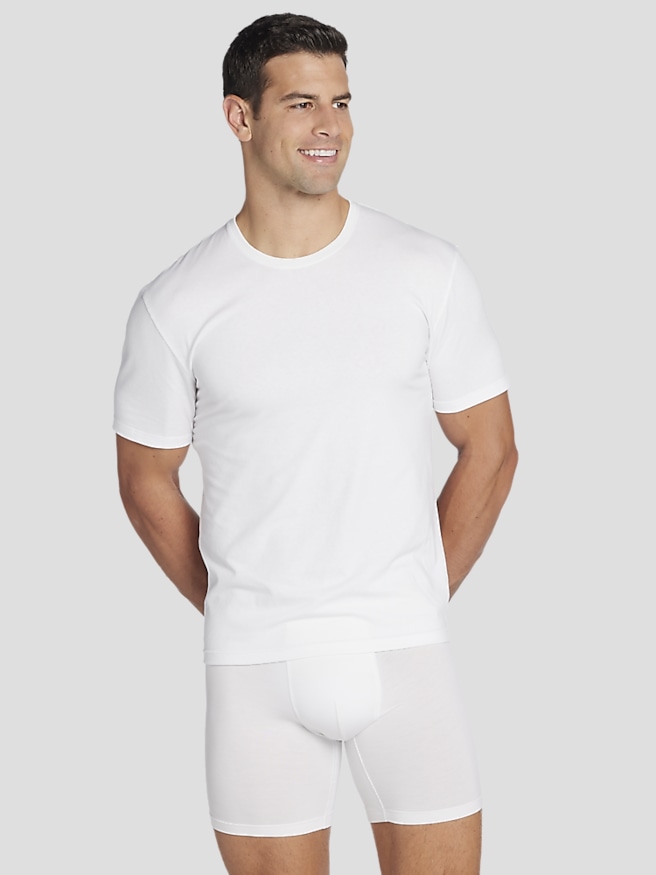
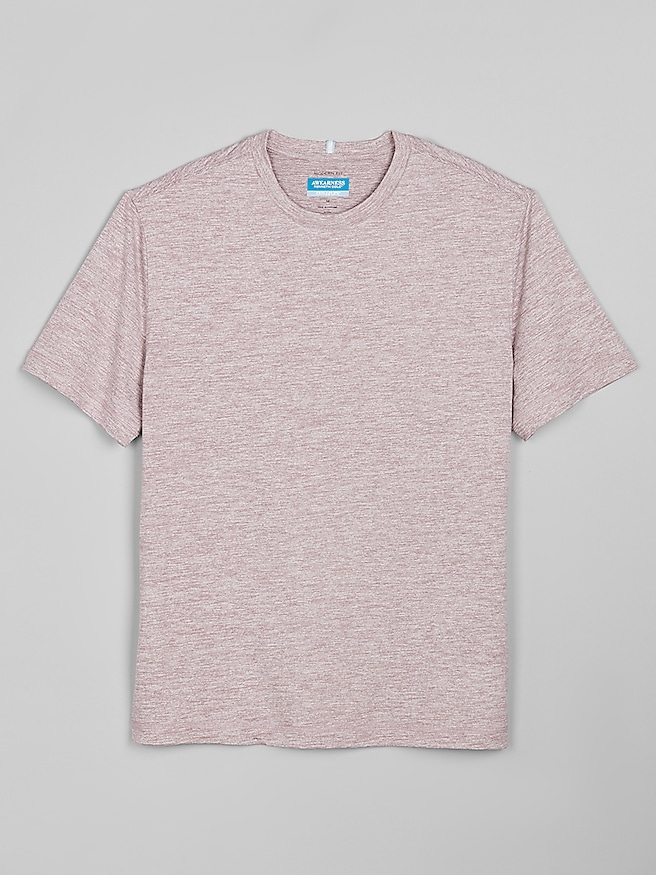
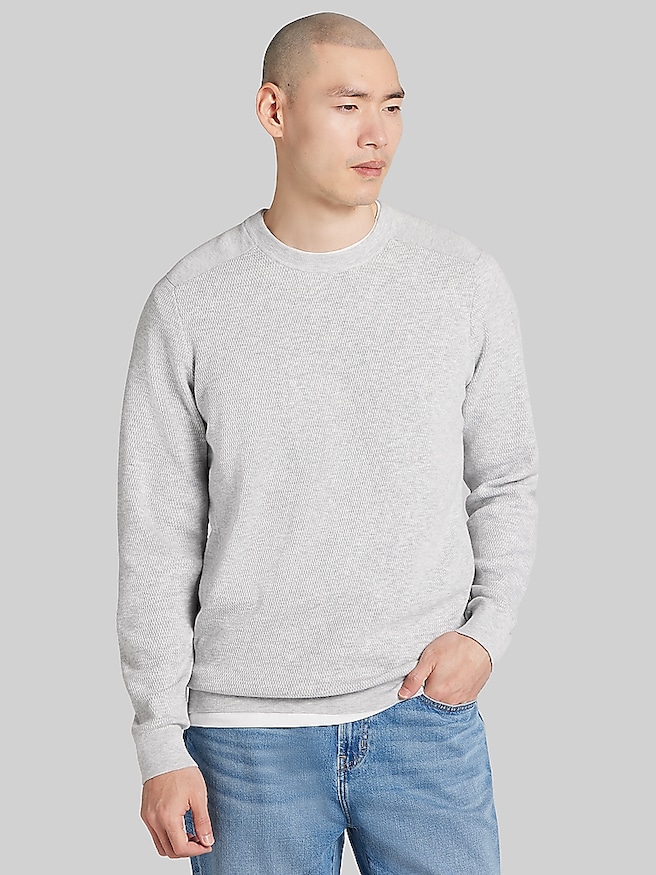
Black crew necks are tops with a rounded, collarless neckline, a shape shared by everyday T-shirts, casual sweatshirts, and knit sweaters. The neckline sits near the base of the neck without a button opening, keeping the front simple and making the fabric, fit, and proportions the main points of distinction. A black crew neck T-shirt usually has a jersey knit construction, with a smooth surface and enough flexibility for everyday movement. Cotton offers a soft feel and breathability, while cotton blends can add stretch or help the fabric hold its shape, depending on the fiber mix. A sweatshirt has a more substantial construction: fleece often features a brushed interior, while French terry has small loops on the inside. Both bring a casual character that works naturally with denim, chinos, and joggers. A crew neck sweater has a more visibly knitted texture, ranging from fine, closely spaced stitches to broader ribbing or textured patterns. Cotton, wool, cashmere, and blended yarns each contribute a distinct feel and drape, so two black sweaters can look similar on a hanger yet wear quite differently. Fine-gauge knits tend to sit smoothly beneath a jacket, while more substantial knits have enough structure to stand on their own. Fabric weight is useful to consider, but it does not tell the whole story of quality or durability. Even stitching, secure seams, and a neckline that lies flat all contribute to a top that wears well over time. Ribbed neckbands can help maintain the rounded opening, and ribbed cuffs and hems give many sweatshirts and sweaters a defined finish. Black also changes how texture reads: a smooth jersey looks clean and understated, while a ribbed knit creates depth through subtle shadows. For men who favor a straightforward wardrobe, these differences make the crew neck a useful foundation rather than a single, uniform style.
Fit determines whether a black crew neck looks trim, easygoing, or deliberately roomy. A slim fit follows the torso closely without pulling across the chest or gathering tightly beneath the arms. A regular fit allows more space through the body, while a relaxed shape offers additional room and a less defined silhouette. Shoulder placement is a helpful starting point: on a conventional fit, the shoulder seam generally rests near the edge of the shoulder, whereas a dropped seam creates a broader, more casual outline. Sleeve length and body length matter just as much. Short sleeves that sit comfortably around the upper arm look balanced without restricting movement, and long sleeves should not interfere with the hands. For an untucked top, a hem that covers the waistband without extending too far down the thighs usually creates an easy proportion with trousers. A crew neckline should feel comfortable when sitting, reaching, or turning the head; an opening that presses against the throat or stretches noticeably out of shape can distract from an otherwise good fit. Intended use helps narrow the choice. A smooth black T-shirt beneath an unstructured blazer can suit a casual dinner or a workplace that permits relaxed dressing, while a fine-knit sweater provides a more composed alternative without introducing a shirt collar. A sweatshirt paired with straight-leg jeans and clean sneakers has a different character, suited to errands, travel, or an informal afternoon with friends. Black crew necks also make tonal dressing straightforward. Black trousers create a continuous line, charcoal adds a subtle distinction, and olive or tan chinos introduce contrast without competing with the top. With black-on-black combinations, differences in texture help keep the outfit from looking flat. For a softer neutral contrast, Grey Crew Necks offer another way to work with many of the same trousers and jackets.
Care plays a large role in keeping a black crew neck looking consistent, especially because fading, lint, and surface wear can be noticeable against a dark background. The care label should set the routine, since a cotton T-shirt, a fleece sweatshirt, and a wool sweater may need different treatment. When machine washing is permitted, turning the top inside out and washing it with similar dark colors can help limit visible friction and color transfer. A suitable detergent and the recommended wash setting matter more than an aggressive cycle, and avoiding unnecessary washing can reduce wear on the fabric. Drying deserves equal attention: excessive dryer heat can affect fit and fibers, while some knits need to be reshaped and dried flat rather than hung. A damp sweater can stretch under its own weight, especially through the shoulders. Folded storage helps preserve the shape of knitwear, while a properly shaped hanger can work for tops whose construction and care instructions allow it. Black fabric may pick up pale lint from towels or other shedding textiles, so separating those fabrics during washing can make the finish easier to maintain. Occasional pilling does not automatically mean a garment is poorly made; friction at the sides, underarms, or beneath a bag strap can bring fibers to the surface. Gentle treatment with a fabric-care tool appropriate for the material can help, without pulling at the knit. These practical considerations are also useful when choosing a black crew neck as a gift. A recipient who prefers simple outfits may appreciate a smooth, understated style, while someone drawn to casual clothing may favor the substantial feel of a sweatshirt. Familiar sizing, preferred sleeve length, and comfort with close or roomy fits are more reliable clues than appearance alone. Care preferences matter, too: a top that fits an established laundry routine is likely to see regular use. For a birthday or graduation gift, the appeal lies in its adaptability. A well-chosen black crew neck can accompany familiar jeans, sharpen casual trousers, or sit neatly beneath a jacket without asking the wearer to rethink an entire wardrobe.