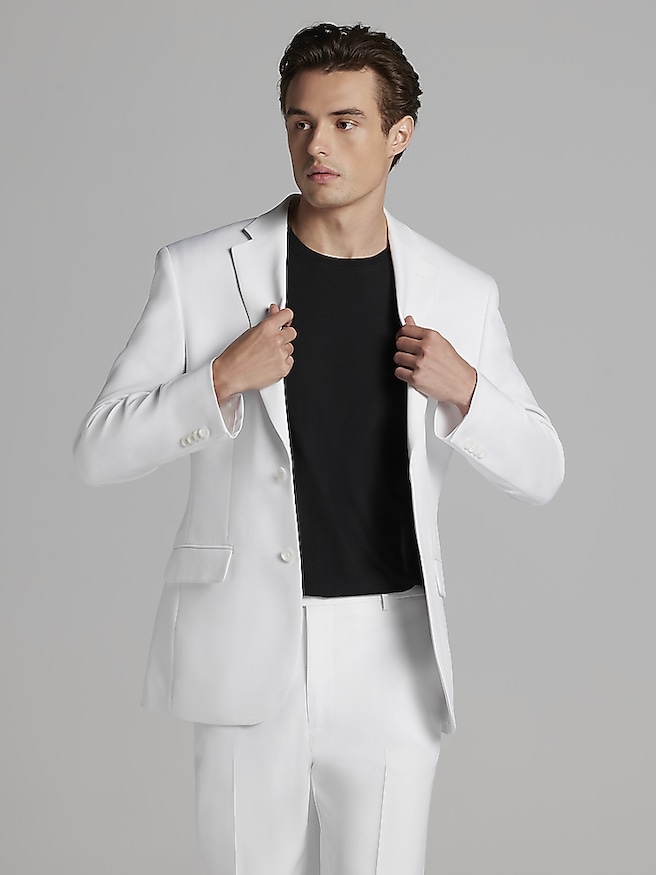
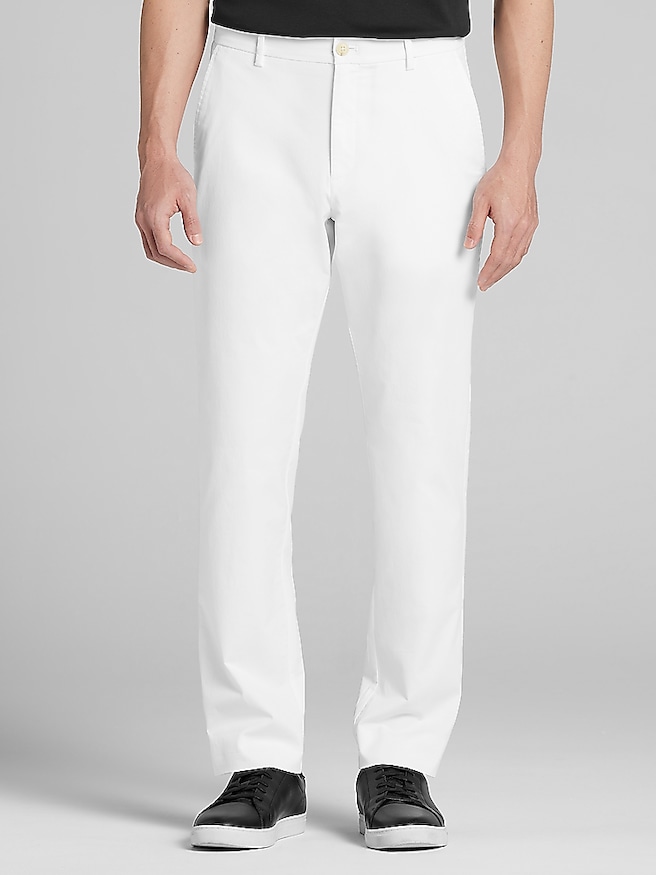
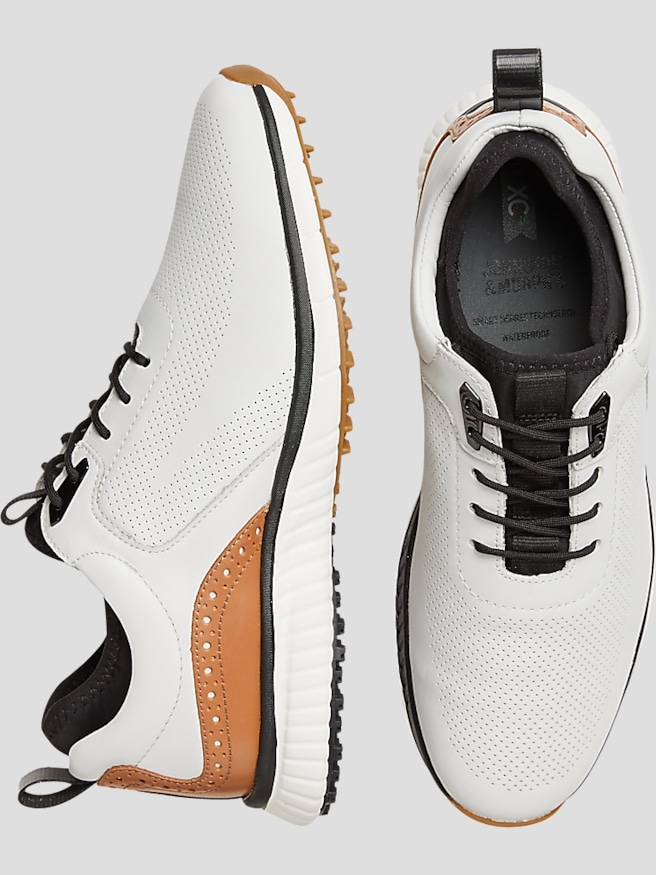
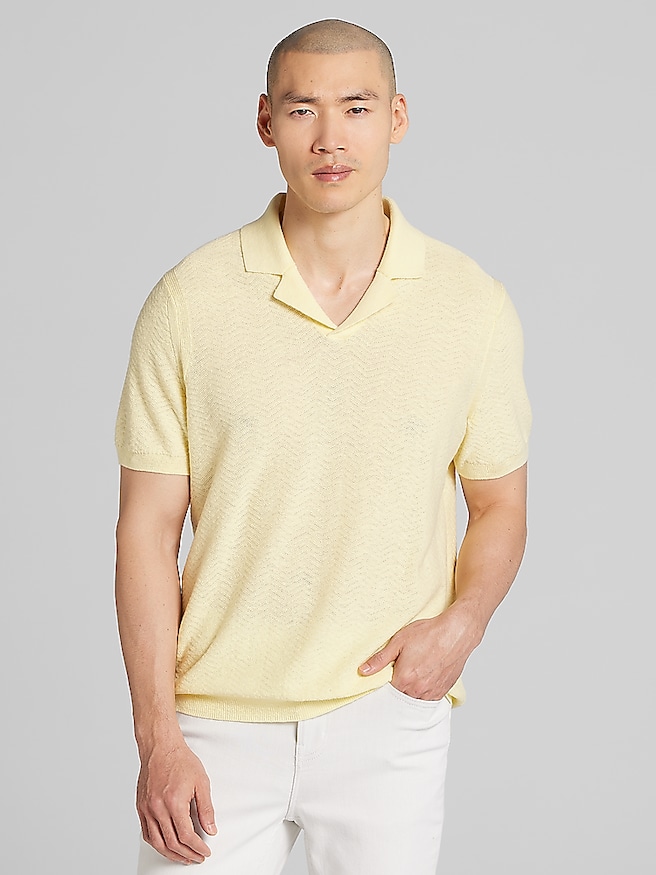
White clothing brings a clean, confident finish to a man’s wardrobe, whether it is worn as part of a polished outfit or kept on hand for occasions that call for something brighter and more distinctive. Crisp white separates can make warm-weather dressing feel effortless, while soft off-white and ivory tones transition comfortably into cooler months when layered beneath jackets, sweaters or outerwear. When choosing from a collection of white clothing, consider the role each piece will play in your closet. A well-fitting silhouette is often more important than an elaborate design, especially with light colors, because white draws attention to proportions, shoulder placement and the way fabric falls across the body. Look for a comfortable fit that allows natural movement without excess fabric, and pay attention to material, texture and weight. Breathable cotton and cotton blends can feel easy during warmer days, while textured weaves, heavier knits and structured fabrics offer more substance as the weather cools. A white garment with a subtle texture may be more forgiving of everyday wear than an ultra-smooth finish, and a slightly warmer shade such as ivory or cream can be an appealing alternative to bright optic white. For formal celebrations, ceremonies, evening events and destination gatherings, explore White Suits for a coordinated look that stands apart from traditional darker tailoring. White clothing can also make a thoughtful gift for a graduate, a groom, a recent college entrant or anyone building a versatile wardrobe. A carefully chosen light-colored essential is useful for family portraits, dinners, vacations, special gatherings and the many unexpected invitations that call for a fresh, pulled-together appearance.
The key to wearing white comfortably is choosing pieces that suit both the occasion and the level of care you are willing to give them. Before purchasing, check the fabric blend, lining and construction, particularly if the garment will be worn in bright light or layered over an undershirt. A garment with a little structure can look sharper at a dressier event, while a relaxed cut and soft hand feel may be better for travel, casual weekends or outdoor gatherings. Consider opacity as well: lightweight white fabric can reveal darker underlayers, so a neutral undershirt that closely matches your skin tone is often less noticeable than a white one. White clothing pairs naturally with navy, charcoal, tan, olive and denim, making it easy to create outfits that range from relaxed to refined. For a clean casual look, combine white with understated neutrals and simple leather accessories. For dressier settings, coordinate the shade of your shirt, trousers or jacket as closely as practical, while allowing texture to add visual interest. White can also serve as a thoughtful seasonal gift because it works across a broad stretch of the year. During the warmer season, it reflects light and complements outdoor settings; during cooler months, it brightens layered outfits and adds contrast beneath darker coats and jackets. It is especially useful for men who travel, attend frequent celebrations or prefer a small wardrobe of dependable pieces that can be dressed up or down. A white shirt, knit layer or tailored garment can move from a daytime gathering to an evening meal with only a change of shoes, belt or jacket, which makes it a practical choice for someone starting a new job, preparing for a special event or refreshing everyday style.
Because white clothing shows marks more readily than darker colors, proper care helps preserve its original appearance and extends the life of each garment. Always check the care label first, then sort white clothing completely separately from colored items to reduce the chance of dye transfer. Wash pieces with similar fabric weights and levels of soil, and avoid overloading the machine so water and detergent can circulate properly. If white fabric looks dull, a pre-soak in warm water with about one-half cup of baking soda for roughly 30 minutes can help loosen buildup before washing. White vinegar may also be added to the rinse cycle to help remove residual detergent and leave fabric feeling fresher; never mix vinegar with chlorine bleach. Bleach should be used cautiously and only when the care label allows it, since it may weaken fibers or cause yellowing in some synthetic materials, including certain nylon and polyester blends. For a stubborn mark, identify whether the fabric is cotton, a blend or a delicate material before choosing a treatment, and test any solution on an inconspicuous area when possible. After washing, drying white clothing outdoors in sunlight can provide a gentle brightening effect, though prolonged direct exposure may affect some fabrics or finishes. Remove garments promptly when dry, smooth them by hand or use the appropriate pressing setting, and store them in a clean, dry space away from dark items that could transfer lint. With thoughtful fabric selection and simple laundry habits, white clothing can retain the fresh, versatile character that makes it a dependable choice for celebrations, workdays, travel and everyday dressing.