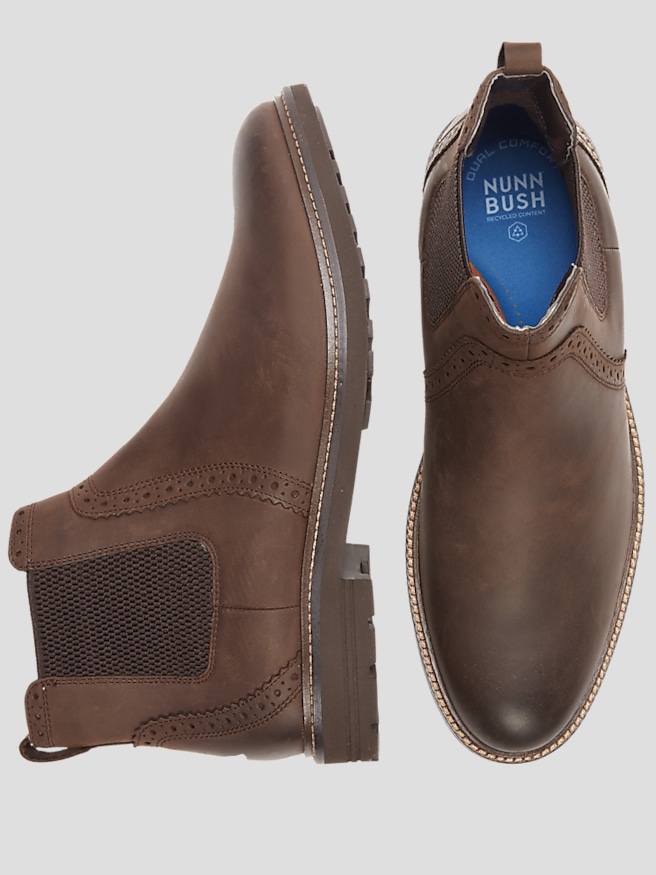
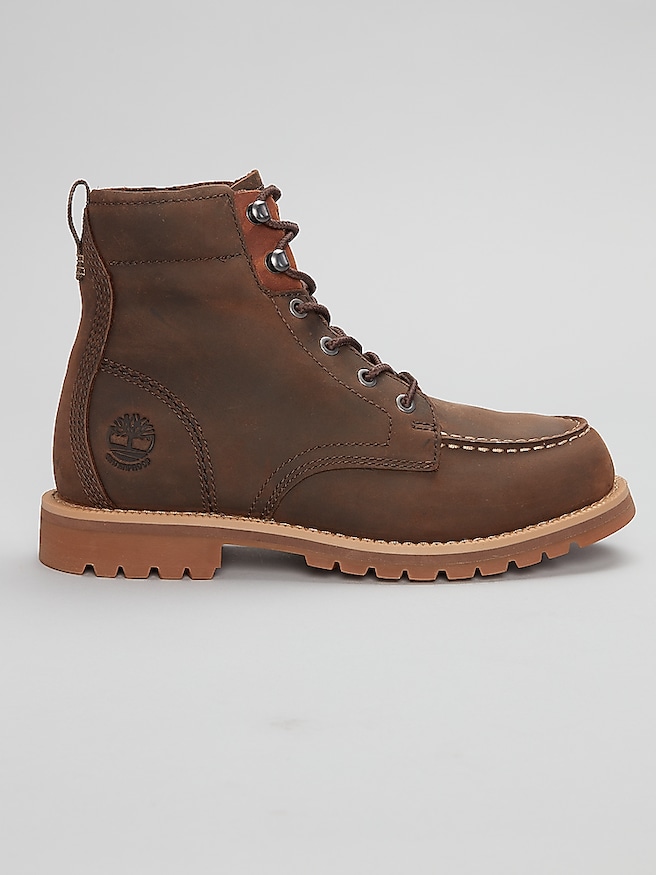
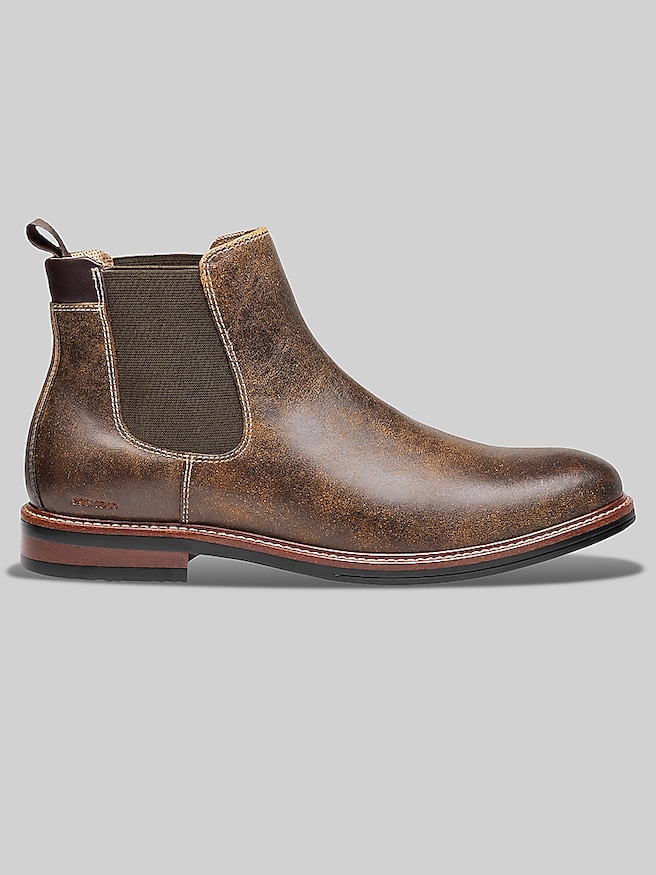
Western Chelsea boots are ankle-high, pull-on boots that combine the elastic side panels of a traditional Chelsea boot with cowboy-inspired details such as square toes, angled heels, pull tabs, and textured leather. The result is a streamlined alternative to a tall western boot, with enough character to stand out beneath a clean trouser hem. Not every pair has the same profile: a broad square toe creates a substantial, unmistakably western look, while an almond or softly tapered toe offers a quieter interpretation. Heel shapes vary, too, from low, stable profiles to more pronounced Cuban-style heels with an angled back. Those details influence how the boot looks in motion and how it balances the rest of an outfit. Dark, straight-leg jeans let the toe shape and leather finish do most of the talking; chinos make the same silhouette feel a little more polished. A tucked-in button-down shirt and a simple leather belt can draw out the western influence without making an outfit feel like a costume. For a dinner out, a concert, or a casual wedding where the dress code allows boots, smooth leather and restrained detailing keep the combination intentional. More pronounced grain, decorative stitching, or a wider toe brings a stronger western presence to denim and casual layers. The ankle height is especially useful for anyone who likes cowboy-inspired footwear but prefers less leather around the lower leg. Pants should fall over the boot opening without catching on the pull tabs or gathering heavily above the ankle. A straight or gently tapered leg often gives the shaft enough room, while a very narrow opening may outline the boot beneath the fabric. The best proportion leaves the toe visible and the hem relaxed, with little excess fabric pooling over the instep. These are boots for people who appreciate a recognizable shape rather than elaborate decoration, whether that means adding a western accent to an everyday outfit or choosing a distinctive alternative to lace-up footwear.
Leather choice has a major effect on the appearance, feel, and upkeep of western Chelsea boots. The familiar appeal of Mens Leather Chelsea Boots carries through in western interpretations: a tidy ankle profile, a pull-on design, and a surface that can develop character through regular wear. Full-grain leather retains its natural grain and can show subtle variations that become part of the boot’s personality. It may feel firm at first, depending on its thickness and finish, then become more flexible at the places where the foot bends. Suede has a soft, napped surface that gives western details a more relaxed appearance, particularly alongside denim or textured trousers. Embossed leather can add visual depth without extra ornamentation, while a smooth finish creates a cleaner line from the shaft to the toe. Neither softness nor thickness alone determines durability; stitching, sole attachment, lining, elastic quality, and the way the boot is worn also matter. Neat seams and well-secured pull tabs are worth attention because pulling the boot on places repeated stress on those areas. Elastic panels should recover their shape rather than remain stretched after use. Underfoot, a leather outsole can provide a sleek profile, while a rubber outsole may offer more grip and cushioning, depending on its tread and construction. A smooth sole and a deeply patterned sole will not feel identical on polished floors or uneven pavement. For a commute followed by several hours at a desk, flexibility and a comfortable lining may take priority. For an evening spent standing at a venue, heel stability and underfoot comfort deserve equal consideration with appearance. Western styling does not by itself make a boot suitable for riding, jobsite protection, or other specialized activities. Everyday western Chelsea boots are best understood as lifestyle footwear unless their construction and stated features support another purpose. That distinction makes it easier to choose for the occasions that actually fill a calendar rather than for the look alone.
A secure fit is especially important in a boot without laces, since the elastic panels provide flexibility but cannot be tightened across the foot. The instep should feel comfortably held, the heel should remain controlled while walking, and the toes should have room without sliding forward. A little heel movement can occur in a new pull-on boot, but repeated slipping, rubbing, or the need to grip with the toes suggests a fit problem. A square toe may look roomy from above without providing the width a particular foot needs, so toe shape is not a substitute for checking the fit through the forefoot. Trying both boots with the socks intended for regular wear gives a more useful impression than relying on size alone. Walking, turning, and sitting reveal whether the shaft presses against the ankle or the forefoot feels pinched when it bends. Leather can soften with wear, but a boot that is too short should not be expected to become longer. Once the fit is right, consistent care helps preserve both comfort and appearance. Dust and grit should be brushed away before they work into creases or seams. Smooth leather generally benefits from occasional conditioning with a suitable product, used sparingly and tested on a discreet area because some formulas can darken the finish. Suede needs a brush and cleaning products intended for its nap rather than standard leather cream. Allowing boots to dry naturally after cleaning and giving them time between wears helps the interior release moisture. Shoe trees can support the shape, while a shoehorn reduces pressure on the heel counter when pulling boots on. For a gift, knowing the recipient’s usual boot size, width, and preference for a square or tapered toe is more useful than choosing by appearance alone. Someone who lives in jeans may appreciate a textured finish and a stronger western profile; someone who favors chinos and tailored shirts may get more use from a restrained shape. In either case, thoughtful fit and straightforward upkeep help make western Chelsea boots a lasting part of an everyday wardrobe.