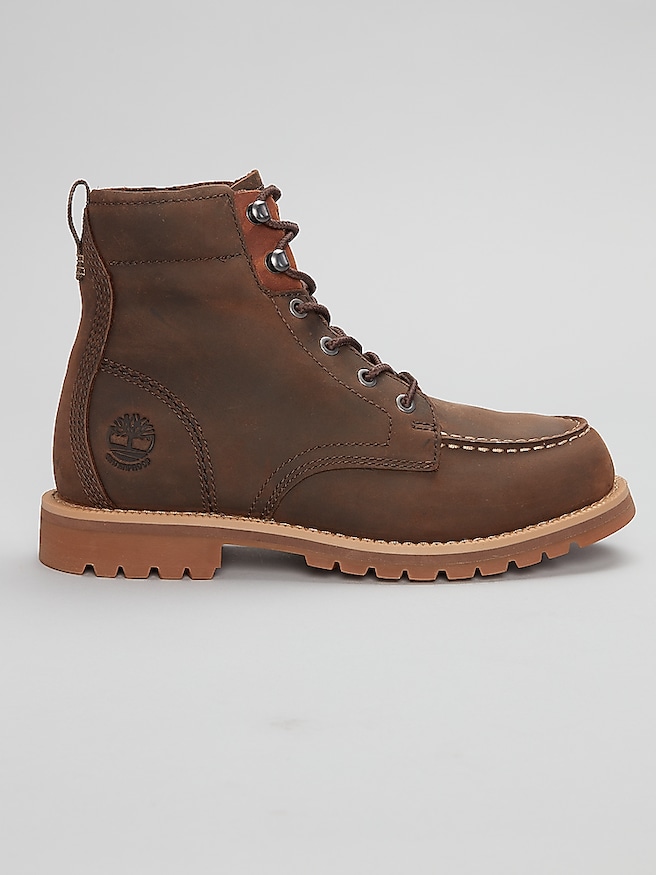
Modern Chelsea boots are ankle-high, pull-on boots defined by elastic side panels and a clean, lace-free upper. Contemporary versions bring that familiar shape into sharper focus through streamlined toes, substantial lug soles, flexible construction, or cushioning designed for everyday wear. The appeal lies in how easily the silhouette moves between dressed-up and relaxed clothing: there are no laces interrupting the front, and the shaft creates a smooth transition beneath a trouser hem. A low-profile sole and gently tapered toe tend to look more refined, while a broader toe and pronounced tread give the same basic design a more substantial presence. Neither approach needs elaborate detailing to make an impression. Smooth black leather offers a crisp foundation for charcoal trousers, dark denim, and a tailored jacket; brown leather brings depth to navy, olive, and tan; suede introduces a softer texture beside chinos or a fine-gauge sweater. For outfits built around a narrow trouser leg, sleek Chelsea boots keep the overall line uncluttered without requiring an overly pointed toe. A straight-leg jean can balance a heavier sole, especially when the hem falls cleanly over the shaft rather than bunching around the ankle. These proportions matter more than matching every detail of an outfit. A belt in a similar leather color can create cohesion, but an exact shade match is not essential for casual dressing. At an office with a business-casual dress code, a restrained leather pair can sit comfortably alongside wool trousers and a button-down shirt. For dinner or a gallery opening, dark jeans and a textured jacket let the boots provide a polished finish without making the outfit feel formal. With a suit, a refined shape and well-kept finish are the more natural choice, provided the occasion allows boots; traditional formal dress codes may call for another type of footwear. The result is a useful middle ground between the ease of a slip-on shoe and the presence of a dress boot.
Materials influence both that appearance and the way Chelsea boots settle into regular use. Full-grain leather retains the hide’s natural grain and can develop character with wear, although durability also depends on thickness, finishing, stitching, and maintenance. Smooth leather generally lends itself to a more polished look, while suede’s napped surface gives color a softer, less reflective appearance. Neither material alone determines comfort. The shape of the boot, the lining, the footbed, and the sole all contribute to how it feels through a commute, an afternoon at a desk, or an evening spent standing. Because Chelsea boots have no laces to adjust, a secure fit across the instep is especially important. The elastic panels should allow entry and movement while the upper holds the foot without uncomfortable pressure. Toes need room to rest naturally, and the widest part of the foot should sit comfortably within the boot rather than pressing against its edges. A small amount of heel movement can occur in a new pull-on boot, but pronounced lifting, rubbing, or sliding is not something to dismiss as inevitable. Leather may soften with wear; that does not make a cramped toe box or an unsuitable width a good fit. Trying boots with the socks intended for regular wear gives a more useful sense of space and support. Shaft height and opening also deserve attention, since they affect both ankle comfort and how trousers fall. Underfoot, cushioned insoles can soften the feel of each step, while arch contours and a stable heel may provide support that feels more comfortable over longer periods. Softness alone is not the same as a supportive fit. Rubber outsoles often offer flexibility and traction, whereas leather outsoles create a traditional dress-boot finish. Deep tread adds visual weight, but grip still depends on the compound and the walking surface. Sole thickness, boot weight, and flexibility are worth considering together, particularly for someone who walks several blocks between appointments or spends much of the day on foot.
Durability is best understood as the combined performance of the upper, elastic, seams, heel, and sole rather than a single material claim. Even stitching, neatly finished edges, and elastic that returns to shape are useful details to notice. Welted construction may allow resoling, depending on the design and the repair service, while some cemented constructions can offer a lighter, more flexible feel. Neither construction method guarantees a particular lifespan. Regular care helps preserve the appearance and function of either, especially at the toe, heel, and flex points where wear becomes visible first. Smooth leather benefits from having surface dirt removed with a soft brush or suitable cloth, followed by occasional conditioning with a product appropriate for its finish. Excess conditioner can leave residue or alter the appearance, so a discreet test area is sensible. Polish can restore color and shine where the leather finish permits it. Suede needs a separate approach: a suede brush helps lift the nap and loosen dry dirt, while a suitable eraser can address some surface marks. Products made for smooth leather should not automatically be used on suede. Any protective treatment should be compatible with the material, and it should not be treated as a guarantee against damage. If boots become damp, allowing them to dry naturally away from direct heat helps protect the leather and adhesives. Shoe trees can help maintain shape between wears, and alternating footwear gives the interior time to dry. Pulling boots on with the intended tabs, when present, rather than tugging repeatedly at the elastic can also reduce unnecessary strain. These practical considerations make modern Chelsea boots a thoughtful gift for a partner, parent, sibling, or recent graduate building a versatile wardrobe. Knowing the recipient’s size, preferred fit, and usual clothing is more useful than choosing solely by appearance. For someone who moves from office hours to dinner plans, a comfortable, restrained silhouette can earn frequent use; for a denim-focused wardrobe, textured leather or a more substantial sole may feel more at home. The strongest choice balances personal style with a shape and construction suited to the wearer’s day.