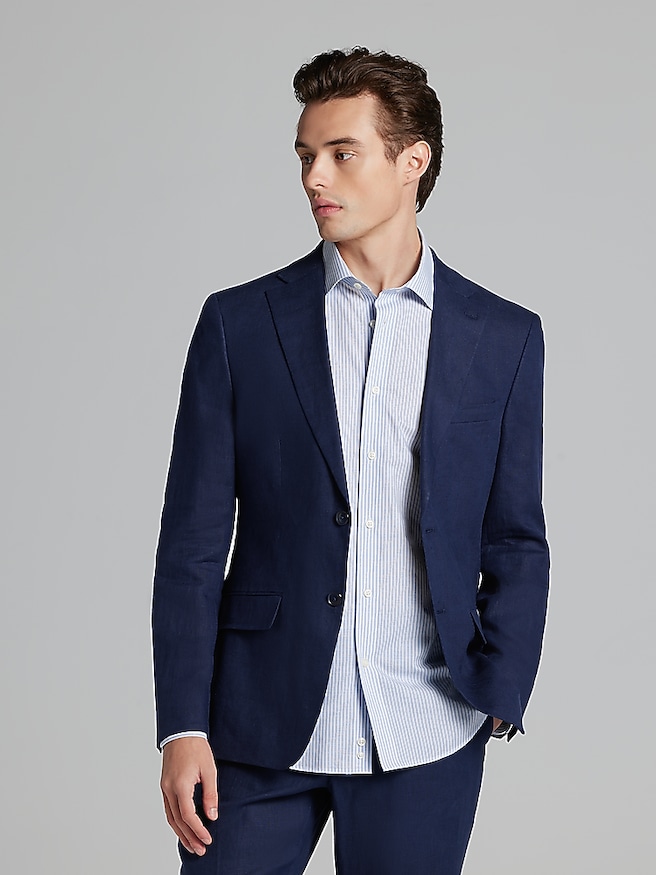
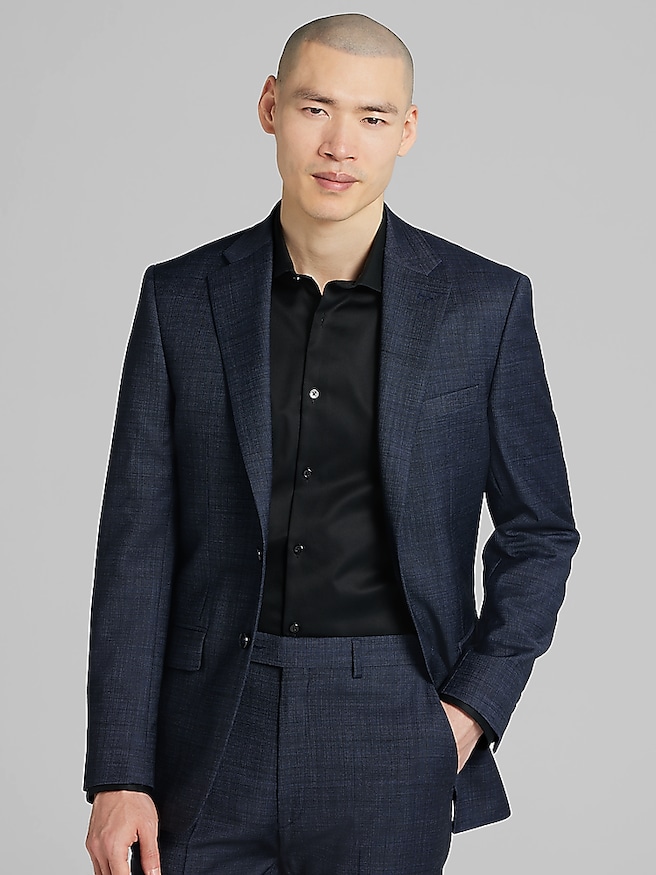
Accessories for a navy blue wedding suit bring definition to a versatile foundation: a crisp white shirt, a burgundy or textured blue tie, a white pocket square, and dark brown or black leather dress shoes create a balanced, polished combination. Navy has enough depth for an evening ceremony without feeling out of place at an afternoon celebration, and its cool undertone works with both warm accent colors and restrained metallic details. Burgundy and oxblood ties provide rich contrast, while slate blue and textured navy ties create a quieter, tonal effect. A navy tie looks most distinct when its weave contrasts with the suit, such as a subtly pebbled silk against smooth suiting. A white linen pocket square adds a clean edge at the chest; silk offers a softer fold and a gentle sheen. The tie and pocket square do not need to repeat the same pattern. A shared accent color usually creates a more natural connection than an exact match. For an outfit centered on a Men's Navy Wedding Suit, accessories can connect the suit to the setting, the wedding palette, and the wearer's role without competing for attention. A groom might choose a distinctive tie texture or meaningful cufflinks, while groomsmen can share a tie color and keep smaller details individual. Wedding guests often benefit from simpler combinations that respect the dress code without echoing the wedding party too closely. Muted green, silver-gray, and soft rose accents also sit comfortably against navy, especially when one color takes the lead and the remaining details stay understated. In cooler months, deeper shades and tactile fabrics can feel at home beside the suit's blue tone. The overall impression depends less on the number of accessories than on their relationship: a clear shirt collar, a proportional tie knot, and a neat pocket square allow the navy suit to remain the centerpiece. Small patterns can add personality, but restrained scale helps them look composed in portraits as well as across a reception room.
Materials and proportions shape how wedding accessories look and feel over a full day of photographs, greetings, dinner, and dancing. Silk ties offer depth of color and a soft luster, while woven textures can make a solid shade more expressive without adding a bold print. Matte finishes feel understated; pronounced shine attracts more attention under indoor lighting and camera flash. Linen pocket squares hold a crisp fold well, while silk tends to suit rounded, relaxed shapes. A square should have enough body to stay visible without creating a bulge in the jacket pocket. Tie width generally looks most balanced when it relates to the jacket's lapel width, and the finished tip should sit near the waistband rather than well above or below it. The knot should fill the shirt collar comfortably without forcing the collar points upward. A spread collar accommodates a fuller knot, while a narrower opening often works with a compact one. Cufflinks belong with shirts designed to accept them, including French cuffs; they should close securely and sit comfortably beneath the jacket sleeve. Silver-tone cufflinks and tie bars complement navy's cool coloring, although warmer metals can look equally deliberate when repeated sparingly. A tie bar should be shorter than the tie's width and fasten the tie to the shirt placket, helping keep it in place during movement. A slim watch can finish the outfit without catching on the cuff. For leather details, dark brown shoes bring warmth to navy, while black leather creates a sharper, more conservative effect suited to many evening weddings. Oxfords provide a streamlined profile; dress loafers can work for a less formal celebration when the invitation allows. A belt should coordinate closely with the shoes in color and finish, but an exact shade match is not essential. Suspenders offer another option with compatible trousers and are generally worn without a belt. Navy dress socks maintain a continuous line between trousers and shoes, and sufficient sock length keeps bare skin from showing when seated.
Comfort, care, and durability matter just as much as color coordination when navy wedding suit accessories need to carry an outfit from the ceremony through the last dance. Dress shoes should hold the heel securely while leaving room for the toes, with no pinching across the forefoot. Trying them with the intended dress socks gives a more useful sense of fit, and wearing them for short periods before the occasion can help identify pressure points. Secure stitching, neatly finished edges, reliable closures, and consistent leather surfaces are practical details to consider in accessories intended for repeated wear. Leather benefits from care suited to its finish: smooth leather may need cleaning, conditioning, and polish, while suede requires its own brush and protection methods. Wet shoes should dry naturally away from direct heat, and shoe trees can help preserve their shape between occasions. Ties last longer when knots are untied gently after wear rather than pulled loose or left in place. Fabric care labels are especially important for silk and structured neckwear, since aggressive washing or heat can affect the surface and shape. Pocket squares should be cleaned according to their fiber content and stored neatly to limit deep creases. Cufflinks and tie bars benefit from a soft cloth after use and separate storage that prevents scratching. These habits support accessories that can return for anniversary dinners, formal gatherings, and other dressed-up occasions rather than serving only one wedding. They also make thoughtful gifts for a groom, a wedding attendant, or a family member taking part in the celebration. Cufflinks with personal significance or a tie in a favorite shade can feel meaningful without overwhelming the outfit, particularly when the recipient's shirt style and preferences are already known. For coordinated wedding parties, viewing fabric colors together in daylight can reveal whether a blue leans gray or a burgundy reads especially dark. Checking the full combination while standing and seated also makes small fit issues easier to notice. The strongest finishing touches look intentional, feel comfortable, and leave room for the person wearing them.