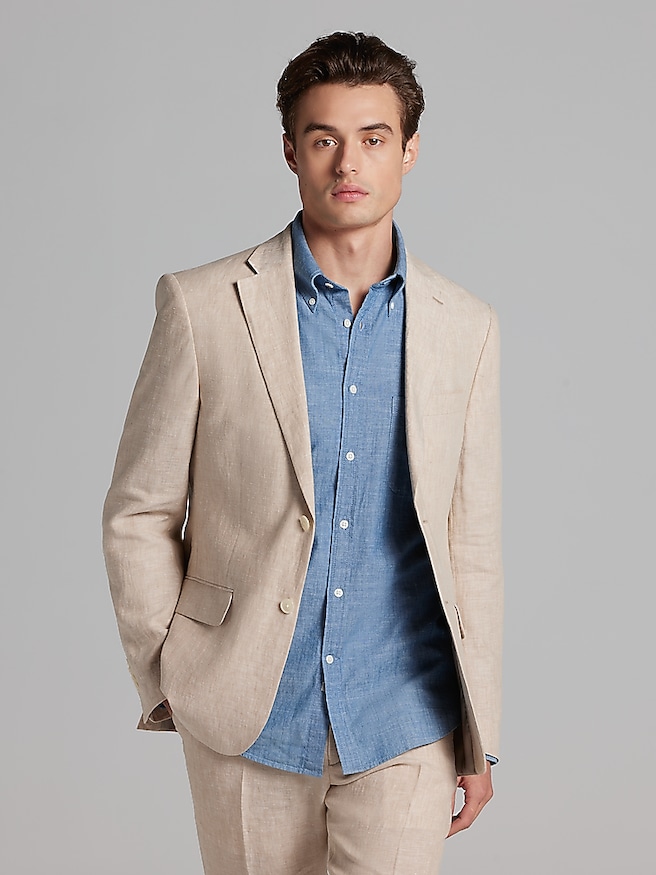
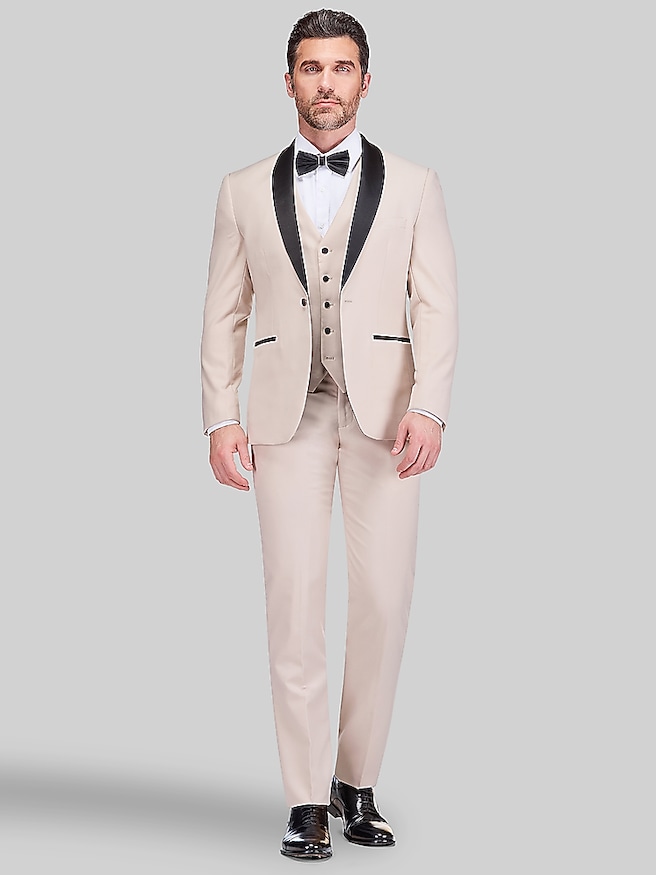
Wedding reception outfits for men balance the occasion’s dress code with the comfort needed for dinner, conversation, and time on the dance floor. Tuxedos suit black-tie celebrations, dark suits work well for many formal or black-tie-optional receptions, and tailored separates can fit more relaxed events when the invitation allows them. Cocktail attire generally calls for a suit or similarly refined combination rather than everyday casual clothing. The invitation and wedding website are the clearest references, since the venue alone does not establish how formally guests should dress. A reception in a ballroom might call for a tuxedo, while another celebration in the same setting may specify cocktail attire. For grooms, reception clothing can continue the ceremony look or introduce a distinct second outfit, such as a different jacket or a suit that feels less structured without losing its celebratory character. Wedding party members may have coordinated colors or accessories, while guests have more flexibility within the requested dress code. Navy, charcoal, and deep gray provide versatile foundations, with black especially suited to traditional evening formality. Subtle checks, textured weaves, and muted accent colors add personality without making the outfit feel louder than the occasion. A reception-only invitation does not automatically suggest a more casual look; the stated dress code still applies. Clothing also needs to look complete beyond the first entrance, whether the jacket stays on through dinner or comes off once dancing begins. A well-fitting shirt, properly finished trousers, and coordinated shoes keep the overall appearance intentional throughout the celebration. For events that include both the ceremony and reception, Best Wedding Outfits offers related occasion-dressing inspiration. The strongest reception looks feel connected to the wedding’s level of formality while still reflecting the wearer’s taste, whether that means a crisp tuxedo silhouette, a classic two-piece suit, or thoughtfully coordinated tailoring.
Fabric and construction influence how wedding reception clothing looks after several hours of wear, not just how it appears in a photograph before the celebration. Wool suiting is valued for its drape, resilience, and ability to release some creasing between wears, making it a practical choice for clothing intended for more than one special occasion. Wool blends can offer different balances of texture, structure, and care requirements, depending on their composition. Fabrics with a modest amount of stretch may make sitting and dancing more comfortable, although stretch does not replace correct sizing or alterations. Cotton dress shirts offer a familiar, crisp foundation, while textured weaves can add depth beneath a solid jacket. Smooth shirt fabrics create a cleaner, more formal impression; pronounced texture generally feels less formal. Satin detailing on tuxedo lapels and trouser stripes gives eveningwear its distinctive finish, so coordinating pieces should support that level of dress rather than compete with it. Fit matters just as much as fabric. Jacket shoulders should sit cleanly without extending noticeably beyond the natural shoulder, and the front should close without pulling into an obvious X around the button. Sleeves that leave a small amount of shirt cuff visible create a neat transition at the wrist. Trousers need enough room through the seat and thighs for a seated dinner, with a waistband that stays comfortable without relying on an overly tight belt. The hem should work with the intended shoes, avoiding excess fabric pooled around the ankles. A slim silhouette should still allow a comfortable stride and an easy embrace; a roomier cut should retain definition rather than look oversized. Trying the full combination while sitting, reaching forward, and walking reveals fit issues that standing still can hide. For someone making a toast, greeting a long line of relatives, or spending hours celebrating, those small differences in movement can matter as much as the outfit’s color.
Accessories and footwear give wedding reception outfits their finishing character, but they work best when their level of formality matches the clothing. A bow tie belongs naturally with a traditional tuxedo, while a necktie can bring color and pattern to a suit without overwhelming it. Pocket squares do not need to duplicate the tie exactly; a shared accent color or complementary pattern usually creates a more considered effect than an identical set. A patterned jacket often benefits from quieter accessories, while a solid suit leaves more room for texture or a distinctive tie. Dress shoes should suit both the outfit and the time spent on foot. Oxfords offer a formal finish, while other refined lace-ups or loafers may work with less formal tailoring when the dress code permits. Clean uppers, tidy edges, and well-kept soles make a noticeable difference, particularly when trousers are hemmed to show the shoe clearly. Comfortable fit matters before the first dance: toes need room, heels should feel secure, and unfamiliar shoes deserve a trial wear before the event. Matching leather accessories closely helps the outfit feel cohesive, though a traditional tuxedo generally calls for its own trouser-support conventions rather than an everyday belt. After the celebration, care helps preserve the clothing’s shape and usefulness. Care labels should determine cleaning methods, since suits, formal jackets, and dress shirts can have different requirements. Structured jackets benefit from supportive hangers and space to air out before storage, while trousers stay neater when hung properly rather than left folded over a chair. Stains are best addressed promptly with methods appropriate to the fabric, especially on delicate finishes. Excessive cleaning can add unnecessary wear, and pressing or steaming should follow the garment’s care guidance. Sound seams, secure buttons, and well-maintained shoes support repeat use at future weddings, milestone dinners, and other dress occasions. With balanced proportions and thoughtful care, reception clothing can remain useful long after the last toast.