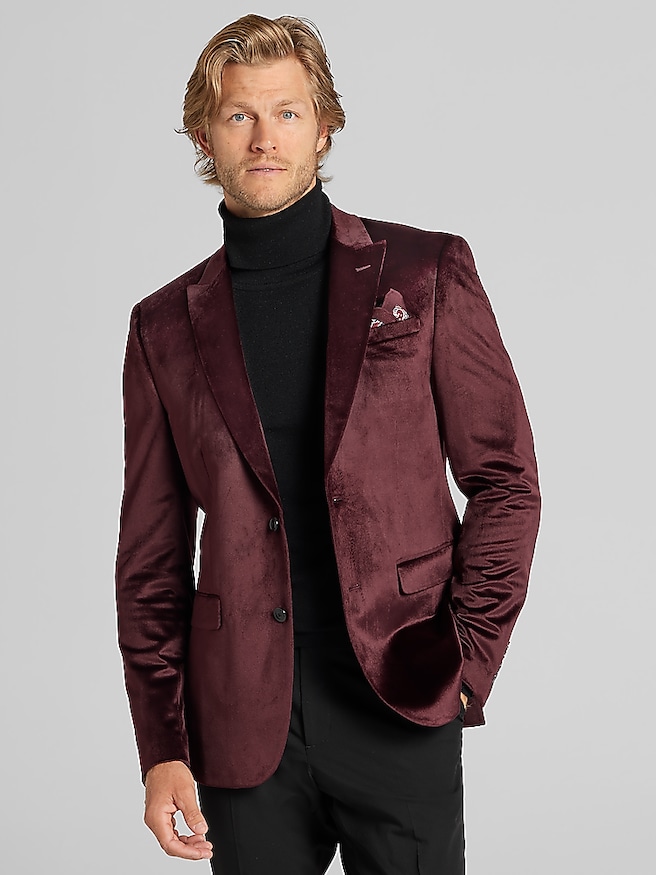
Velvet fashion brings plush texture, rich color, and a soft, shifting sheen to clothing for formal occasions and everyday dressing. Its distinctive surface comes from a dense, closely cut pile: tiny upright fibers that catch the light as the fabric moves. That construction gives velvet its depth, making black look especially rich and shades such as burgundy, navy, and emerald appear subtly lighter or darker across a sleeve or lapel. Velvet describes the fabric’s construction rather than a single fiber, so its character depends on what it is made from and how it is finished. Cotton velvet often has a substantial feel and a more understated luster, while silk velvet is known for fluid drape and a luminous surface. Polyester and other synthetic blends can offer softness and resilience, and a small amount of stretch can add flexibility. The fiber label, lining, and overall structure tell more about how a garment will wear than sheen alone. In men’s clothing, velvet has a longstanding connection to evening attire, particularly through the smoking jacket and tailored dinner jacket. That heritage still gives velvet tailoring a sense of occasion, but the fabric need not be reserved for a ballroom. A softly structured velvet layer over a fine-gauge knit can feel appropriate for an anniversary dinner, a theater outing, or a restaurant gathering where a full suit would seem too formal. More structured tailoring, crisp shirting, and polished footwear bring out its ceremonial side for wedding celebrations and dressy receptions. The appeal lies in how much visual interest the fabric supplies without relying on a busy pattern. A clean silhouette in a deep solid color can look expressive on its own, with the pile providing dimension that a smooth woven fabric does not. For someone who usually wears restrained colors, velvet offers a way to introduce character while keeping the overall look familiar and composed.
Fit determines whether that rich texture feels effortless or overly bulky. Velvet catches light along folds and pressure points, so pulling across the chest, tight sleeves, or fabric bunching at the waist can be especially noticeable. A tailored jacket should sit cleanly through the shoulders, allow comfortable movement through the upper back, and close without pronounced tension around the button. There should also be enough room for the intended layer underneath; the space needed for a dress shirt is not quite the same as the space needed for a knit. Sleeve length and jacket proportions matter because a plush surface already gives the garment visual presence. Clean lines help maintain balance, whether the cut is close to the body or more relaxed. For velvet trousers, an easy drape through the seat and thigh keeps the pile from being stretched tightly, while a tidy hem prevents excess fabric from gathering over the shoe. Lining can help clothing slide smoothly over other layers, and the weight of the fabric influences whether the silhouette feels crisp or fluid. These details are useful when choosing clothing for a seated dinner, an evening of dancing, or an event that involves both. Styling works best when the surrounding textures have a clear purpose. Smooth wool trousers, a cotton shirt, and simple leather shoes let a velvet jacket remain the focal point. Dark denim and understated sneakers can make the same type of texture feel more relaxed for a social setting without a formal dress code. Combining velvet with silk introduces another kind of sheen; the flowing surfaces associated with silk fashion can complement velvet’s dense pile when the colors and patterns remain restrained. A small silk accent often provides enough contrast without making every part of the outfit compete for attention. Event expectations still come first, especially when an invitation specifies black tie or another established dress code. Velvet can be part of formal dressing, but fabric alone does not determine whether an outfit meets the occasion.
Lasting enjoyment of velvet depends on both its construction and the way its surface is treated. The pile can flatten where it is compressed or repeatedly rubbed, which makes elbows, the seat of trousers, and areas beneath a shoulder strap worth particular attention. This does not mean velvet is inherently fragile; a well-constructed garment in a suitable fiber blend can hold up well with thoughtful wear and care. However, its textured surface behaves differently from a flat suiting fabric. Following the sewn-in care label is essential because cotton, silk, synthetic fibers, linings, and internal tailoring may require distinct cleaning methods. Some velvet clothing is washable, while structured or delicate garments may call for professional cleaning. A hot iron pressed directly onto the face of the fabric can crush the pile or leave an unwanted mark, so pressing and steaming should follow the garment’s instructions rather than a general routine. For valuable or tailored pieces, a cleaner experienced with velvet can assess the appropriate treatment. Between wears, giving clothing space rather than packing it tightly helps protect the surface. Shaped hangers support jacket shoulders, and storage away from prolonged direct sunlight helps preserve color. Spills are best addressed promptly according to the care label, without vigorous rubbing that may spread the stain or disturb the nap. These practical considerations also make intended use important when selecting velvet clothing. Someone who attends frequent dinners or performances may appreciate a versatile shape and an understated color, while a wedding guest or host may favor a stronger color for a particular celebration. As a gift, velvet clothing can suit a recipient who enjoys tailoring, tactile fabrics, or a more expressive approach to evening dressing, provided size and preferred fit are known. Its enduring attraction is the combination of touch and appearance: a soft surface, dimensional color, and a finish that becomes more interesting in movement. With appropriate proportions and thoughtful construction, velvet gives familiar clothing a distinctive presence without requiring an elaborate outfit.