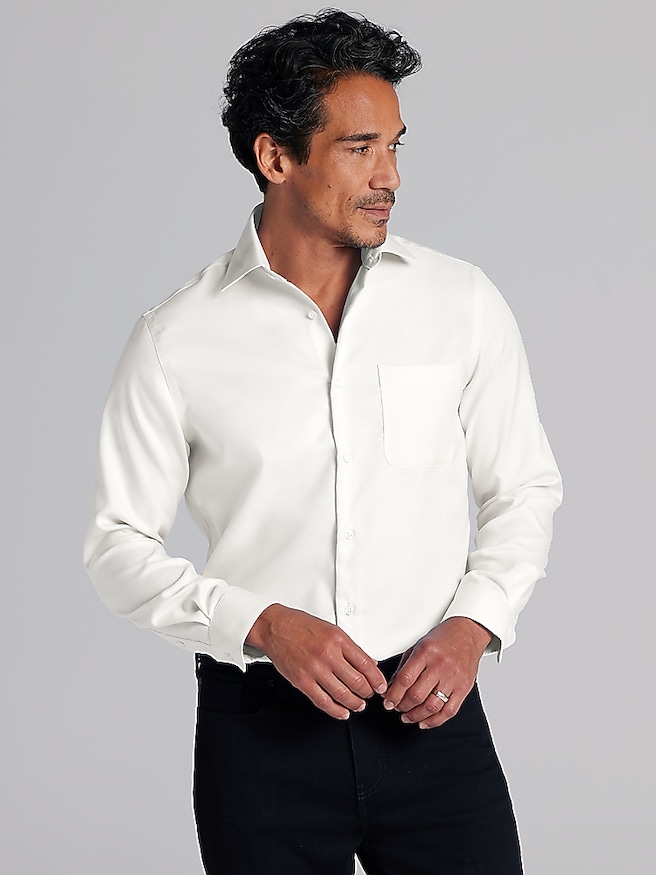
Men’s dress shirts and casual button-front shirts provide a foundation for outfits that move comfortably between professional settings and everyday occasions. A crisp collar frames the face, a clean front creates a polished line beneath a jacket, and the right proportions help a shirt look intentional whether it is worn with tailored trousers or denim. Dress shirts typically have a more structured collar and longer shirttails suited to tucking, while casual styles may have softer construction and shorter hems designed to look balanced outside the waistband. Fit makes a noticeable difference in both appearance and comfort. Regular-fit shirts generally provide more room through the chest, waist, and sleeves, making them a practical choice for someone who prefers ease of movement or a less fitted silhouette. Slim-fit shirts sit closer to the torso and usually have narrower sleeves, creating a cleaner outline beneath a suit jacket without the extra fabric that can gather at the waist. Fit names are useful starting points, but measurements and construction determine how a shirt actually feels. Shoulder seams should sit near the edge of the shoulders, the front should lie smoothly without pulling between buttons, and the sleeves should allow the elbows to bend comfortably. A collar worn with a tie needs enough room to button without pressing tightly against the neck. Sleeve length also matters: cuffs should reach the wrist, with a small amount visible beyond a jacket sleeve when the arms rest naturally. For a day that includes a commute, several hours at a desk, and dinner afterward, balanced proportions make a shirt easier to wear throughout the schedule. Someone who spends more time standing, presenting, or reaching across a workspace may especially appreciate room through the upper back and shoulders. A well-fitting shirt supports those movements while maintaining a neat appearance rather than requiring repeated adjustments.
Fabric and construction shape the experience of wearing a shirt just as much as its cut. Cotton is valued for its breathable feel and familiar texture, with the character of the fabric varying by weave and weight. A smooth plain weave can create a crisp, understated surface, while twill often has a subtle diagonal texture and a slightly softer drape. Oxford cloth has a more noticeable woven appearance that works naturally with less formal outfits. Cotton-blend fabrics combine cotton with other fibers to influence properties such as wrinkle resistance, drying time, and ease of care. Polyester-containing blends may hold their shape well and require less pressing, although the feel depends on the fabric’s composition and finish. Stretch fabrics can make sitting, reaching, and bending more comfortable, particularly in closer-fitting shirts, but stretch is not a substitute for the correct size. Performance features such as moisture management should be evaluated through the garment’s stated specifications rather than assumed from its appearance. The same is true of wrinkle-resistant and non-iron finishes: these treatments can simplify maintenance, but the care label remains the best reference for washing, drying, and pressing. Prompt removal from the dryer and hanging a shirt neatly can help limit creasing, while ironing at the recommended setting protects the fabric and finish. Collar points, cuffs, and the button placket are especially noticeable areas, so smooth construction in those places contributes to a polished look. Durability depends on several details working together, including secure buttons, consistent stitching, sound seams, and fabric suited to the way the shirt will be worn. Cuffs and collars experience frequent friction and contact with skin, making regular, appropriate cleaning important. A shirt worn repeatedly for office days has different demands from one reserved for ceremonies or occasional dinners. Rotating shirts, avoiding excessive heat when the label advises against it, and addressing stains promptly can help maintain their appearance without treating every fabric the same way.
Color, pattern, and collar shape give shirts much of their versatility. White and light blue create a clear, familiar backdrop for suits and ties, while deeper solid colors can bring a more relaxed mood to an outfit worn without neckwear. Fine stripes add definition without overwhelming a jacket, and small checks introduce visual interest that can work in both professional and casual settings. The scale of a pattern affects how it combines with other clothing: a closely spaced check tends to read more subtly from a distance, while a larger pattern becomes a stronger part of the outfit. For additional pattern-focused options, Check Men's Shirts offers a natural extension of this shirt category. Collar construction also changes the overall impression. A point collar creates a relatively narrow frame for a tie, while a spread collar leaves more space for a fuller knot. A button-down collar has points fastened to the shirt front, helping them stay in place and giving the shirt a more relaxed character. Beneath a suit jacket, a tucked shirt with smooth fabric at the waist keeps the outfit composed; with chinos or dark denim, a softer collar and an appropriately proportioned untucked hem can feel less formal without looking careless. These distinctions matter for job interviews, client meetings, graduation celebrations, family photographs, and dinners where the dress code calls for something more considered than a T-shirt. Shirts can also make thoughtful gifts for someone beginning a new role, building a professional wardrobe, or refreshing frequently worn basics. The most useful gift reflects the recipient’s established measurements, preferred fit, and everyday habits rather than relying on color alone. Someone who wears a tie regularly may value a comfortable collar and dependable sleeve length, while someone in a more relaxed workplace may reach most often for easy-care fabrics and restrained patterns. Across those uses, a shirt earns its place through comfort, adaptable styling, and construction that helps it maintain a presentable appearance through repeated wear.